


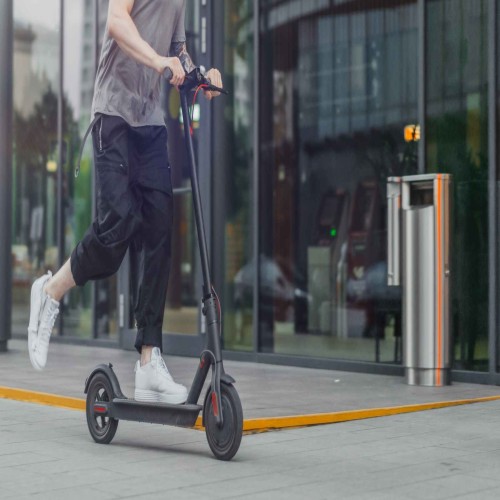
Emergence of Scooter Sharing
With increasing traffic congestion and pollution in cities, public transportation systems are struggling to cope up with the growing transportation needs. At the same time, people are looking for flexible, economical and environment-friendly transportation options for short-distance commuting within cities. It is in this context that shared mobility services like bike sharing and scooter sharing have emerged as viable alternatives in recent years. Among them, scooter sharing has gained immense popularity due to the flexibility, affordability and speed it offers for intra-city transportation.
Business Models of Major Scooter Sharing Players
Pioneered initially by companies like Lime and Bird in 2017, scooter sharing has seen many players entering the market globally with different business models. While some operators like Lime and Bird follow the dockless model where scooters can be parked anywhere, others have introduced docking stations. Majorca-based Cooltra was one of the earliest operators to deploy docking stations from where scooters need to be picked and dropped. Another model is station-less where scooters have predefined parking zones but no docking stations. Operators also differ in their approach to fleet ownership with some like Lime owning fleets while others engage local entrepreneurs who maintain fleets under franchise agreements.
Challenges Faced by Scooter Sharing Operators
Scooter Rental the concept has seen widespread acceptance evidenced by huge daily rides, scooter sharing businesses also face mounting operational challenges. Fleet maintenance and rebalancing scooters optimally across cities require huge investments. Vandalism and theft of dockless scooters parked on sidewalks is another major issue faced. Scooter dumping and riding violations have led to backlash and even bans in some cities. High costs of introducing safety measures like geofencing and rider authentication have also impacted companies. Sustaining profitable unit economics is the biggest test for players given the high costs of customer acquisition and fleet operations.
Growing Popularity Among Users
Despite challenges, scooter sharing continues to grow in appeal among users. In many cities, they have become the preferred last-mile connection from public transit stations and bus stops. Time-strapped professionals find them time-saving for short commutes within cities. Students and tourists also enjoy the freedom and exploration scooter sharing enables. With hourly or daily rental rates much lower than cab hailing, they offer great value. Features like live tracking in apps and convenient payment integration with credit/debit cards have enhanced user experience. E-scooters are also considered more environment-friendly than personal vehicle usage or taxi rides for short intra-city trips.
Regulatory Changes and Safety Concerns
While regulators initially struggled to accommodate the rapidly growing scooter sharing industry, policy support is now growing. Many cities have permitted dockless scooter parking on sidewalks with stipulated guidelines. Some have mandated requirements like geofencing and speed governors that reduce speeds in certain zones for safety. Helmet mandates for riders have also been announced in some markets. However, concerns around sidewalk riding, improper parking and risks of accidents still remain. Studies have highlighted need for more segregated bike lanes and safer infrastructure to minimize risks to riders and pedestrians.
Sustainability
Despite short-term setbacks during the pandemic, scooter sharing is projected to bounce back and witness exponential growth globally in the coming years. Companies are augmenting safety features and tightening regulations to address concerns. Some operators are also piloting folding e-scooters that can be more easily accommodated in public transport during last-mile trips. With growing acceptance among users and policy support from regulators, these shared mobility services are expected to play a bigger role complementing public transportation. For the industry to sustain in the long-run, operators will need to optimize fleet operations, focus on profitability and work closely with cities to develop supportive infrastructure and regulation frameworks. In the scooter sharing has emerged as a popular and green alternative for urban transportation. While initial regulatory uncertainties and operational challenges exist, the concept is poised for significant growth with policy enabling and technology advancements improving safety. As regulations evolve to promote eco-friendly micro-mobility, scooter sharing can play a key role complementing public transit to achieve the objective of reducing vehicular pollution and traffic congestion in cities. Continuous collaboration among stakeholders will be crucial for its mainstream adoption as a sustainable transportation model of the future.
About Author:
Priya Pandey is a dynamic and passionate editor with over three years of expertise in content editing and proofreading. Holding a bachelor's degree in biotechnology, Priya has a knack for making the content engaging. Her diverse portfolio includes editing documents across different industries, including food and beverages, information and technology, healthcare, chemical and materials, etc. Priya's meticulous attention to detail and commitment to excellence make her an invaluable asset in the world of content creation and refinement. (LinkedIn- https://www.linkedin.com/in/priya-pandey-8417a8173/)




COVID-19 Impact Analysis on Eco-friendly Labels Market report published by Value Market Research provides a detailed market analysis comprising market size, share, value, growth and trends for the period 2019-2027.
The report encompasses data regarding market share and recent developments by key players.
Moreover, this market report also covers regional and country markets in detail.The research report also covers the comprehensive profiles of the key players in the market and an in-depth view of the competitive landscape worldwide.
The major players in the Eco-friendly Labels include SATO Holdings Corporation, Elevate Packaging Inc., CCL Industries, HERMA Labels, Hally Labels, inkREADible Labels, Paramount Labels, VR Labels & Stickers, JK Labels, Signal Ltd., Weber Packaging Solutions, Labels Plus, Crown Labels Mfg.
Co. Ltd., Berkshire Labels, WEAVEBEL Ltd., Blair Labeling Inc., Zebra Technologies Corp., Interfas, Genesis Patterns (Labels), and The Label Makers Limited..
This section includes a holistic view of the competitive landscape that includes various strategic developments such as key mergers & acquisitions, future capacities, partnerships, financial overviews, collaborations, new product developments, new product launches, and other developments.Get more information on "Global Eco-friendly Labels Research Report" by requesting FREE Sample Copy at https://www.valuemarketresearch.com/contact/eco-friendly-labels-market/download-sampleMarket SegmentationThe broad Eco-friendly Labels has been sub-grouped into the Material, Label Type, Printing Technology, End-Use Industry and Region.