
The journey to parenthood is a deeply emotional and transformative experience for many couples. However, for some, achieving a successful pregnancy may require medical assistance. When discussing fertility treatments and assisted reproductive technologies, one of the most important factors couples consider is Pregnancy Success Rates. Understanding these rates can provide insight into the effectiveness of different treatments and help aspiring parents make informed decisions. Under the expert guidance of Dr. Archana Dhawan Bajaj, many couples have successfully navigated fertility challenges and embraced the joys of parenthood.
The Importance of Pregnancy Success Rates
Pregnancy success rates refer to the likelihood of achieving a viable pregnancy through natural conception or assisted reproductive techniques (ART) such as in vitro fertilization (IVF), intrauterine insemination (IUI), or fertility-enhancing medications. These rates are influenced by various factors, including age, underlying medical conditions, and the quality of reproductive treatments.

As fertility science advances, more individuals and couples struggling with infertility can explore tailored solutions to improve their chances of conception. By understanding pregnancy success rates, they can set realistic expectations and choose the most suitable fertility treatment plan.
Factors Influencing Pregnancy Success Rates
Several factors contribute to pregnancy success rates, including
1. Age of the Woman
Age plays a crucial role in fertility. Women in their early 20s to mid-30s generally have higher conception rates compared to those in their late 30s and 40s. The decline in ovarian reserve and egg quality with age can impact natural conception and ART outcomes.
2. Male Factor Infertility
Sperm quality, including count, motility, and morphology, directly influences the likelihood of successful fertilization. Male infertility issues can often be managed with specialized treatments such as intracytoplasmic sperm injection (ICSI) or donor sperm options.
3. Underlying Medical Conditions
Conditions like polycystic ovary syndrome (PCOS), endometriosis, uterine abnormalities, and hormonal imbalances can affect fertility. Proper diagnosis and treatment by an experienced fertility expert, such as Dr. Archana Dhawan Bajaj, can improve the chances of conception.
4. Assisted Reproductive Technologies (ART)
Different ART procedures have varying success rates. IVF, IUI, and egg donation are some of the most commonly used methods to enhance fertility. The success of these treatments depends on factors like embryo quality, endometrial receptivity, and overall health.
5. Lifestyle and Health Factors
A healthy lifestyle significantly impacts fertility. Factors like smoking, excessive alcohol consumption, obesity, and chronic stress can lower pregnancy success rates. Adopting a balanced diet, regular exercise, and stress management techniques can improve fertility outcomes.
Understanding Success Rates of Common Fertility Treatments
1. Natural Conception
For couples with no underlying fertility issues, the monthly pregnancy success rate ranges from 15-25%. However, as age advances, natural conception rates decline, making medical intervention necessary in some cases.
2. Intrauterine Insemination (IUI)
IUI is a less invasive fertility treatment where processed sperm is directly inserted into the uterus during ovulation. The success rate for IUI ranges between 10-20% per cycle, depending on factors like maternal age and sperm quality.
3. In Vitro Fertilization (IVF)
IVF is one of the most effective ART procedures, where eggs are fertilized outside the body and the resulting embryo is transferred into the uterus. The pregnancy success rates for IVF range from 30-50% per cycle, with higher chances for younger women and those using high-quality embryos.
4. Egg Donation and Surrogacy
For women with poor ovarian reserve or those unable to carry a pregnancy, egg donation and surrogacy offer alternative paths to parenthood. These methods have high success rates, often exceeding 50%, depending on the quality of donor eggs and surrogate health.
How Dr. Archana Dhawan Bajaj Enhances Pregnancy Success Rates
Dr. Archana Dhawan Bajaj is a renowned fertility specialist who has helped countless couples overcome infertility challenges. Her expertise in reproductive medicine, combined with state-of-the-art fertility treatments, ensures optimal care and personalized treatment plans. She offers advanced diagnostic techniques, fertility preservation options, and holistic approaches to improve reproductive health.
Her patient-centric approach, coupled with cutting-edge ART techniques, has significantly improved pregnancy success rates for many hopeful parents. Whether through IVF, IUI, or alternative fertility solutions, Dr. Bajaj’s commitment to excellence has made a profound difference in the lives of her patients.
Tips to Improve Your Pregnancy Success Rate
While medical treatments play a significant role, couples can take proactive steps to enhance their fertility potential:
Conclusion
Achieving a successful pregnancy is a multifaceted process that depends on various factors, including medical history, lifestyle, and treatment choices. By understanding Pregnancy Success Rates, couples can make informed decisions about their fertility journey. Under the guidance of Dr. Archana Dhawan Bajaj, many individuals have turned their dreams of parenthood into reality. With the right support, medical advancements, and lifestyle modifications, the path to parenthood can be smoother and more fulfilling.

Other than that, many patients are taking kidney failure treatment in Ayurveda from Dr. Puneet Dhawan.The Symptoms of Kidney Failure Kidney disease is a quiet disease that is why the condition of kidney failure does not occur at the same time rather step by step over months or years.
At the point when a patient is in the underlying phases of kidney disease, the indications of kidney issue don't end up obvious to the patients.
That is the reason in most of the cases: kidney failure stays undiscovered until a patient reaches an advanced stage.The symptoms that will indicate you about kidney failure kidney include:WeaknessDry or Itchy skinMuscle cramps major at nightNausea and vomitingSicknessSwelling in the face, hands, feet, and anklesPuffy eyesharsh pantingBlood in the urineFrequent urinationLack of concentrationPain in the back and chestFeverHaving a couple of symptoms in the body for delayed time requires the meeting with your specialist who can indicate the phase of kidney failure and kidney failure treatment in Ayurveda you need.Reasons for kidney failure Our kidneys are made out of a great many practical units called nephrons and glomerulus which are in charge of giving the blood a chance to stream into and far from the kidneys.
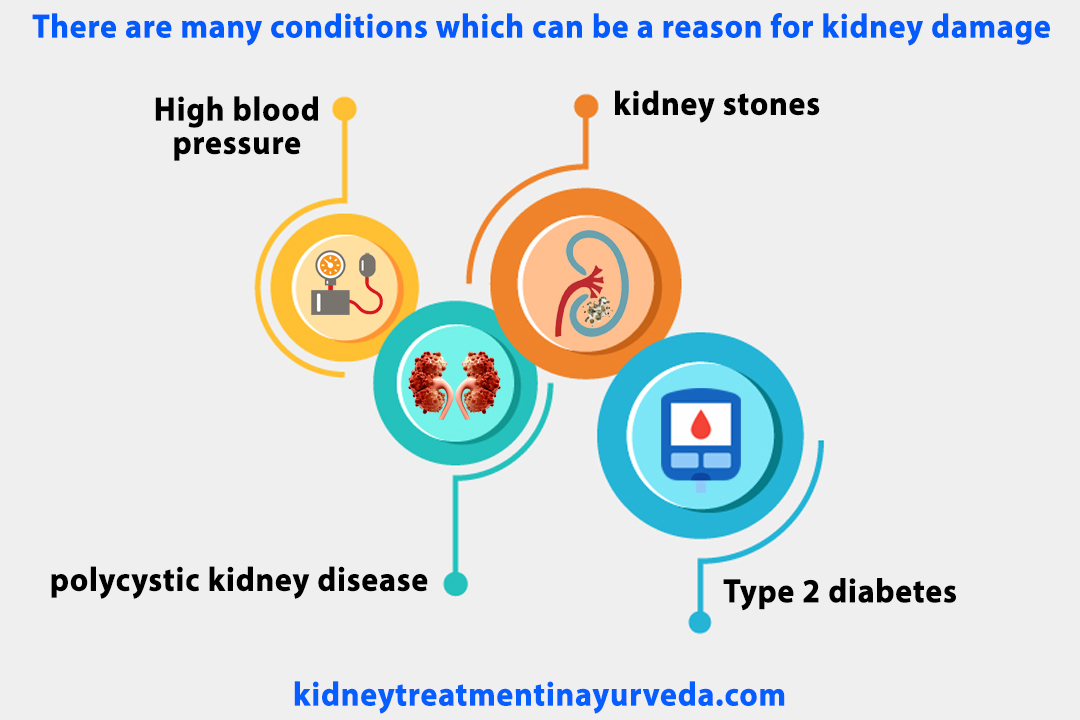
Those wellbeing conditions include:Diabetes - Uncontrolled glucose level in the body hurts the veins those inside the kidney.Blood weight - A hypertension level builds the danger of harm to the corridors and veins in the kidneys.Insufficient bloodstream to the kidneys - Kidneys need blood to dispense with poisons, and the absence of bloodstream influences it outlandish for the kidney to work legitimatelyGlomerulonephritis - It is an aggravation of the little channels of the kidney called glomerulusUrinary tract diseases - Blockage in the urinary tract makes the pee stream the regressive way causing contamination in the bladder.Diagnosing kidney failure The specialist would direct a progression of tests to decide how your kidneys are dispensing with liquids and recommend kidney failure treatment in Ayurveda.
These tests include:The eGFR: Refer as glomerular filtration rate; this test is done to know how well your kidneys are cleaning blood every second.Urine test: To know whether there is protein in your peeSerum creatinine: Creatinine is checked with the assistance of a blood test.
Creatinine is a concoction squander found in the blood and is dispensed with by your kidney.Why choose kidney failure treatment in Ayurveda?