





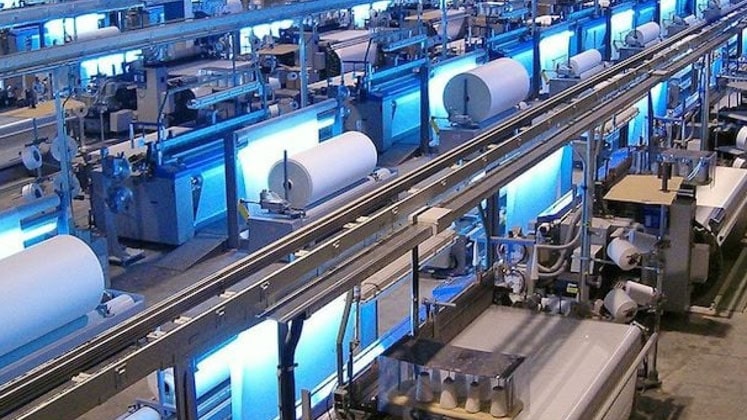
Global textile machinery market is projected to witness a CAGR of 5.39% during the forecast period 2025–2032, growing from USD 35.21 billion in 2024 to USD 53.59 billion in 2032.
The textile machinery market is undergoing significant transformations driven by technological advancements and evolving market dynamics. One of the most important trends is the increasing integration of automation and robotics in textile manufacturing. This enhances precision and dramatically increases the rates of production. Robotic systems are now increasingly used in different stages, starting from spinning to weaving, then dyeing and finishing, to eliminate human error and optimize efficiency. Another crucial development is predictive maintenance technologies.
Manufacturers can predict equipment breakdowns through data analytics and machine learning, allowing them to minimize downtime and allow operations to flow. This will increase the equipment’s lifespan and ensure continuity in supply chains by adhering to predetermined production. Matters of sustainability are also changing the industry’s approach. Already, some techniques, such as waterless dyeing, involve using supercritical carbon dioxide instead of water. Other examples of development toward a circular economy include the autonomous AI-enabled sorting systems for textile recycling, addressing the rising volumes of textile waste globally. There is a shift toward reshoring manufacturing operations. For example, U.S.-based companies are increasing domestic production to stabilize supply chains, a move influenced by recent geopolitical events and supply-chain disruptions.
This rising acceptance of locally fabricated textiles, fair production, and the integration of advanced machinery in local production units are also fueling market growth. The acceptance of markets embracing automation with predictive maintenance on the one hand and sustainable methods on the other has led toward a shift by market dynamics themselves to localized supply chain production; hence, the idea is to meet evolving consumer trends.
For instance, in October 2024, Lectra SA (Lectra Group) launched Valia Fashion, an AI-powered digital platform that streamlines apparel production, from order processing to fabric cutting. Developed for Industry 4.0, it streamlines material utilization, automates processes, and fosters better teamwork. Valia Fashion assists manufacturers, subcontractors, and brands in increasing their agility, reducing expenses, and achieving sustainability objectives.
Click: https://www.marketsandata.com/industry-reports/textile-machinery-market
Higher Focus on Automation and Sustainability to Fuel Market Growth
Integrating advanced technologies such as automation, robotics, and AI has significantly improved the efficiency of textile machinery. Automated systems improve the production rate, reduce human errors, and provide real-time operations monitoring, increasing the demand for modern textile equipment. Integration of IoT (Internet of Things) further provides predictive maintenance with minimal downtime and productivity improvement.
Increased consumer awareness and regulatory demands for environmentally friendly products are driving the demand for sustainable textile machinery. Waterless dyeing techniques and energy-efficient systems have emerged as the latest innovation in this sector to address the industry’s environmental footprint. The result has been a rising market for green technologies in the textile production industry.
For instance, in March 2024, Kyocera Corporation launched the ‘TRUE BLUE TEXTILE’ project based on a ‘Wear to Save Water’ fashion concept. To address environmental problems, including water pollution in the textile and clothing industries, Kyocera Corporation uses a new sustainable inkjet textile printer, “FOREARTH” which uses almost no water for textile printing.
Growing Demand for Unique Textiles, Including Technical Textiles to Fuel Market Growth
The expanding application of technical textiles in healthcare, automotive, and construction sectors has fueled the demand for specialized machinery. These textiles demand sophisticated manufacturing processes, which has led to investments in innovative machinery to meet industry-specific requirements, thus driving market growth. The increasing global demand for fashion, home textiles, and industrial fabrics has increased the textile machinery market. Emerging markets in Asia-Pacific and increased urbanization worldwide are spurring the need for efficient and high-capacity machinery to cater to growing consumer demands. Governments across the globe understand the growing demand for technical textiles and printing. The system allows them to cater to various industries with the right equipment and supplies. Hence, government institutions are funding companies that work in a similar direction.
For instance, in December 2024, India’s National Technical Textiles Mission’s Empowered Programme Committee approved 2 Start-Ups under the Grant for Research & Entrepreneurship across Aspiring Innovators in Technical Textiles (GREAT) scheme. It has also approved a grant to 6 education institutes to introduce courses in Technical Textiles under ‘General Guidelines for Enabling of Academic Institutes in Technical Textiles’. The authorized start-up projects concentrate on two important areas: medical textiles and sustainable textiles.
Higher Demand from E-Commerce to Make Garments and Apparel Segment Lead
Based on application, the garments and apparel segment leads the textile machinery market due to their rising global demand for fashion, home textiles, and industrial fabrics. The demand for efficient and high-capacity machinery in the Asia-Pacific emerging markets and increasing urbanization across the globe are driving the growth of textile machinery. The garment and apparel segment is the leading segment in the textile machinery market, significantly contributing to the global demand for textile products. This segment caters to various industries, such as fashion, sportswear, casual wear, and luxury clothing, and is, therefore, the largest consumer of textile machinery.
The primary driving forces behind this leadership are the fashion industry growth, an expanding world population, and increased disposable income, especially in developing economies. This segment also gains significance as it integrates advanced technologies such as CAD and 3D printing to create prototypes in less time and to make the production process more efficient. Further, the demand for customized garments has increased due to changing consumer tastes toward individualized and customized clothing, thereby bolstering the demand for modern textile machinery. Fast fashion trends and e-commerce growth have further fueled this segment by forcing manufacturers to speed up production and meet tight deadlines. The emerging economies in Asia-Pacific, including China, India, and Vietnam, are also important contributors, as they both produce and consume.
Asia-Pacific Leads in the Textile Machinery Market
Given its dominant position in textile production, Asia-Pacific spearheads the global textile machinery market. Several factors are driving this dominance. The region is home to the world’s largest textile-manufacturing countries, which include China, India, Bangladesh, and Vietnam. These have emerged as global hubs for apparel, home textiles, and industrial fabrics, countries rich in raw materials with lower labor costs and government policies to promote industries and exports. Rapid urbanization, population growth, and increased consumer expenditure in the Asia-Pacific have substantially boosted demand for textiles. There is thus an immense demand for sophisticated textile machinery.
The adoption of modern technologies such as air jets and rapier textile machinery has enabled manufacturers to produce goods at higher efficiency and to international quality standards in the region. Investments in infrastructure and developing textile parks also play a crucial role, as the former provides integrated support facilities for textile manufacturing. While innovation, cost advantages, and high production capacities drive this market, Asia-Pacific will continue to dominate it with exports, supplemented by increasing domestic consumption.
For instance, in October 2024, Picanol N.V. exhibited a new rapier weaving machine at ITMA Asia + CITME, launching for the first time. The four Picanol weaving machines on display were Supermax and Ultimax rapier weaving machines and an OmniPlus-i Connect air-jet weaving machine.
Future Market Scenario (2025–2032F)
- AI and Machine Learning are likely to drive predictive analytics and enhance quality control in textile manufacturing.
- Automation and robotics are anticipated to revolutionize production efficiency by minimizing human intervention in repetitive tasks.
- Digitalization, including 3D printing and CAD, will streamline design processes and improve supply chain management.
- Smart Textiles equipped with sensors and microchips will enable innovative applications in wearable technology and healthcare.
Report Scope
“Textile Machinery Market Assessment, Opportunities, and Forecast, 2018–2032F”, is a comprehensive report by Markets and Data, providing an in-depth analysis and qualitative and quantitative assessment of the current state of the global textile machinery market, industry dynamics, and challenges. The report includes market size, segmental shares, growth trends, opportunities, and forecast between 2025 and 2032. Additionally, the report profiles the leading players in the industry, mentioning their respective market share, business models, competitive intelligence, etc.
Mr. Vivek Gupta 5741 Cleveland street, Suite 120, VA beach, VA, USA 23462 Tel: +1 (757) 343-3258 Email: info@marketsandata.com Website: https://www.marketsandata.com




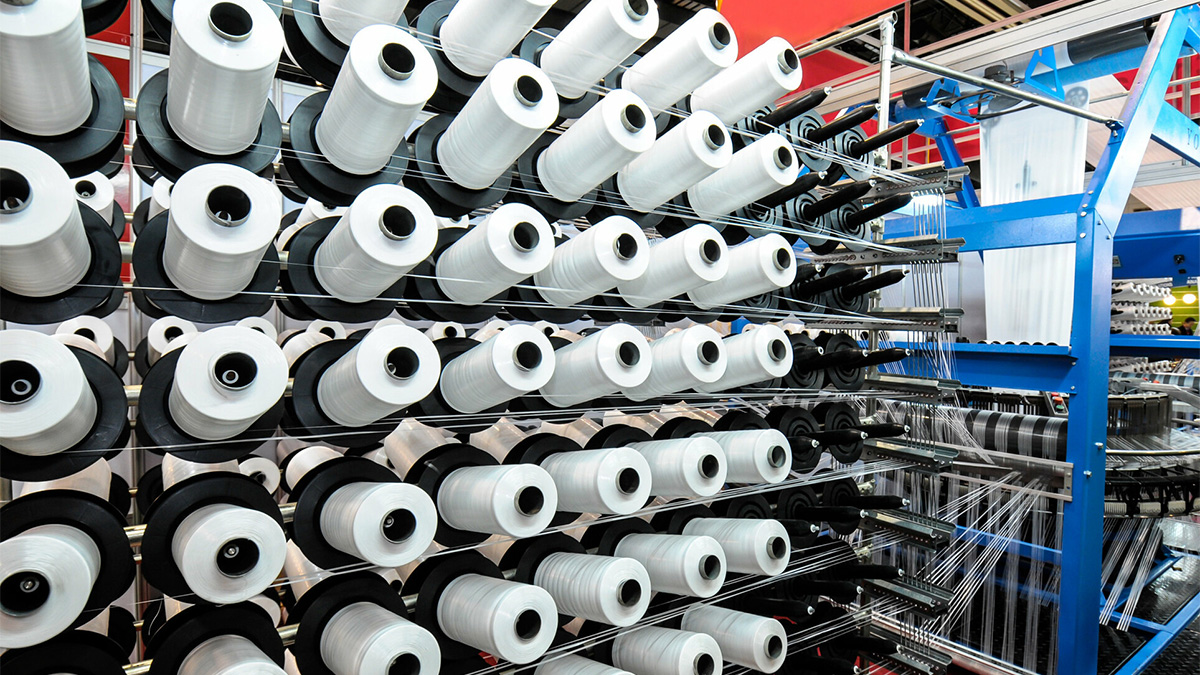
Textile Machinery are used in the fabrication and processing of fabrics, textiles, and other woven and non-woven materials.
They are used in processes such as spinning, weaving, warping, and dyeing.In the coming years there is an increasing technology progress for textile machinery in the regions of Germany, Italy, Japan and China that is expected to drive the market for more advanced textile machinery.
Growth in government budgets in the principal countries, increasing of textile fields expenditures, more-intense competition, launches in introducing new products, retrofitting and renovation of old technology, increasing adoption of textile machinery in developing countries will drive growth in global markets.Download FREE Sample of this Report @ https://www.grandresearchstore.com/report-sample/global-textile-machinery-2019-2024-258According to this study, over the next five years the Textile Machinery market will register a 6.5% CAGR in terms of revenue, the global market size will reach US$ 53940 million by 2024, from US$ 39460 million in 2019.
In particular, this report presents the global market share (sales and revenue) of key companies in Textile Machinery business, shared in Chapter 3.This report presents a comprehensive overview, market shares, and growth opportunities of Textile Machinery market by product type, application, key manufacturers and key regions and countries.This study considers the Textile Machinery value and volume generated from the sales of the following segments:Segmentation by product type: breakdown data from 2014 to 2019, in Section 2.3; and forecast to 2024 in section 11.7.Spinning MachineryKnitting MachineryWeaving MachineryFinishing MachineryOthersSegmentation by application: breakdown data from 2014 to 2019, in Section 2.4; and forecast to 2024 in section 11.8.Cotton Textile IndustryWoolen Textile IndustryLinen Textile IndustryOthersThis report also splits the market by region: Breakdown data in Chapter 4, 5, 6, 7 and 8.AmericasUnited StatesCanadaMexicoBrazilAPACThe report also presents the market competition landscape and a corresponding detailed analysis of the major vendor/manufacturers in the market.The key manufacturers covered in this report: Breakdown data in in Chapter 3.SaurerRieterToyota IndustriesSHIMA SEIKIJingwei Textile MachineryTruetzschler GroupVan de WieleMurata MachinerySavio MacchineCHTC Fong?sItemaStollLindauer DORNIER GmbHLakshmi Machine WorksOerlikonNingbo CixingQingdao Textile MachineryIn addition, this report discusses the key drivers influencing market growth, opportunities, the challenges and the risks faced by key manufacturers and the market as a whole.
It also analyzes key emerging trends and their impact on present and future development.Research objectivesTo study and analyze the global Textile Machinery consumption (value & volume) by key regions/countries, product type and application, history data from 2014 to 2018, and forecast to 2024.To understand the structure of Textile Machinery market by identifying its various subsegments.Focuses on the key global Textile Machinery manufacturers, to define, describe and analyze the sales volume, value, market share, market competition landscape, SWOT analysis and development plans in next few years.To analyze the Textile Machinery with respect to individual growth trends, future prospects, and their contribution to the total market.To share detailed information about the key factors influencing the growth of the market (growth potential, opportunities, drivers, industry-specific challenges and risks).To project the consumption of Textile Machinery submarkets, with respect to key regions (along with their respective key countries).To analyze competitive developments such as expansions, agreements, new product launches, and acquisitions in the market.To strategically profile the key players and comprehensively analyze their growth strategies.Get the Complete Report & TOC @ https://www.grandresearchstore.com/manufacturing-and-construction/global-textile-machinery-2019-2024-258Table of content2019–2024 Global Textile Machinery Consumption Market Report1 Scope of the Report1.1 Market Introduction1.2 Research Objectives1.3 Years Considered1.4 Market Research Methodology1.5 Economic Indicators1.6 Currency Considered2 Executive Summary2.1 World Market Overview2.1.1 Global Textile Machinery Consumption 2014–20242.1.2 Textile Machinery Consumption CAGR by Region2.2 Textile Machinery Segment by Type2.2.1 Spinning Machinery2.2.2 Knitting Machinery2.2.3 Weaving Machinery2.2.4 Finishing Machinery2.2.5 Others2.3 Textile Machinery Consumption by Type2.3.1 Global Textile Machinery Consumption Market Share by Type (2014–2019)2.3.2 Global Textile Machinery Revenue and Market Share by Type (2014–2019)2.3.3 Global Textile Machinery Sale Price by Type (2014–2019)2.4 Textile Machinery Segment by Application2.4.1 Cotton Textile Industry2.4.2 Woolen Textile Industry2.4.3 Linen Textile Industry2.4.4 Others2.5 Textile Machinery Consumption by Application2.5.1 Global Textile Machinery Consumption Market Share by Application (2014–2019)2.5.2 Global Textile Machinery Value and Market Share by Application (2014–2019)2.5.3 Global Textile Machinery Sale Price by Application (2014–2019)CONTACT US:276 5th Avenue, New York , NY 10001,United StatesInternational: (+1) 646 781 7170 / +91 8087042414Email: help@grandresearchstore.comFollow Us On linkedin :- https://www.linkedin.com/company/grand-research-store/
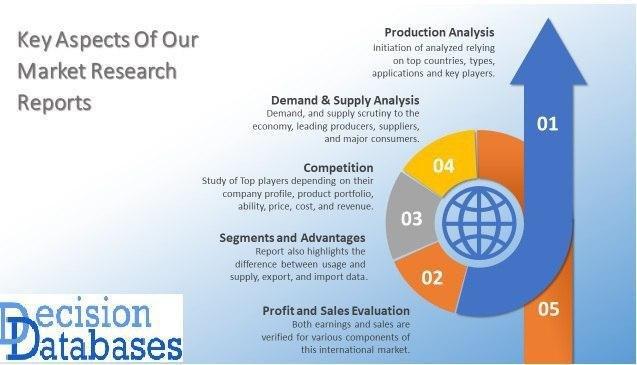
The statistical surveying report on the global Textile Machinery Market has been presented by using professional or expert knowledge through standard and modified research approaches and forecasts.
The yearly forecast and predication for the years 2020 to 2025 have been enclosed by the report along with comprehensive analysis for all market segments and regions.
The statistical data derived from authentic resources and assisted by industry experts.
It likewise assesses the market by evaluating market elements, including drivers, restraints, opportunities, threats, challenges, growth prospects, and other market elements.
The global textile machinery market report presents a complete research-based study of the industry including details such as company shares, forecast data, in-depth analysis and an outlook of the market on a worldwide platform.
Get FREE Sample Report Copy @ https://www.decisiondatabases.com/contact/download-sample-46328 According to this study, over the next five years, the Textile Machinery market will register a 6.4% CAGR in terms of revenue, the global market size will reach $ 57460 million by 2025, from $ 44780 million in 2019.