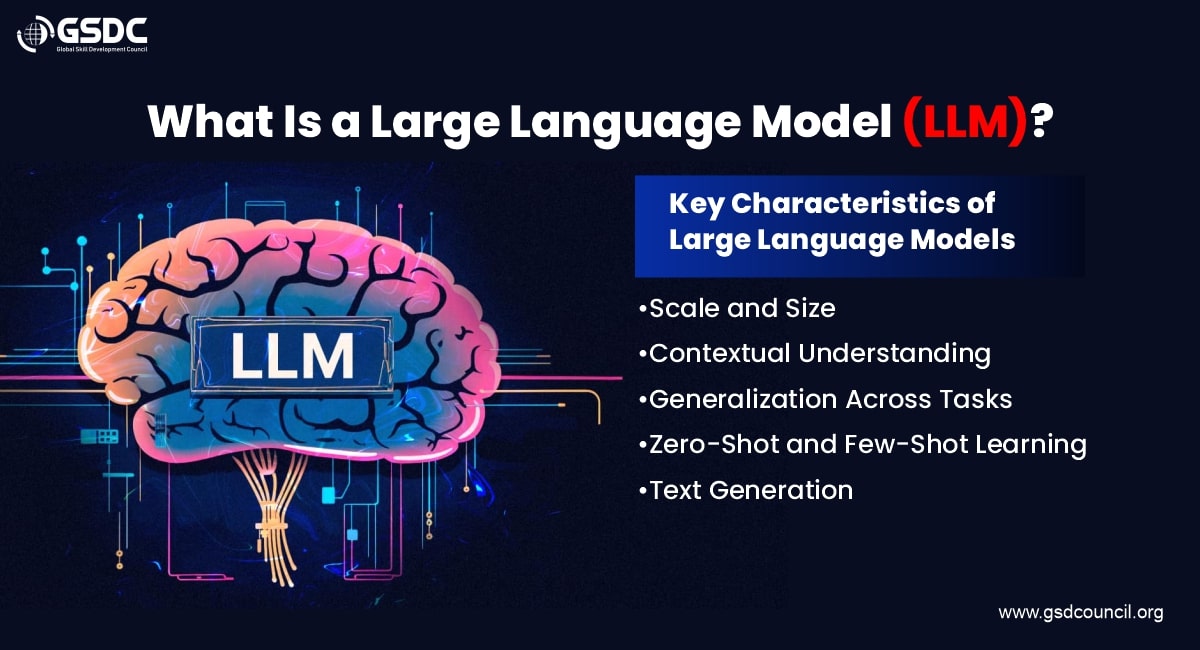


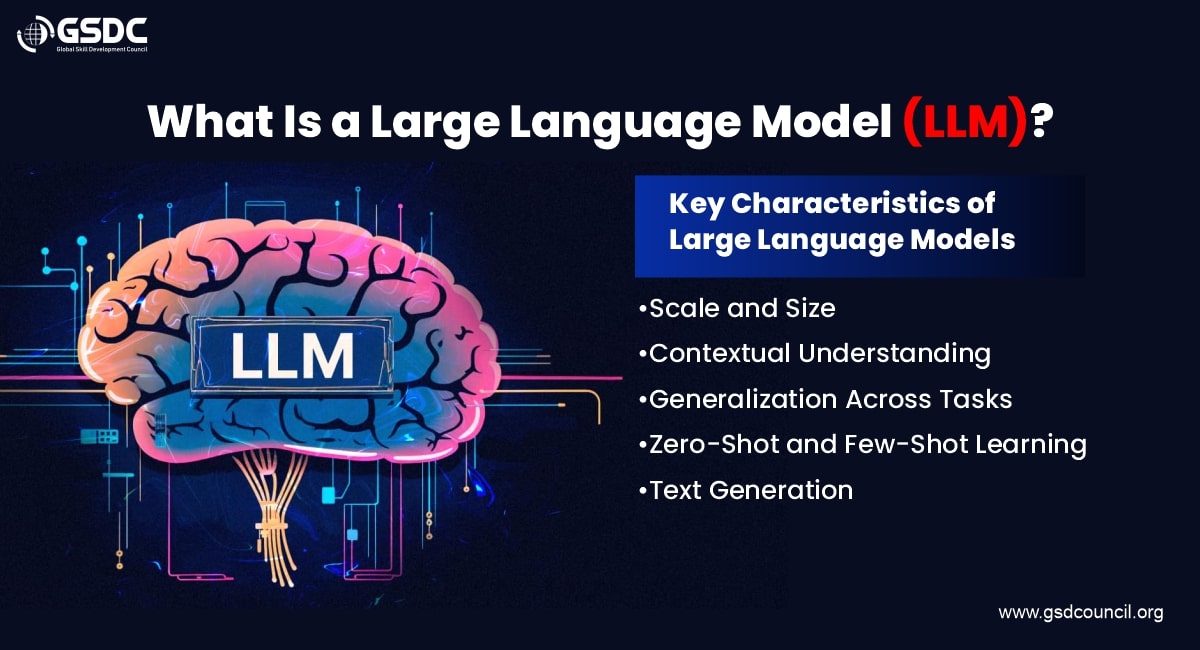
In the rapidly changing world of artificial intelligence, Large Language Models (LLMs) have emerged as some of the most sophisticated tools for understanding and generating human language. These models, built on advanced deep learning techniques, are trained on vast amounts of text data, enabling them to produce language that can be strikingly similar to human communication.
LLMs are changing the way we interact with technology, offering capabilities that range from casual conversation to complex technical writing. But what makes these models so powerful, and how do they work? Let's explore the fascinating world of LLMs to understand their key characteristics and other factors.
What are Large Language Models (LLMs)?
LLMs, or Large Language Models, are higher-order versions of artificial intelligence. A product of deep learning processes, these language models are designed to understand and generate human languages. Here, Generative AI Professional Certification will help you more to understand how LLMs are used for different purposes.
These are ultra-sophisticated text processors that get trained on stacks of data from books, websites, articles, and many more. It is this training that has enabled them to identify patterns and understand context, hence their ability to produce text which is often nearly indistinguishable from that of a human.
Use Cases of Large Language Models (LLMs)
Language generation capabilities: these range from writing emails, blog posts, and other mid-to-long-form content based on prompts that can then be refined and polished. One very good example of that is retrieval-augmented generation, or RAG.
Summarization of content: long articles, news stories, research reports, corporate documentation, and even customer history summarized into thorough texts, tailored in length to the output format.
AI assistants: chatbots that answer customer queries, execute backend processes, and provide elaborate information in natural language, within an integrated self-service customer care solution.
Code generation: This helps developers build apps, point out errors in code, find security problems in several languages, and even translate from one to another.
Sentiment Analysis: It analyzes text for the customer's tone, hence understanding customer feedback at scale and helping with brand reputation management.
Language Translation: It provides wider coverage to organizations across languages and geographies, with fluent translations and multilingual capabilities.
Future Advancements in Large Language Models
ChatGPT brought the LLMs to the fore and activated speculation and heated debate on what the future might look like. As LLM continues to grow and enhance their prompts of natural language there is much concern for what their advancements would do to the job market. LLMs will successfully develop the ability to change or replace employers in certain fields.
If used effectively, LLMs can increase productivity and process efficiency, but this has posed ethical questions for its use in mankind's society.