


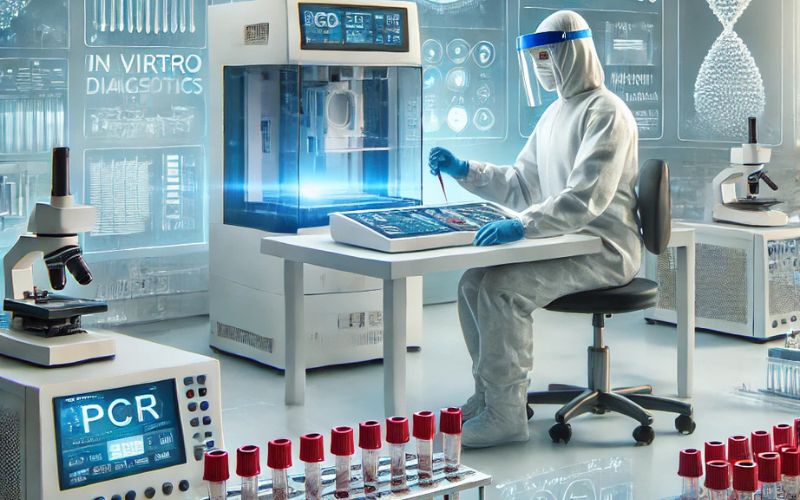
United States in vitro diagnostics market size was valued at USD 32.84 billion in 2022, and is expected to reach USD 56.43 billion in 2030, with a CAGR of 7% for the forecast period between 2023 and 2030F. United States in vitro diagnostics (IVD) market is a critical component of the country’s healthcare sector, playing a pivotal role in disease detection, monitoring, and management. IVD refers to medical devices, reagents, and systems used to analyze biological specimens such as blood, urine, tissue, and other bodily fluids outside the body. These tests aid in diagnosing diseases, guiding treatment decisions, and monitoring patient health, contributing to better patient outcomes and cost-effective healthcare.
Growth and Advancements in the U.S. In Vitro Diagnostics Market
The United States in vitro diagnostics (IVD) market has experienced notable growth in recent years, driven by factors such as the increasing prevalence of chronic diseases like diabetes, cardiovascular conditions, and cancer. The aging population further fuels demand, as elderly individuals require frequent medical monitoring and diagnostic testing. Additionally, technological advancements and automation have enhanced efficiency, accuracy, and turnaround times, contributing to market expansion.
The highly competitive landscape includes both established industry leaders and innovative startups, with research and development focusing on personalized medicine, point-of-care testing, and companion diagnostics.
Rising Incidence of Infectious Diseases
The growing prevalence of infectious diseases in the United States has significantly influenced the IVD market. Factors such as globalization, increased international travel, population density, and evolving disease patterns have contributed to this rise. Consequently, there is a greater demand for rapid and accurate diagnostic tests to quickly identify infectious agents and enable timely treatment.
In response, the industry has developed advanced diagnostic technologies and assays capable of detecting a broad range of pathogens, including viruses, bacteria, and fungi. These innovations have helped healthcare providers diagnose diseases efficiently, implement early interventions, and control outbreaks more effectively.
The increasing awareness of early detection and disease surveillance has fueled investment in research and development, leading to more sensitive, specific, and user-friendly diagnostic tools. For instance, in July 2022, Fujirebio Inc.’s Lumipulse G β-Amyloid Ratio (1-42/1-40) test became the first FDA-cleared laboratory diagnostic test for assisting in Alzheimer’s disease diagnosis.
Innovations in Diagnostic Instruments
The U.S. IVD market has witnessed significant technological advancements in diagnostic instruments, transforming healthcare practices. Cutting-edge innovations have improved the accuracy, speed, and accessibility of diagnostic tests. Miniaturization and automation have led to the rise of portable and point-of-care devices, enabling rapid and precise diagnostics at patients’ bedsides.
The integration of artificial intelligence (AI), digital health technologies, and telemedicine has expanded data analysis capabilities and remote patient monitoring, optimizing disease management. Additionally, advancements in molecular diagnostics, such as nucleic acid testing and next-generation sequencing (NGS), support personalized medicine, allowing for tailored treatments based on individual patient profiles.
The adoption of IVD instruments continues to grow due to technological progress. Devices like Roche Diagnostics’ cobas 4800 and Cepheid’s GeneXpert have significantly contributed to this trend.
In December 2022, Abbott introduced Navitor™, a transcatheter aortic valve implantation (TAVI) system, designed for minimally invasive treatment of severe aortic stenosis in high-risk patients. Similarly, in November 2021, Roche launched the cobas 5800 System, a molecular testing platform for diagnosing infectious diseases like respiratory infections and sexually transmitted diseases.
Advancements in Oncology Diagnostics
Oncology is projected to be one of the fastest-growing segments in the U.S. IVD market due to the rising incidence of cancer. The most common types include breast, prostate, colorectal, lung, stomach, and liver cancers. Additionally, cancer-causing viruses such as HPV, Hepatitis B, and Hepatitis C are responsible for approximately 20% of cancer-related deaths. Over the next two decades, the number of cancer cases in the U.S. is expected to increase by 70%, further driving demand for early-stage diagnosis through clinical testing.
As a result, the adoption of in vitro diagnostics for cancer detection is on the rise. In August 2022, the FDA approved Divitum Tka, a blood-based biomarker assay for monitoring metastatic breast cancer (MBC). Likewise, in November 2020, the FDA authorized the FoundationOne Liquid CDx test, a next-generation sequencing (NGS)-based liquid biopsy tool for detecting multiple cancer biomarkers.
Impact of COVID-19 on the IVD Market
The COVID-19 pandemic significantly increased demand for IVD kits and reagents, emphasizing the importance of in vitro diagnostics in detecting and managing infectious diseases. The outbreak accelerated the development of rapid and highly accurate diagnostic tests for SARS-CoV-2, reinforcing the role of IVD in pandemic control efforts.
The pandemic also influenced industry dynamics, with more companies prioritizing home-based COVID-19 testing solutions. In 2021, the FDA emphasized the importance of molecular diagnostic self-tests, prompting companies like BATM Advanced Communications Ltd. to introduce COVID-19 self-test kits for early disease detection.
The emergency-use authorization (EUA) of new COVID-19 tests positively impacted market growth. For example, in May 2021, Kroger announced the availability of Abbott’s BinaxNOW COVID-19 Ag Card for self-testing. Similarly, in April 2021, Abbott expanded the distribution of BinaxNOW COVID-19 Ag Self-Test to major retailers such as Walgreens, Walmart, and CVS Pharmacy.
Additionally, in January 2020, Quest Diagnostics partnered with Memorial Hermann Health System to enhance diagnostic services across 21 hospital laboratories in Houston, further strengthening the U.S. IVD market.
U.S. In Vitro Diagnostics Market Report Scope
The “United States In Vitro Diagnostics Market Assessment, Opportunities, and Forecast (2016-2030F)” by Markets and Data offers a comprehensive analysis of the IVD market in the U.S., examining market dynamics, segmental shares, industry challenges, and growth opportunities. The report provides qualitative and quantitative insights, covering trends from 2016 to 2030F, with an in-depth evaluation of COVID-19’s impact, technological advancements, and competitive intelligence on leading industry players.
Click here for full report- https://www.marketsandata.com/industry-reports/united-states-in-vitro-diagnostics-market
Latest reports-
https://www.marketsandata.com/industry-reports/agrivoltaics-market
https://www.marketsandata.com/industry-reports/acetic-acid-market
Contact
Mr. Vivek Gupta5741 Cleveland street,Suite 120, VA beach, VA, USA 23462Tel: +1 (757) 343–3258Email: info@marketsandata.comWebsite: https://www.marketsandata.com