


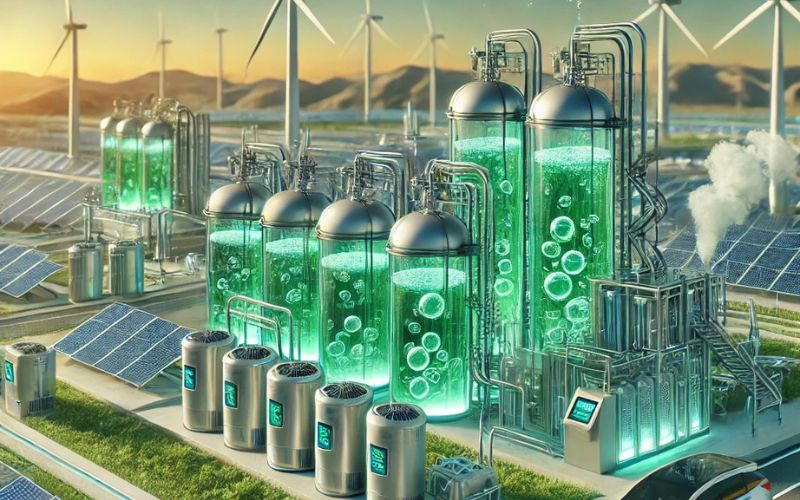
United States green hydrogen market size was valued at USD 440 million in 2022, and is projected to reach USD 1272.9 million by 2030, growing at a CAGR of 14.2% from 2023 to 2030. Energy is critical in worldwide development, economies, and sustainability, fueling industries, transportation, and meeting daily requirements. Nonetheless, the growing energy demand raises environmental apprehensions linked with greenhouse gas emissions and the consequences of climate change.
Click here for full report- https://www.marketsandata.com/industry-reports/united-states-green-hydrogen-market
Green Hydrogen: A Clean Energy Solution for a Sustainable Future
Green hydrogen presents an environmentally friendly, carbon-neutral alternative across industries, transportation, and everyday applications, helping to curb greenhouse gas emissions and support global sustainability goals.
Growth of the Green Hydrogen Market in North America
North America, the world’s second-largest hydrogen market, has set a target of producing 50 million tons (MT) of hydrogen annually by 2050. Currently, nearly 99% of U.S. hydrogen production relies on fossil fuels, with only 1% generated through electrolysis. However, the United States is making significant investments in green hydrogen through initiatives such as the H2Global program and clean hydrogen hubs, fostering the sector’s expansion.
In the U.S., green hydrogen adoption is accelerating as a key solution for achieving carbon neutrality. This growth is driven by cost reductions, technological advancements, supportive policies, and increased awareness. Government agencies, businesses, and individuals are increasingly turning to green hydrogen to cut emissions, improve air quality, and enhance energy independence.
Green Hydrogen: The Fuel of the Future
The Paris Agreement under the United Nations Framework Convention on Climate Change (UNFCCC) seeks to limit global warming to below 2°C. In line with this, the United States has pledged to achieve net-zero emissions by 2050.
Green hydrogen is critical for meeting global net-zero targets, particularly in heavy industries, long-haul transportation, shipping, and aviation. To support this transition, the Inflation Reduction Act (IRA) offers the 45V Hydrogen Production Tax Credit (PTC), providing incentives of up to USD 3 per kg for low-emission hydrogen projects. The program includes four tiers, with the lowest tier offering USD 0.6 per kg for hydrogen production with higher greenhouse gas intensity.
A major milestone in green hydrogen development is the St. Gabriel Green Hydrogen project in Louisiana, a collaboration between Plug Power and Olin Corporation. Set to launch by the end of 2023, this facility will produce 15 tons of green hydrogen daily, supplying the fuel cell market. Plug Power aims to scale up to 500 tons per day by 2025 and 1,000 tons per day by 2028, helping reduce 4.3 million metric tons of CO2 emissions annually in North America.
Technological Advancements Driving Green Hydrogen Growth
The United States is a key player in the North American hydrogen market, which is projected to supply 9 million tons per annum (MTPA). By 2025, the region is expected to lead with 2.8 MTPA of low-carbon hydrogen production. The Inflation Reduction Act of 2022 further supports clean energy initiatives, encouraging both public and private sector investment in emission-free hydrogen production.
Innovations in electrolyzer technology have boosted efficiency and lowered production costs, making green hydrogen more competitive with traditional energy sources. As a fossil fuel-free alternative, green hydrogen offers a promising path for decarbonization. The U.S. Department of Energy’s (DOE) Hydrogen Shot initiative aims to reduce green hydrogen production costs to USD 1 per kg, increasing clean hydrogen usage fivefold. The goal is to achieve 50 MT of annual production by 2050, with intermediate targets of 10 MT by 2030 and 20 MT by 2040.
New Fortress Energy, using Plug Power’s PEM electrolysis technology, aspires to become North America’s largest green hydrogen producer, with an initial 50 tons per day (TPD) capacity, scalable to 500 megawatts (MW).
Government Support for Green Hydrogen Expansion
The U.S. government is actively promoting green hydrogen development through policy initiatives, financial incentives, and research funding. These efforts accelerate adoption, positioning hydrogen as a critical clean energy solution while enhancing U.S. energy security by reducing reliance on fossil fuel imports.
The DOE’s National Clean Hydrogen Strategy and Roadmap outlines three key objectives:
- Focusing on strategic, high-impact hydrogen applications
- Achieving a USD 1 per kg clean hydrogen cost by 2031
- Establishing at least four regional clean hydrogen hubs
Additionally, the Inflation Reduction Act (August 2022) offers hydrogen production tax credits of up to USD 3 per kg over ten years, creating lucrative investment opportunities.
Green Hydrogen’s Expanding Market Viability
With declining renewable energy costs, green hydrogen is becoming increasingly viable and cost-effective for integration across multiple industries. It serves as an energy storage solution, converting excess renewable power into hydrogen for later use in electricity generation. Currently, North America’s operational clean hydrogen supply stands at approximately 740 KTPA, with a growing share being low-carbon hydrogen.
By 2022, the region had 33 active green hydrogen facilities with a combined production capacity of 691,000 tons per annum (TPA). A key project is the Texas-based green hydrogen plant by Air Products and AES Corporation, which will produce 220 tons of hydrogen daily, utilizing 1.4 GW of wind and solar energy. The total project cost is USD 4 billion.
The H2USA initiative, spearheaded by the DOE, is strengthening hydrogen infrastructure for transportation and energy applications. As of 2023, the United States had 59 operational retail hydrogen stations, with 50 more planned or under construction. Green hydrogen’s increasing adoption across industries is further driving market expansion.
Infrastructure Development Paving the Way for Growth
The rapid expansion of hydrogen infrastructure, including storage, transportation, and refueling stations, is enabling widespread adoption of green hydrogen as a low-emission energy solution. Countries worldwide are investing in large-scale hydrogen production facilities and developing hydrogen ecosystems for diverse applications, such as urban transport systems using hydrogen-powered buses and commercial vehicles.
In the U.S., the Infrastructure Investment and Jobs Act (IIJA) has allocated USD 8 billion to establish four Regional Clean Hydrogen Hubs (H2Hubs). The Midwest Alliance for Clean Hydrogen (MachH2) is applying for DOE funding to create a regional clean hydrogen production and distribution hub, contributing to the national clean hydrogen network and accelerating decarbonization efforts.
Market Challenges and Opportunities
Impact of COVID-19
The COVID-19 pandemic disrupted the U.S. energy sector, reducing transportation fuel demand and leading to industrial slowdowns. However, the government and private sector responded by increasing investments in green hydrogen infrastructure, research, and development. Renewable energy adoption, particularly in solar and wind power, surged during this period, bolstering the green hydrogen industry.
The DOE’s Hydrogen Program, led by EERE and HFTO, has played a crucial role in shaping the U.S. hydrogen economy. Companies like CF Industries and ThyssenKrupp have accelerated hydrogen technology development, partnering on the Donaldsonville Green Hydrogen Project in Louisiana, which will produce 20,000 tons of green ammonia annually—one of North America’s largest such facilities.
Impact of the Russia-Ukraine War
The Russia-Ukraine conflict has heightened concerns over energy security, underscoring the risks of fossil fuel dependence. The crisis has motivated the U.S. and other nations to prioritize renewable energy and explore alternatives like green hydrogen.
To strengthen domestic energy resilience, the U.S. has expanded green hydrogen investments, including the Sauk Valley Green Hydrogen Plant in Illinois. This facility will produce 52 tons of green hydrogen annually and store 400 kg on-site, ensuring a stable renewable energy supply during geopolitical disruptions.
Market Report Scope
The “United States Green Hydrogen Market Assessment, Opportunities, and Forecast, 2016-2030” by Markets and Data provides a comprehensive analysis of the current state, industry trends, and challenges in the U.S. green hydrogen sector. It covers market size, segmental performance, growth trends, COVID-19 and geopolitical impacts, investment opportunities, and forecasts for 2023-2030. The report also profiles leading industry players, detailing market share, business strategies, and competitive landscape.
Latest reports-
https://www.marketsandata.com/industry-reports/agrivoltaics-market
https://www.marketsandata.com/industry-reports/acetic-acid-market
Contact
Mr. Vivek Gupta5741 Cleveland street,Suite 120, VA beach, VA, USA 23462Tel: +1 (757) 343–3258Email: info@marketsandata.comWebsite: https://www.marketsandata.com