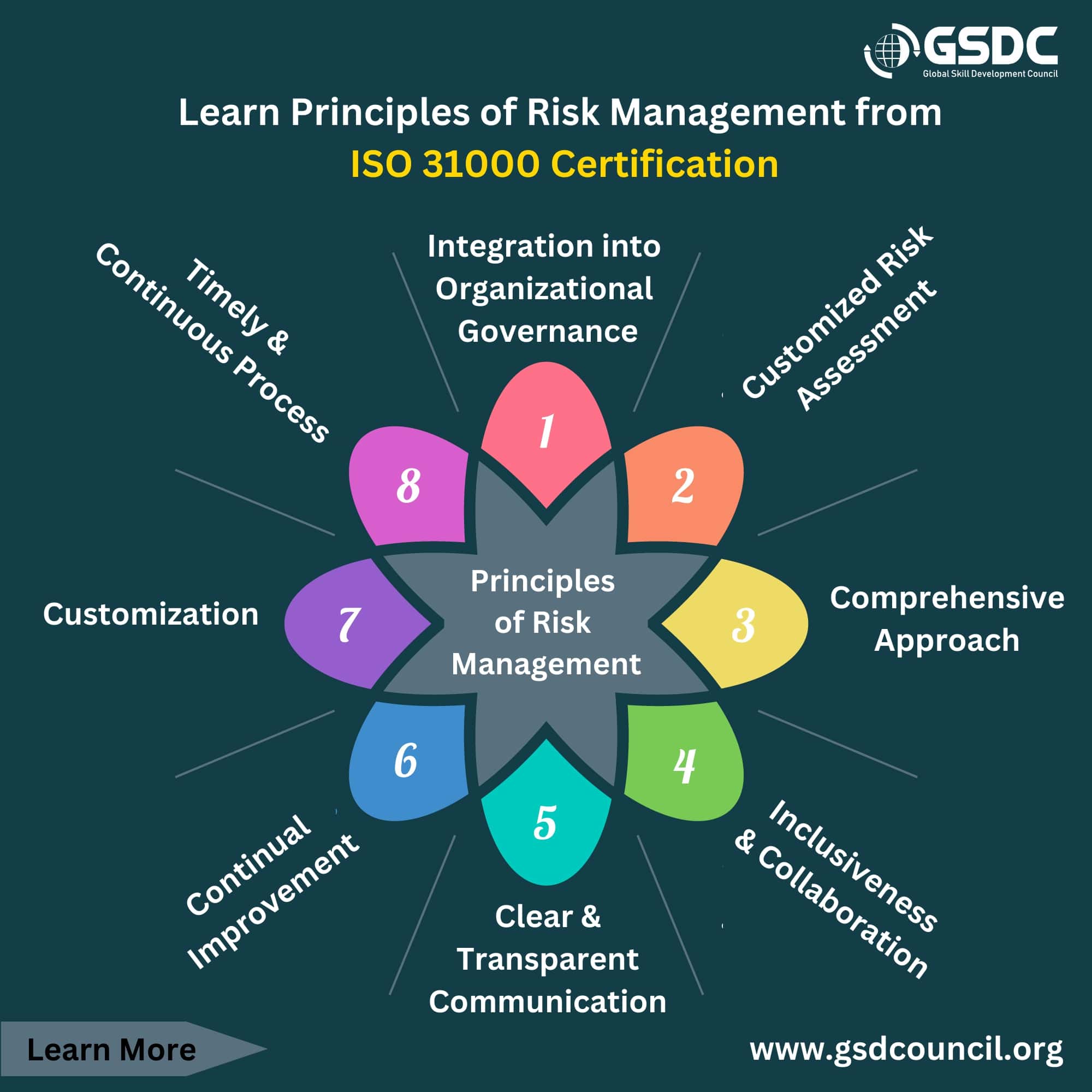


ISO 31000 Certification is not just a credential—it’s a career accelerator for risk professionals looking to stay ahead of industry trends, enhance decision-making skills, and contribute to organizational success.
In the intricate and fast-changing business environment of today, effective decision-making is essential for the success of organizations. Risks, uncertainties, and disruptions may affect operations, profitability, and long-term sustainability. This is where ISO 31000 Certification comes into the picture.
The ISO 31000 Risk Management Certification gives risk assessment and decision-making a methodical process, enabling organizations to make well-informed, data-driven, and risk-conscious decisions. Let us see how the certification influences decision-making across different levels in an organization.
1. Encourages Risk-Based Decision-Making
ISO 31000 professionals are equipped to incorporate risk aspects into each and every decision. Rather than trusting intuition or previous experience only, decision-makers:
· Spot potential risks and opportunities
· Evaluate the likelihood and impact of risks
· Formulate strategies to address uncertainties
Organizations minimize losses, improve efficiency in operations, and maximize potential for growth through the application of risk-based thinking.
2. Promotes Active Risk Identification and Management
Companies that embrace ISO 31000 risk management standards build an active risk culture. Decision-makers can:
· Identify risks ahead of their escalation
· Put preventive measures in place
· Prepare contingency plans against possible disruptions
This proactive strategy reduces unforeseen difficulties and maintains business continuity.
3. Improves Data-Driven Decision-Making
ISO 31000 Certification provides professionals with the skills to interpret risk data to inform decision-making, including:
· Using qualitative and quantitative risk assessment methods
· Using statistical and financial models for risk assessment
· Using data analytics for improved forecasting and planning
Data-driven insights enable organizations to make evidence-based and strategically informed decisions, minimizing uncertainty in business operations.
4. Enhances Strategic Planning and Business Growth
ISO 31000 risk management approach supports organizational goals, such that decision-makers:
· Include risk analysis in strategic planning
· Pinpoint possible roadblocks in business growth
· Assess risks associated with investment and market entry
By embracing ISO 31000 principles, companies can make informed, wise strategic decisions that contribute to long-term growth.
5. Enhances Crisis Management and Response
In a volatile business climate, economic downturns, cybersecurity attacks, or supply chain breakdowns are always possible. ISO 31000-trained risk managers:
· Implement risk response plans
· Formulate business continuity plans
· Facilitate swift and effective crisis management
This translates into minimal downtime, less financial loss, and greater organizational resilience.
6. Encourages a Culture of Accountability and Transparency
When a company implements ISO 31000, decision-making is structured, transparent, and accountable. Leaders and managers:
· Adhere to a standardized risk assessment methodology
· Maintain compliance with regulatory requirements of the industry
· Involve stakeholders in decision-making
This improves corporate governance, stakeholders' confidence, and ethical business operations.
7. Enhances Adaptability to Emerging Risks
With technological changes and evolving global scenarios at a fast pace, emerging risks are always there. ISO 31000 Risk Manager Certification empowers professionals with:
·
Risk adaptation strategies for emerging threats
·
Agile decision-making methods
·
Best practices for reacting to disruptive innovations
· This enables companies to remain competitive and flourish in uncertain climates.
· The Competitive Advantage of ISO 31000 in Decision-Making
Companies that incorporate ISO 31000 risk management principles into their decision-making processes have a strategic advantage. By promoting risk awareness, data-driven analysis, and forward-thinking planning, companies can:
· Make wiser, better-informed decisions
· Reduce dangers and take advantage of opportunities
· Improve resilience and long-term durability
ISO 31000 Certification isn't all about risk managing—it's about making smarter business decisions that deliver growth, stability, and achievement in a turbulent world.