
The integration of artificial intelligence (AI) in finance has transformed the industry landscape, revolutionizing everything from algorithmic trading to risk management and customer service. As AI continues to reshape the financial sector, there is an increasing demand for professionals equipped with the right skills to harness its potential. This has led to the emergence of specialized courses that bridge the gap between AI technology and financial expertise.
Why AI in Finance?
AI’s ability to analyze vast amounts of data, identify patterns, and make predictions has positioned it as a game-changer in finance. Here are some key areas where AI is making an impact:
Algorithmic Trading: AI-powered algorithms execute trades at lightning speed, leveraging real-time data and sophisticated models to maximize returns.
Risk Management: Machine learning models analyze historical data and market trends to predict potential risks, helping institutions mitigate losses.
Fraud Detection: AI systems identify unusual patterns in transactions, flagging potential fraud in real time.
Personalized Financial Services: Chatbots and recommendation engines enhance customer experience by providing tailored advice and solutions.
Portfolio Optimization: AI tools optimize asset allocation by evaluating risk and return metrics more effectively than traditional methods.
Given the transformative potential of AI in these areas, acquiring skills in AI for finance has become essential for aspiring and current financial professionals.
What Makes AI in Finance Courses Unique?
AI in finance courses stands out because they combine two traditionally distinct disciplines: technology and finance. These programs aim to provide a solid foundation in:
Machine Learning Fundamentals: Covering algorithms like linear regression, decision trees, neural networks, and reinforcement learning.
Financial Concepts: Focusing on areas such as quantitative finance, portfolio theory, and risk management.
Programming Skills: Teaching languages like Python and R, which are widely used in both AI and financial modeling.
Big Data and Analytics: Training students to process and analyze massive datasets using tools like Hadoop and Spark.
Practical Applications: Incorporating real-world case studies and projects, such as building trading models or designing robo-advisors.
Machine Learning in Finance by IIQF (Indian Institute of Quantitative Finance)
Overview: This course bridges the gap between AI technology and quantitative finance, focusing on practical applications in trading, risk management, and portfolio optimization.
Highlights: Includes Python-based hands-on projects, machine learning techniques like natural language processing (NLP) for financial data, and insights into algorithmic trading.
Who It’s For: Aspiring quantitative analysts and finance professionals.
Benefits of Taking AI in Finance Courses
Career Advancement: These courses equip you with in-demand skills, making you a valuable asset in the competitive job market.
Practical Knowledge: Most programs include hands-on projects that simulate real-world scenarios, enhancing your problem-solving abilities.
Networking Opportunities: Joining a reputed program gives you access to a community of professionals, mentors, and industry experts.
Staying Relevant: As AI adoption grows, staying updated with the latest trends and technologies ensures long-term career growth.
Cross-Disciplinary Expertise: Combining AI and finance knowledge sets you apart from peers, opening doors to unique roles like financial data scientist or AI risk analyst.
How to Choose the Right Course
With numerous options available, selecting the right course can be challenging. Here are some factors to consider:
Relevance to Career Goals: Choose a program that aligns with your career aspirations, whether it’s trading, risk management, or customer analytics.
Level of Expertise: Ensure the course matches your current skill level—beginner, intermediate, or advanced.
Accreditation and Reputation: Opt for courses offered by reputed institutions or platforms.
Flexibility: Look for programs with flexible schedules if you’re a working professional.
Hands-On Learning: Prioritize courses that offer practical projects and case studies.
Conclusion
AI in finance courses are more than just an educational pursuit; they are a gateway to becoming a pivotal player in the future of finance. By equipping yourself with the knowledge and skills offered by these programs, you can stay ahead in a rapidly evolving industry and make significant contributions to financial innovation.
Whether you’re an aspiring financial engineer, a data scientist, or a seasoned professional looking to upskill, there has never been a better time to dive into the world of AI in finance. Choose the right course, embrace the learning journey, and position yourself for success in this exciting and dynamic field.




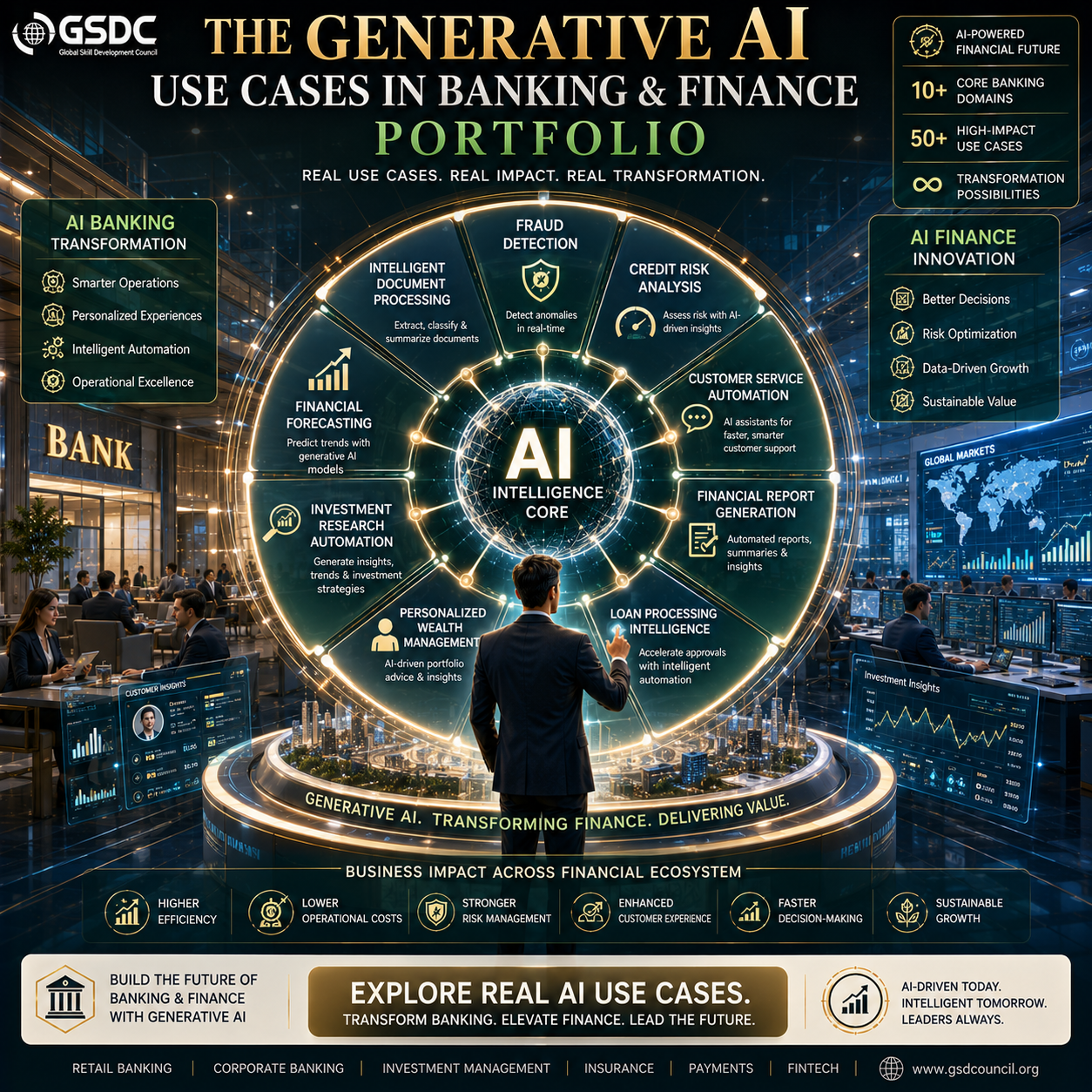
Generative AI Banking & Finance is moving pretty fast into being a strategic asset across banking and financial services. It’s helping in all sorts of places, like smoothing out customer conver