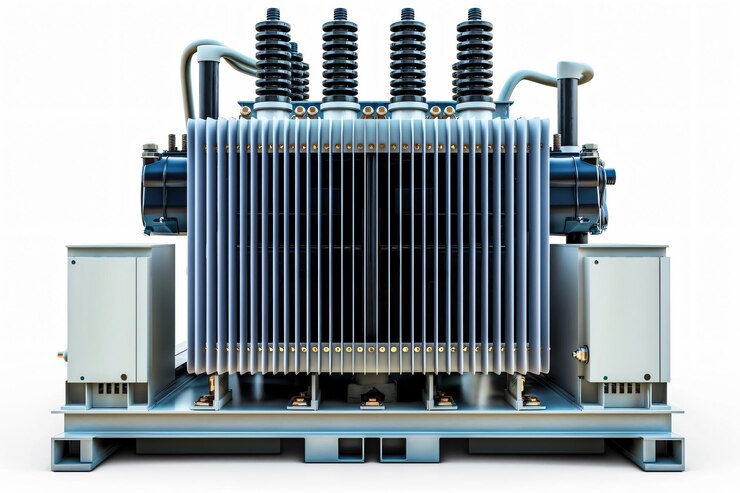



The distribution transformers market in Saudi Arabia is expected to grow at a CAGR of 5.15% between 2025 and 2032, increasing from USD 0.75 billion in 2024 to USD 1.12 billion by 2032.
This growth is primarily driven by the country’s transition toward renewable energy, advancements in smart grid technology, increasing urbanization, and a stronger emphasis on energy efficiency. The rapid expansion of cities and a rising population are putting pressure on existing power infrastructure, requiring utilities to modernize and expand their distribution networks—leading to greater demand for distribution transformers.
Additionally, the Saudi government’s commitment to incorporating renewable energy into the national grid is boosting demand for transformers in solar and wind energy projects. Policies focusing on carbon neutrality, renewable energy integration, and grid modernization will continue to create growth opportunities in the sector.
For instance, in October 2024, Saudi Arabia set a target of generating at least 50% of its electricity from renewable sources by 2030. The country aims to expand its total energy capacity to 130 GW, with 58.7 GW from solar and 40 GW from wind power. This investment in energy infrastructure is expected to drive the demand for distribution transformers in the coming years.
Click – https://www.marketsandata.com/industry-reports/saudi-arabia-distribution-transformers-market
Urbanization and Industrialization Driving Market Expansion
Saudi Arabia is rapidly urbanizing and industrializing, necessitating expanded and improved power grid infrastructure. As cities grow, electricity demand rises, increasing the need for distribution transformers to ensure a stable and reliable power supply. Significant investments in residential, commercial, and public infrastructure further contribute to the demand for modern distribution transformers.
Industries such as manufacturing, mining, and processing require continuous and stable electricity supply. The push for industrial automation and energy-intensive operations has increased demand for distribution transformers. Additionally, large-scale industrial facilities need transformers with different voltage levels to ensure uninterrupted power distribution across various processes.
The government’s National Investment Strategy (NIS) aims to boost GDP and investment in key sectors, including oil and gas, metals and mining, transportation, ICT, and renewable energy. This strategy highlights Saudi Arabia’s commitment to urbanization and industrial development, further driving demand for distribution transformers.
Government Investments in Energy Diversification and Smart Grid Development
The Saudi government is actively investing in renewable energy infrastructure to improve the reliability and efficiency of electricity distribution. The country is moving towards a diversified energy mix, incorporating solar, wind, and hydroelectric power. Distribution transformers play a crucial role in transferring electricity from renewable sources to end users. Large-scale solar farms require transformers to transmit power over long distances, and expanding the national power grid to underserved areas necessitates further transformer installations.
Additionally, Saudi Arabia is implementing smart grid technology to modernize its electricity distribution network. Smart grids, which include advanced distribution transformers, help manage energy fluctuations, optimize power distribution, and improve grid stability. The integration of renewable energy sources into the power grid is also facilitated by smart grids.
According to the Saudi Minister of Energy, 40% of the country’s electricity distribution network will be automated by 2025, up from the current 32%. The rising adoption of smart grid technology is expected to drive the demand for distribution transformers in the near future.
Single-Phase Distribution Transformers Leading the Market
Single-phase distribution transformers are expected to dominate the market during the forecast period. As Saudi Arabia works to modernize its power grid and integrate smart technologies, the demand for advanced distribution transformers is growing. Additionally, as the government prioritizes industrial expansion to diversify its economy, manufacturing sectors require more reliable electricity supply, driving demand for single-phase transformers.
Moreover, the integration of renewable energy sources into the national grid is increasing the use of single-phase distribution transformers across various applications. Given these developments, this segment is set to maintain its market dominance.
Riyadh: The Leading Regional Market
Riyadh holds the largest share of Saudi Arabia’s distribution transformers market. The city’s expanding population, commercial growth, and industrial projects are driving an increasing demand for reliable power infrastructure. Additionally, Riyadh is at the forefront of Saudi Arabia’s smart city initiatives, integrating digital and smart infrastructure into urban planning, further boosting transformer demand.
Several large-scale development projects in Riyadh, including King Abdullah Financial District (KAFD), Riyadh Metro, and New Riyadh City, are driving the need for expanded electrical infrastructure. This, in turn, increases demand for distribution transformers in the region.
Future Market Trends (2025–2032)
- Saudi Arabia’s focus on improving energy efficiency and reducing transmission losses will drive demand for high-performance distribution transformers.
- The growing emphasis on renewable energy integration will enhance the significance of distribution transformers.
- Ongoing upgrades to the electrical grid will increase reliability and efficiency, fostering market growth.
- The modernization of power infrastructure will be crucial for meeting Saudi Arabia’s growing electrification needs, further propelling the demand for distribution transformers.
Report Scope
The report, “Saudi Arabia Distribution Transformers Market Assessment, Opportunities, and Forecast (2018-2032F),” by Markets and Data, provides an in-depth analysis of the current market landscape, industry dynamics, and key challenges. It includes market size estimates, segmental analysis, growth trends, and future opportunities. The report also profiles major industry players, detailing their market share, business models, and competitive landscape.
Contact
Mr. Vivek Gupta5741 Cleveland street,Suite 120, VA beach, VA, USA 23462Tel: +1 (757) 343–3258Email: info@marketsandata.comWebsite: https://www.marketsandata.com