





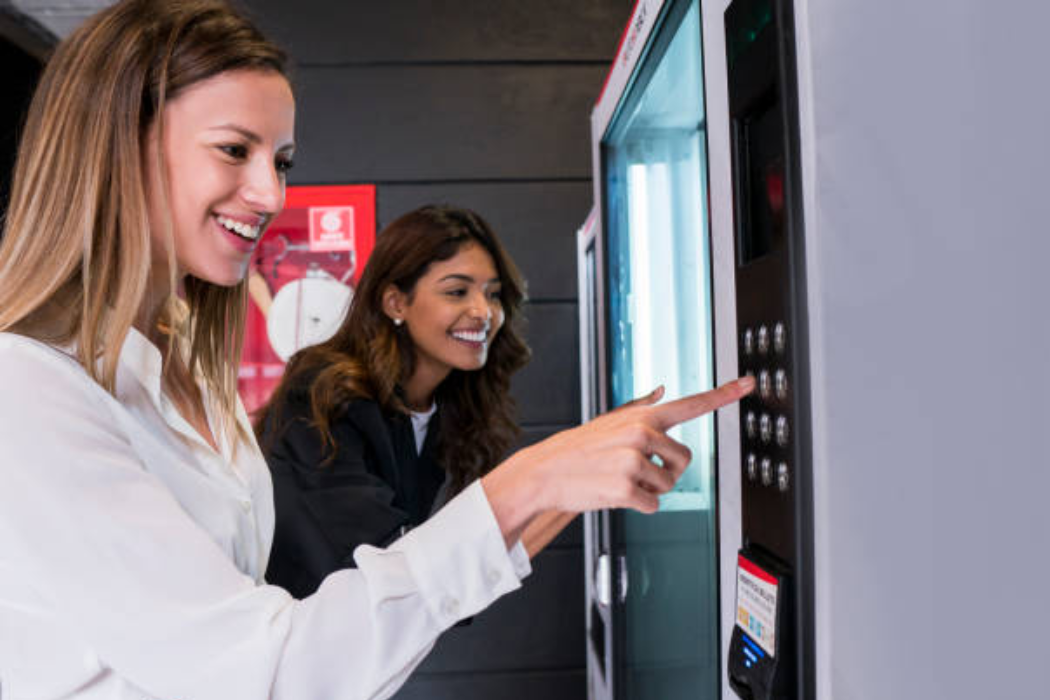
For businesses looking to provide food and snack options for employees, the choice often comes down to micro-markets vs. traditional cafeterias. While both offer convenient meal solutions, micro-markets stand out as the more cost-effective and efficient option. In this blog, we’ll explore why micro-markets are the smarter financial choice for businesses.
Lower Operational Costs
Self-Service Model:
Unlike cafeterias, which require a full staff, including cooks, servers, and cashiers, micro-markets operate on a self-service model, eliminating labor costs and making them more economical.
Minimal Infrastructure:
Cafeterias demand expensive kitchen equipment, ongoing maintenance, and compliance with health regulations. Micro-markets require only shelves, refrigeration units, and a self-checkout kiosk, reducing setup and operational expenses.
Reduced Food Waste
Bulk Food Waste in Cafeterias:
Cafeterias often prepare food in bulk, leading to significant waste when items go unsold.
Smart Inventory Management:
Micro-markets use inventory tracking technology to monitor sales and restock only what’s needed, reducing food waste and maximizing profits.
Increased Product Variety Without Extra Costs
Diverse Offerings:
Micro-markets provide a wide range of food options, including fresh, healthy, and specialty snacks, without the costs of cafeteria menu planning and preparation.
Customization:
Businesses can tailor product selections based on employee preferences without hiring a chef or managing food production.
Convenience and Employee Satisfaction
24/7 Availability:
Unlike cafeterias, which have fixed hours, micro-markets operate 24/7, allowing employees to grab a meal or snack anytime.
Quick and Hassle-Free:
Self-checkout kiosks provide a seamless purchasing experience, eliminating the need for employees to wait in long lines during peak hours.
Scalable and Space-Saving Solution
Compact Design:
Unlike cafeterias, which require a large dedicated space, micro-markets fit into small areas, making them ideal for businesses with limited square footage.
Easy Expansion:
Businesses can start small and scale up as needed without incurring major renovation costs.
Conclusion: Why Micro-Markets Make More Sense
When evaluating cost, convenience, and efficiency, micro-markets clearly emerge as the superior choice over traditional cafeterias. They provide a cost-effective, low-maintenance, and highly flexible solution while ensuring employees have access to a variety of food options at all times. By eliminating high operational costs and reducing food waste, micro-markets offer a smart, scalable alternative that meets modern business needs. If you want an affordable, efficient way to provide food options, switching to a micro-market is a strategic move.



Christopher Lafata is well-known for his clear and organized way of making businesses run better. Christopher Lafata's main goal is to help businesses make their systems easier to use so that teams
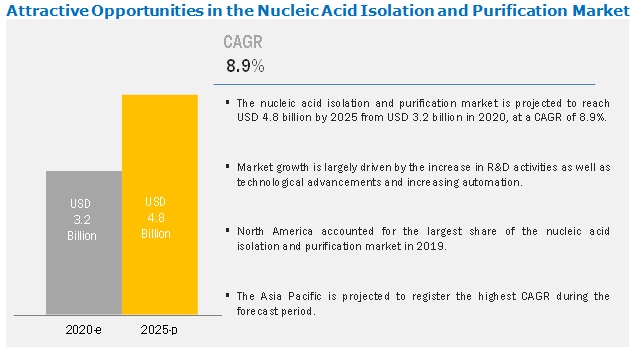
The growth of this market can mainly be attributed to the increasing R activities as well as technological advancements and increasing automation.
On the other hand, the high cost of automated instruments is expected to hinder the growth of the market.The Nucleic Acid Isolation and Purification Market is projected to reach USD 4.8 billion by 2025 from USD 3.2 billion in 2020, at a CAGR of 8.9% during the forecast period.Ask for PDF Brochure:- https://www.marketsandmarkets.com/pdfdownloadNew.asp?id=229978287Objectives of the StudyTo define, describe, and forecast the global nucleic acid isolation and purification market by product, method, type, application, end user, and regionTo provide detailed information about the major factors influencing the market growth (such as drivers, restraints, and opportunities)To analyze micromarkets with respect to individual growth trends, prospects, and contributions to the overall nucleic acid isolation and purification marketTo analyze market opportunities for stakeholders and provide details of the competitive landscape for key playersTo forecast the size of the nucleic acid isolation and purification market in four major regions along with their respective key countries (North America, Europe, Asia Pacific, and the Rest of the World)To profile the key players in the global nucleic acid isolation and purification market and comprehensively analyze their core competencies and market sharesTo track and analyze competitive developments such as product launches, expansions, and R activities of the leading players in the nucleic acid isolation and purification marketMarket Segmentation: -On the basis of product, the DNA isolation and purification market has been segmented into kits, reagents, and instruments.
The kits segment accounted for the largest share of the global nucleic acid isolation and purification market in 2019.On the basis of application, the global nucleic acid isolation market is segmented into diagnostics, drug discovery & development, personalized medicine, agriculture & animal research, and other applications.On the basis of type, the global DNA isolation and purification market is segmented into plasmid DNA isolation and purification, total RNA isolation and purification, circulating nucleic acid isolation and purification, genomic DNA isolation and purification, messenger RNA isolation and purification, microRNA isolation and purification, PCR cleanup, and other nucleic acid isolation and purification types.Regional Analysis: -In 2019, North America accounted for the largest share of the nucleic acid isolation and purification market, followed by Europe.
The large share of this region can be attributed to factors such as significant R spending in biotechnology and pharmaceutical companies, the large size of the biotechnology industry, technological advancements, and government support in the region.Request for Sample Pages : – https://www.marketsandmarkets.com/requestsampleNew.asp?id=229978287Key Players: -QIAGEN N.V. (Netherlands), Thermo Fisher Scientific (US), and F. Hoffmann-La Roche Ltd. (Switzerland) are the key players operating in the nucleic acid isolation market.