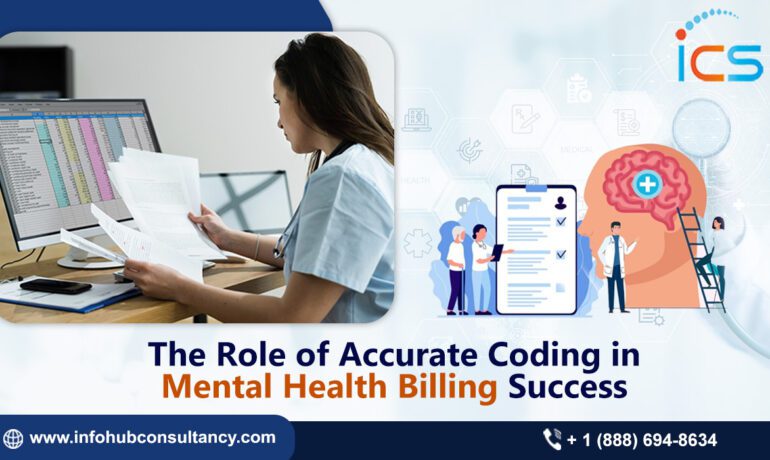

The Role of Accurate Coding in Mental Health Billing Success
Accurate coding is the cornerstone of successful mental health billing. With a growing demand for mental health services, providers must navigate the complexities of billing and coding to ensure optimal reimbursement and compliance. This blog explores the critical role of accurate coding in mental health billing success, offering insights into its impact, challenges, and future trends.
Table of Contents
Introduction to Mental Health Billing
Mental health billing involves a detailed process of submitting claims to insurance payers for services rendered. Unlike general medical billing, mental health billing encompasses unique challenges due to the complexity of services provided, diverse patient needs, and ever-changing regulations. Key aspects include the use of Current Procedural Terminology (CPT) and International Classification of Diseases (ICD-10) codes to represent services and diagnoses accurately. Without proper coding practices, providers risk delayed reimbursements, claim denials, and potential compliance issues.
The Fundamentals of Medical Coding
Medical coding translates clinical documentation into standardized codes. These codes are vital for describing diagnoses, treatments, and procedures, forming the foundation for reimbursement.
Accurate coding ensures claims are processed efficiently, reducing the risk of rejections and facilitating timely reimbursements.
The Role of Precise Coding in Revenue Cycle Management
Precise coding plays a crucial part in ensuring a well-maintained revenue cycle. Here’s how it influences financial outcomes:
ICS ensures HIPAA compliance and boosts reimbursements by up to 30%, allowing providers to focus on care. Accurate coding is vital for financial stability, especially for practices with tight budgets.
Compliance and Legal Considerations
Compliance in mental health billing goes beyond financial implications. Regulatory bodies like the Centers for Medicare & Medicaid Services (CMS) and the Health Insurance Portability and Accountability Act (HIPAA) enforce stringent rules to protect patient data and ensure ethical billing practices.
Regular training and updates on coding regulations help practices stay compliant while mitigating the risk of audits and legal consequences.
Enhancing Accuracy in Mental Health Billing
To achieve accuracy in mental health billing, providers can adopt the following practices:
The Future of Mental Health Billing
The landscape of mental health billing is evolving with advancements in technology and an increasing emphasis on mental health awareness. Future trends include:
Adapting to these trends will empower mental health providers to enhance efficiency and remain competitive.
Conclusion
Accurate coding is the backbone of mental health billing success, influencing everything from compliance to financial outcomes. By adopting robust practices, leveraging technology, and staying informed about industry trends, providers can enhance efficiency and maintain compliance. Partnering with Info Hub Consultancy Services, a top Outsource medical coding and billing services provider, ensures access to expert solutions tailored to your mental health practice’s needs.
Contact ICS today to streamline your mental health billing and achieve optimal reimbursement outcomes. Your success starts with us!