

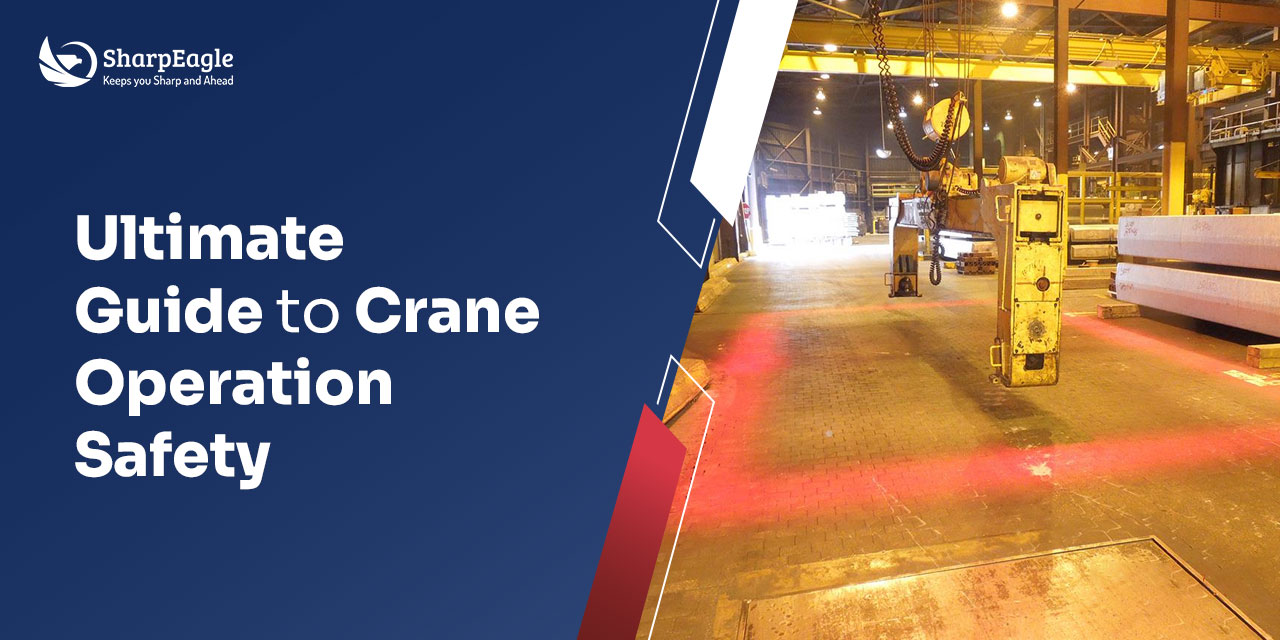
Cranes play a pivotal role in construction and industrial operations - these machines often operate in complex environments where safety is paramount. Crane operation safety policies not only protect workers but also enhance productivity and reduce costly disruptions.
At SharpEagle, we offer innovative safety solutions through which businesses can address critical safety challenges effectively.
In this guide we’ll explore the best practices, common hazards, and cutting-edge solutions to improve safety during crane operations.
Introduction to Crane Operation Safety
Cranes are indispensable tools for lifting and moving heavy loads across construction and industrial sites. However, improper handling of these powerful machines can result in severe accidents, injuries, and even fatalities.
According to the U.S. Bureau of Labor Statistics (BLS), between 2011 and 2021, an average of 44 crane-related fatalities occurred annually in the United States alone. A significant portion of those were caused by crane collapses, contact with power lines, and improper load handling.
Furthermore, the Occupational Safety and Health Administration (OSHA) reports that violations related to crane safety frequently rank among the most cited in workplace inspections. These statistics underscore the critical need for stringent safety measures and comprehensive training programs.
By prioritizing crane operation safety, businesses can protect lives, adhere to regulatory compliance, and ensure seamless and efficient workflows, ultimately fostering a safer and more productive work environment.

Common Hazards in Crane Operations
Understanding the risks associated with crane operations is critical for implementing effective safety measures. Cranes are powerful machines, but they can pose significant dangers when hazards are not properly managed.
Let’s explore the most common hazards and their potential impact:
Blind Spots
Restricted visibility is one of the leading causes of accidents in crane operations. Operators often struggle to see nearby personnel or equipment, increasing the likelihood of collisions. Blind spots can be particularly dangerous in crowded or high-activity areas where the risk of inadvertent contact is elevated.
Overloading
Exceeding the crane's load capacity is a common yet avoidable hazard. Overloading can lead to catastrophic consequences, such as the crane tipping over or structural failure. These incidents not only endanger the operator but pose significant risks to on-ground staff and surrounding equipment too.
Mechanical Failures
Cranes are complex pieces of machinery that require regular maintenance to function safely and efficiently. Neglecting routine inspections or ignoring minor issues can result in mechanical failures, such as hoist malfunctions, broken cables, or faulty brakes. These failures can lead to dropped loads, equipment damage, and serious injuries.
Environmental Factors
External conditions, such as adverse weather or uneven terrain, can severely compromise crane stability. High winds, heavy rain, or icy surfaces increase the risk of accidents by reducing traction and making it harder to maintain control. Uneven ground can cause the crane to tilt, further jeopardizing its stability. Read more