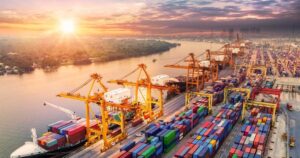
Technological innovations are at the heart of the transformation of Australian ports into smart hubs of global commerce. These advancements not only improve the efficiency of port operations but also contribute to sustainability, safety, and the reduction of costs. The integration of cutting-edge technologies such as the Internet of Things (IoT), Artificial Intelligence (AI), Blockchain, and automation are playing key roles in the development of Australia's smart ports market.
The Australia Smart Ports Market is estimated to be valued at USD 1.73 Bn in 2024 and is expected to reach USD 7.46 Bn by 2031, growing at a compound annual growth rate (CAGR) of 23.22% from 2024 to 2031.
One of the most significant technological drivers is the Internet of Things (IoT). IoT-enabled devices and sensors are transforming how goods are tracked within ports. These sensors monitor a wide range of activities, such as container movements, fuel consumption, cargo handling, and environmental conditions. For example, in the Port of Melbourne, IoT sensors help track container locations in real-time, improving cargo flow and reducing bottlenecks. This enables port authorities to optimize space usage and reduce congestion, which in turn decreases wait times for vessels.
Competitive overview of Australia Smart Ports Market
Hutchison Ports Australia, DP World Australia, P&O Ports, Port of Newcastle, Port of Adelaide, BMT Group, Port of Darwin, Svitzer Australia, Kongsberg Maritime, Siemens Australia are the major players.
Artificial Intelligence (AI) is another technology that is revolutionizing Australia Smart Ports Market AI algorithms are used to predict congestion, optimize vessel scheduling, and automate processes such as container loading and unloading. For instance, AI-based systems at the Port of Brisbane predict when ships are likely to arrive and adjust the schedule of cranes and dock workers accordingly. This reduces idle time and helps port authorities plan operations more efficiently.
Blockchain technology is also emerging as a critical tool for enhancing transparency and security in port operations. By using blockchain, Australian ports can offer a decentralized and tamper-proof system for tracking shipments, ensuring that each step in the cargo's journey is verified and recorded. This minimizes the risk of fraud and delays. Blockchain also allows for seamless data sharing among various stakeholders, including logistics providers, shippers, and port authorities, facilitating smoother communication and reducing operational friction.
Furthermore, automation plays an increasingly important role in the efficient functioning of Australia's ports. Automated guided vehicles (AGVs) and automated cranes are being used to move containers from ships to shore and vice versa. These automated systems not only speed up operations but also reduce human error and enhance safety by minimizing direct human interaction with heavy machinery.
Environmental sustainability is another key area where technology is driving change. Smart ports are using technologies such as energy-efficient systems, renewable energy sources, and waste reduction technologies to reduce their environmental impact. For example, the Port of Sydney has incorporated solar-powered systems to reduce its reliance on conventional electricity sources, contributing to a greener, more sustainable port.
In summary, the integration of IoT, AI, blockchain, and automation into Australian ports is a game-changer. These technologies are enabling ports to enhance operational efficiency, reduce environmental impacts, and increase competitiveness. The future of Australia’s smart ports market is bright, with these innovations shaping the future of global trade.
Get this Report in Japanese Language: オーストラリアのスマートポート市場
Get this Report in Korean Language: 호주스마트포트시장
Author Bio:
Money Singh is a seasoned content writer with over four years of experience in the market research sector. Her expertise spans various industries, including food and beverages, biotechnology, chemical and materials,