






In today’s fast-paced digital economy, intellectual property (IP) has become one of the most valuable assets for businesses. From proprietary software and algorithms to brand identity and trade secrets, IP drives innovation and competitive advantage. However, many businesses still rely on outdated, traditional IP valuation methods that fail to capture the true worth of these intangible assets—leading to missed opportunities, inaccurate reporting, and undervaluation in strategic decisions.
Limitations of Traditional IP Valuation Methods
Traditional IP valuation approaches—like the cost method, market method, and income method—have long been used for estimating IP value. While useful in certain contexts, they often fall short when applied to modern, data-driven businesses.
- Cost-Based Approach: This method estimates value based on the cost to create or replace the IP. It ignores future earning potential and market demand, making it unsuitable for high-growth digital IP like software or algorithms.
- Market-Based Approach: This relies on comparable transactions. However, IP deals are often private, and suitable comparables are rare or non-existent, especially for niche or cutting-edge technologies
- Income-Based Approach: It projects future income from IP but struggles to account for uncertainty, risk, and the rapidly changing market conditions that define the tech and digital economy.
Modern Business Challenges Demand Modern Valuation
Today’s IP landscape is more complex than ever. Consider companies whose value lies predominantly in digital assets—like machine learning models, SaaS platforms, or user data algorithms. Traditional valuation models don’t account for:
- Network effects
- Scalability of digital assets
- Real-time usage data
- Market disruption potential
Modern businesses need valuation methods that reflect the dynamic, forward-looking nature of digital IP, not static backward-looking metrics.
The Need for Data-Driven, Context-Aware IP Valuation
To make informed decisions—whether for licensing, mergers, fundraising, or compliance—businesses require tools that provide a nuanced and current view of IP value. This means leveraging real-time data, advanced analytics, industry-specific benchmarks, and predictive modeling to produce valuations that are both defensible and insightful.
Conclusion
Traditional IP valuation methods are no longer sufficient for today’s innovation-led, intangible-driven economy. Businesses need smarter, data-enabled tools that evolve with the speed of technology. DataAlchemist offers advanced IP valuation solutions tailored to modern industries, helping companies unlock the true value of their intellectual assets with accuracy and confidence.




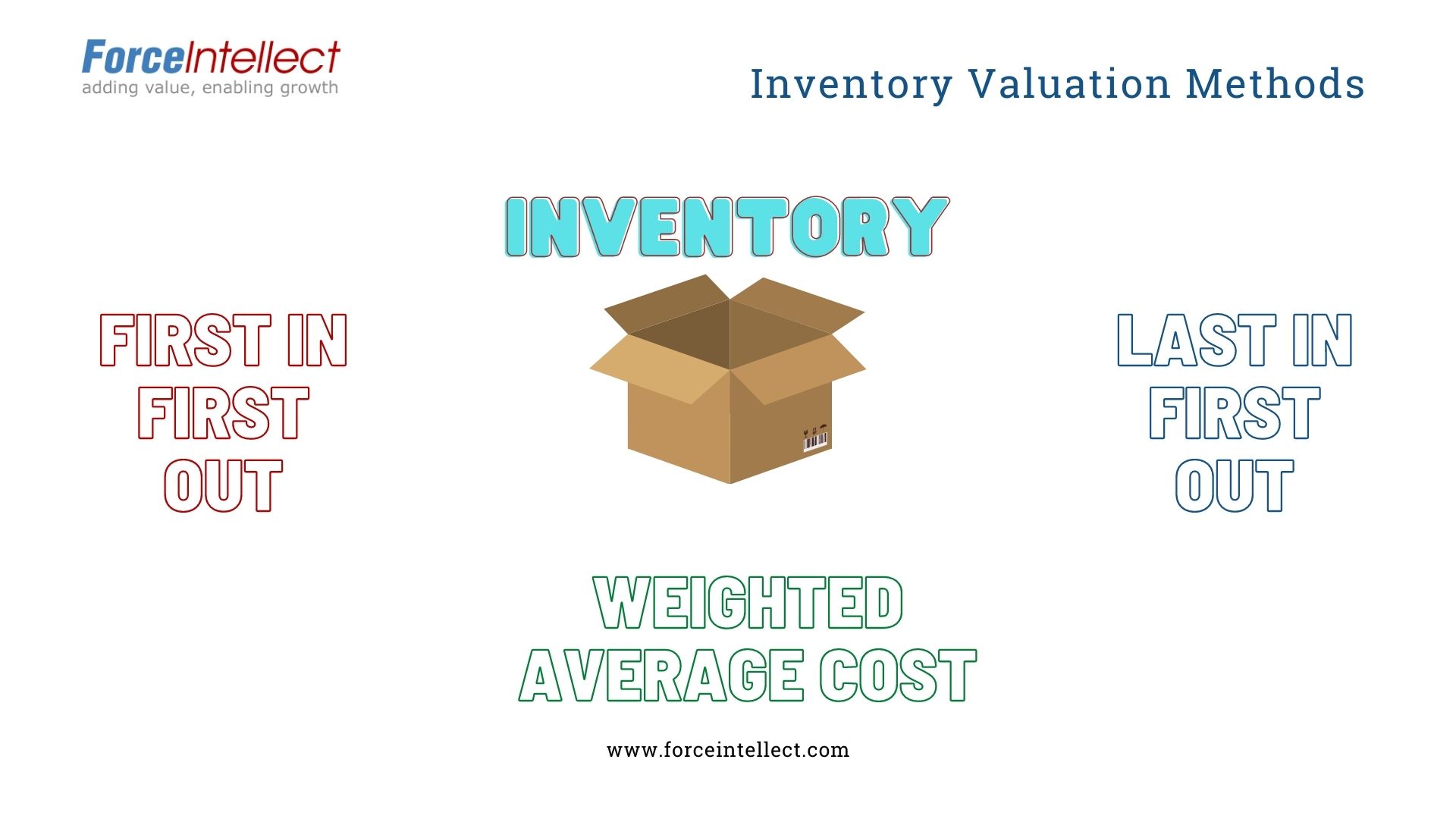
Inventory Valuation is the monetary value or financial worth of your closing inventory.
There are 3 popular Inventory Valuation Methods: First in First Out (FIFO), Last In First Out (LIFO) & Weighted Average Cost (WAC).
Choose an inventory valuation method that suits your organization’s financial goals.https://www.forceintellect.com/2020/11/06/inventory-valuation-methods/