Introduction
With the advancement of eCommerce, companies are always looking for ways to improve the customer experience, increase sales, and remain competitive. One technology which has made this possible is Machine Learning (ML). The most advanced eCommerce platforms of today do not just sell products—they provide personalized and intuitive shopping experiences powered by ML.
This is precisely the reason why so many eCommerce brands are strategically choosing to hire ml developers.
How Modern eCommerce Uses Machine Learning
One of the vital parts of artificial intelligence is machine learning, which allows systems to learn from data, detect patterns, and make decisions with little human involvement. ML has no set boundaries to follow as in traditional software; it grows based on given data.
In the eCommerce industry, ML has unlocked capabilities like:
These functions are now critical for meeting modern shopper expectations—and behind every intelligent feature is a skilled team of ML developers.
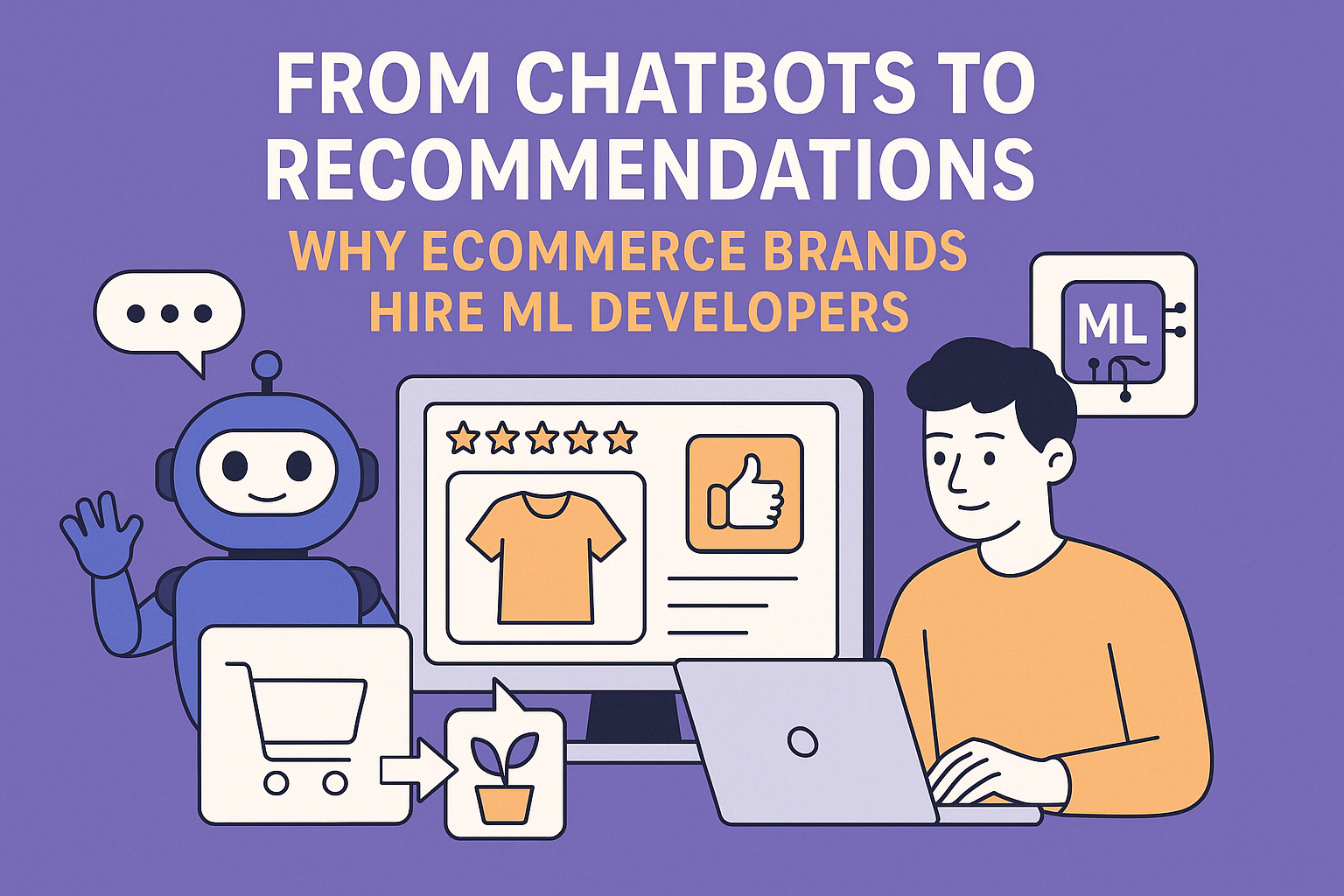
Chatbots: The AI-Powered Customer Support
Consumers today expect 24/7 customer service, fast responses, and personalized assistance. ML-based chatbots are enabling just that.
By incorporating Natural Language Processing (NLP), ML developers build bots that can understand customer intent, learn from past conversations, and respond intelligently. Unlike scripted bots, ML-enhanced ones can:
Many eCommerce brands have seen a direct reduction in cart abandonment rates thanks to chatbots proactively assisting hesitant buyers.
Recommendation Systems: Increasing Sales
The use of ML in eCommerce is particularly well developed in recommendation systems.
As soon as brands employ developers, they acquire the expertise to install complicated programs that scrutinize client behavior, online activities, purchases, and even social network interactions. These include:
According to a McKinsey report, 35% of what consumers purchase on Amazon is driven by recommendations—a testament to the power of this feature.
Inventory and Demand Forecasting
Overstocking eats up warehouse costs. Understocking disappoints customers. The balance lies in demand forecasting, an area where ML excels.
By training models on historical sales data, seasonality, promotions, and even weather patterns, ML developers can help eCommerce companies:
For omnichannel retailers, this real-time adaptability is invaluable.
Fraud Detection and Security
eCommerce platforms face constant threats—payment fraud, fake reviews, account takeovers. Traditional rule-based systems often lag in response time and accuracy.
ML developers combat this by designing real-time fraud detection systems that use:
By recognizing subtle behavioral deviations (like IP switching or erratic click patterns), these systems flag threats before they escalate, safeguarding both customer trust and platform integrity.
Why eCommerce Brands Choose to Hire ML Developers
Pre-built AI tools may work for small-scale shops, but scaling and personalization demand custom solutions—the kind only a skilled ML developer can build.
Hiring ML developers offers:
These developers bridge the gap between raw data and strategic decision-making—exactly what brands need to thrive in today’s AI-first marketplace.
How To Find Machine Learning Developers For An eCommerce Project
In case of focusing on employment opportunities, we suggest checking for these critical points while hiring ML professional:
While you may hire internally, most eCommerce businesses tend to work with an AI development company like HourlyDeveloper.io. This type of collaboration helps brands tap into excellent ML experts without incurring long-term fixed costs.
Conclusion
Ecommerce has advanced significantly as intelligent chatbots and personalized recommendations are powered by machine learning technology. Companies that opt to hire ML developers enjoy competitive advantages in automation, customer satisfaction, and growth reporting.
If you are looking to transform your online store using flexible ML frameworks, hiring skilled developers is the best choice for you. The future of eCommerce is intelligent—be smart, and don’t get left behind.