


In today’s dynamic business landscape, having a clear, actionable strategy framework is essential for organizations aiming to sustain growth and outperform competitors. A well-constructed strategy framework guides decision-making, aligns resources, and ensures every team member understands their role in achieving key objectives. This article breaks down the core components of an effective strategy framework, drawing insights from Group50’s Strategy 5.0 Framework — a modern approach that integrates “Where to Play,” “How to Win,” and prioritizing the “Most Important Goal.”
Whether you are a business leader, strategist, or project manager, understanding these five essential elements will empower you to design and implement winning strategies tailored to your organization’s unique needs.
1. Define “Where to Play” — Identify Your Strategic Battlefield
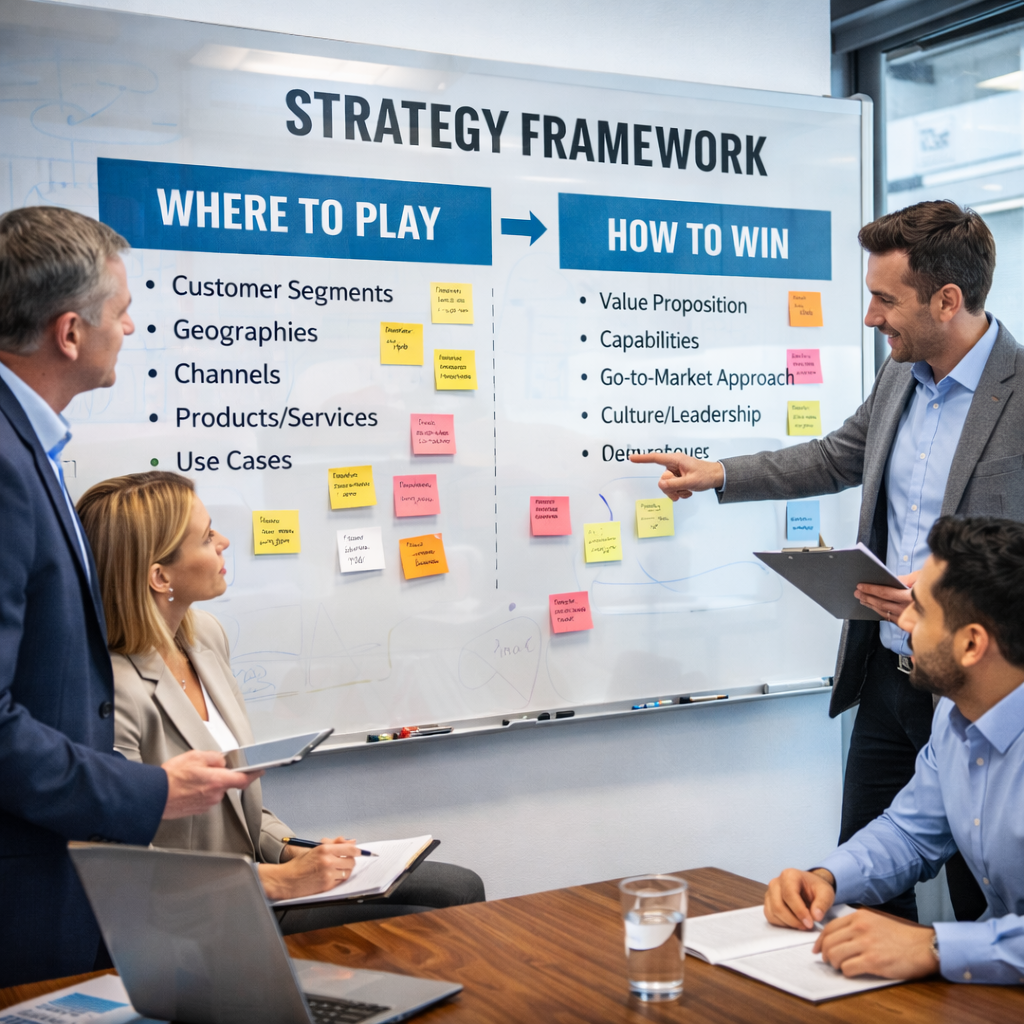
The first step in any strategy framework is deciding where the organization will compete. “Where to Play” means choosing the right markets, customer segments, and product lines where your company can create value and gain advantage.
- Market Segmentation: Break down broad markets into specific segments based on customer needs, demographics, or behavior.
- Geographic Focus: Determine if your strategy targets local, regional, national, or global markets.
- Channel Strategy: Decide which sales or distribution channels will best reach your target customers.
- Product or Service Offering: Identify which products or services will be the focus for growth or innovation.
By carefully selecting the “Where to Play,” businesses avoid spreading resources thin across too many fronts. This focus improves effectiveness and sets the stage for competitive differentiation.
2. Clarify “How to Win” — Craft Your Competitive Advantage
Once the playing field is set, the next critical step is determining how your organization will win. This means developing a unique value proposition or competitive advantage that resonates with customers and sets you apart from competitors.
- Cost Leadership: Compete by delivering products or services at the lowest cost while maintaining acceptable quality.
- Differentiation: Offer unique features, superior service, or innovation that justifies premium pricing.
- Focus Strategy: Serve a narrow market segment exceptionally well.
- Operational Excellence: Optimize internal processes for speed, quality, and reliability.
The “How to Win” element directs all activities, investments, and innovation efforts toward sustaining and amplifying the competitive edge.
3. Prioritize the “Most Important Goal” — Align Organization Around Impact
Clarity in strategic priorities ensures that teams work cohesively toward the highest-impact objectives. The “Most Important Goal” is a single, measurable outcome that aligns with your overall vision and drives progress.
- Revenue Growth: Target a specific sales or market share increase within a defined timeframe.
- Cost Reduction: Set goals to improve efficiency and reduce expenses without compromising quality.
- Customer Experience: Enhance satisfaction, loyalty, or engagement metrics.
- Innovation Milestones: Launch new products or technologies that open new markets or disrupt existing ones.
Setting this focal goal helps avoid conflicting priorities and enables clear communication and accountability across the organization.
4. Develop a Detailed Action Plan — Translate Strategy Into Execution
A strategy framework is only as effective as its execution. This step involves breaking down strategic goals into specific initiatives, projects, and tasks with assigned owners, timelines, and metrics.
- Initiative Identification: Choose projects that directly support the “Where to Play” and “How to Win” decisions.
- Resource Allocation: Assign budgets, personnel, and technology to initiatives based on priority and impact.
- Milestone Planning: Define clear checkpoints to monitor progress and make adjustments.
- Risk Management: Identify potential obstacles and plan contingencies.
By translating strategy into actionable plans, organizations create clarity and momentum, turning aspirations into results.
5. Establish Continuous Feedback and Adaptation — Stay Agile in a Changing Market
Markets and technologies evolve rapidly, so a robust strategy framework incorporates mechanisms for continuous learning and adaptation.
- Performance Measurement: Use KPIs and dashboards to track progress against goals.
- Regular Reviews: Schedule frequent strategy check-ins at all organizational levels.
- Customer Feedback: Collect and analyze insights to inform ongoing adjustments.
- Market Scanning: Monitor competitors, industry trends, and regulatory changes.
An adaptive strategy framework ensures your organization remains relevant, resilient, and ready to seize new opportunities or pivot when necessary.
Why the Strategy 5.0 Framework Matters
Group50’s Strategy 5.0 Framework elegantly integrates these five elements, providing a clear roadmap from strategic choices to measurable outcomes. It encourages leadership teams to focus on critical decisions, engage stakeholders, and drive sustainable growth with purpose.
Businesses leveraging this framework often experience:
- Enhanced clarity and focus on priorities
- Improved cross-functional alignment and collaboration
- Faster decision-making with data-driven insights
- Greater adaptability to disruption and market shifts
Conclusion
Crafting and implementing an effective strategy framework is vital for business success in a competitive environment. By clearly defining “Where to Play,” clarifying “How to Win,” prioritizing the “Most Important Goal,” developing detailed action plans, and embracing continuous feedback, organizations can confidently navigate uncertainty and deliver lasting value.
Professionals equipped with these five key elements can lead their organizations to strategic clarity, operational excellence, and sustained competitive advantage.
For more insights into advanced strategy frameworks and practical tools, explore Group50’s resources on strategic business transformation.