


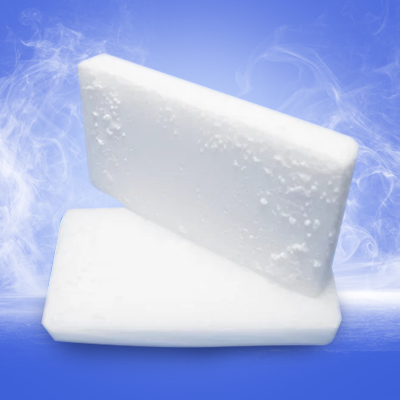
As enterprises seek more sustainable, non-toxic, and efficient cleaning options, dry ice blasting is emerging as a viable option. This unique approach employs solid carbon dioxide (CO₂) pellets to clean surfaces without using water, chemicals, or abrasives. But what makes it so promising, and could it really represent the future of environmentally friendly industrial cleaning?
What Is the Definition of Dry Ice Blasting?
Dry ice blasting is a type of non-abrasive cleaning in which compressed air propels dry ice pellets at high speeds at a polluted surface. When the pellets strike the surface, they immediately sublimate (transform from solid to gas), removing dirt, oil, paint, mould, and other undesired items.
Dry ice blasting, unlike sandblasting or water jetting, produces no secondary waste because the pellets disintegrate into carbon dioxide gas.
Why is it considered eco-friendly?
Chemical-free cleaning.
Dry ice blasting does not require any harmful chemicals. This not only preserves the environment, but it also provides safer working conditions for employees. It eliminates the need to dispose of polluted chemical runoff, which is a significant issue in typical industrial cleaning.
No Waste or Residue
Dry ice sublimates, leaving no water or grit behind. This significantly decreases clean-up time and expense while also preventing cross-contamination, which is particularly critical in industries such as food processing and pharmaceuticals.
Reduced water consumption.
With global water scarcity becoming a major concern, enterprises are under pressure to reduce water consumption. Dry ice blasting is a water-free alternative that maintains cleaning effectiveness.
Lower energy consumption
Because the method frequently allows machines to be cleaned without disassembly, it helps to avoid the lengthy downtime and energy costs associated with traditional cleaning processes.
Key Advantages Over Traditional Cleaning Methods
Non-Abrasive: Unlike sandblasting and grinding, dry ice blasting does not harm surfaces. It is perfect for sensitive equipment such as electrical panels and delicate machinery.
Sanitisation: Because it effectively eliminates bacteria, mould, and pathogens, it has been approved by the FDA and USDA for food-grade use.
On-Site Cleaning: Equipment can frequently be cleaned in place (CIP), saving time, lowering labour costs, and avoiding costly production shutdowns.
Fast and Efficient: Because it is dry and leaves no residue, no additional drying or disposal is required. industrial use cases
The food and beverage industry
Removes grease, carbon buildup, and biofilms from ovens, conveyors, and packaging lines without the use of water or solvents.
Automotive and Aerospace
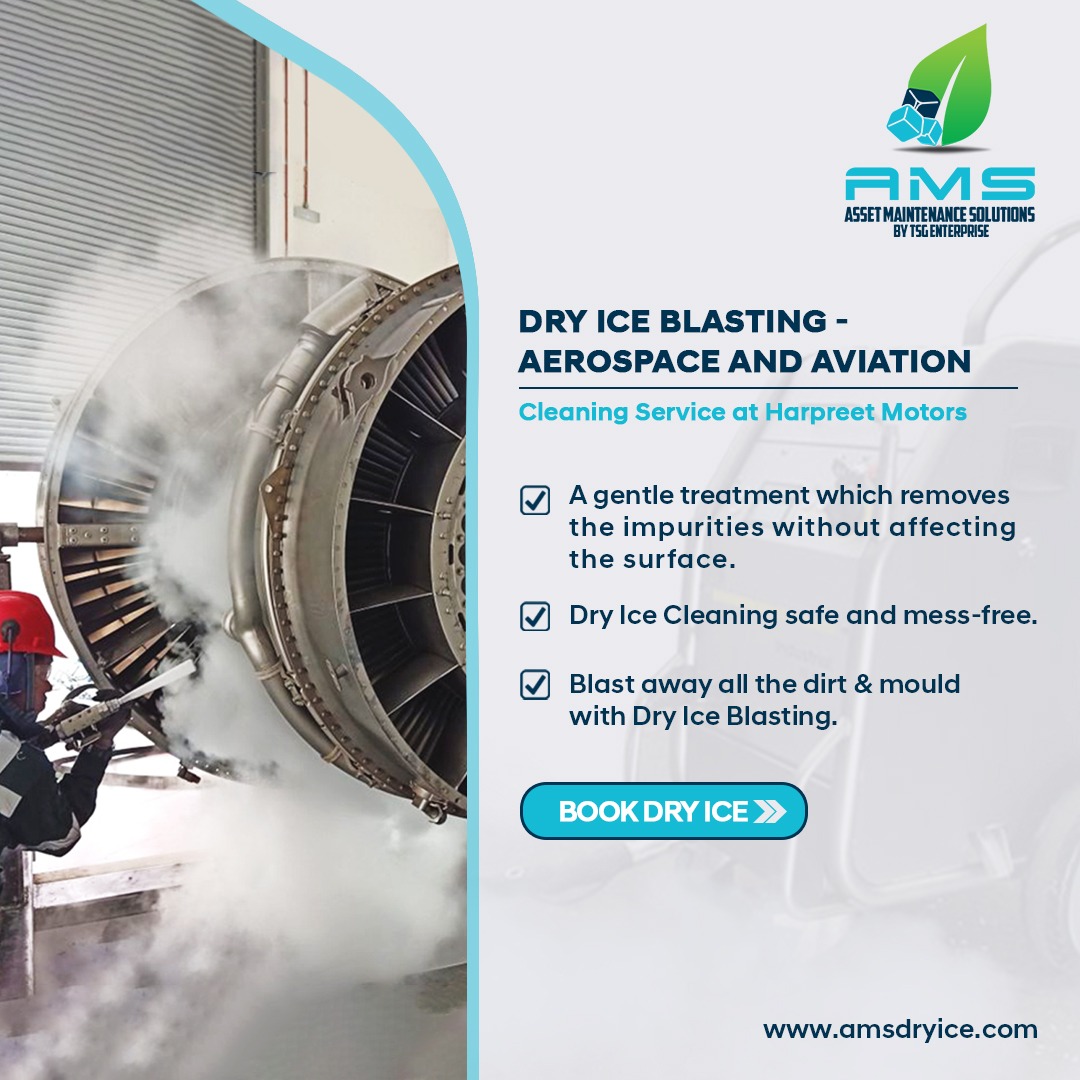
Used to clean engine components, moulds, and tooling without the need for dismantling.
Pharmaceuticals
Maintains hygiene standards without introducing moisture, which is necessary for sterile environments.
Power Production and Utilities
Cleans turbines, generators, and transformers without shutting down systems or causing electrical shorts.
Fire & Mould Remediation
Soot, smoke, and mould are effectively removed from wood, concrete, and metal structures while preserving their integrity.
Environmental and safety rules
Dry ice blasting is becoming increasingly popular as environmental rules tighten. Companies are now forced to decrease emissions, hazardous waste, and water use, all of which dry ice blasting excels at.
Furthermore, by eliminating the need for solvents and reducing waste disposal, it helps to ensure ISO 14001 compliance, which governs environmental management systems.
Limitations and challenges.
While the benefits are compelling, dry ice blasting does have some limitations.
Equipment Costs: While the initial investment in blasting equipment can be high, the ROI is often achieved through reduced downtime and disposal costs.
CO₂ Emissions: Despite being reclaimed from other industrial processes and not directly emitted, some believe it nevertheless contributes to carbon output. However, this has a minor impact when compared to traditional procedures that involve chemicals and water.
Not Suitable for All Materials: It is not always suitable for removing heavy rust or cleaning highly porous surfaces.
The Future Outlook
As companies prioritise sustainability and safety, the use of dry ice blasting is projected to expand across sectors. Innovations are reducing the size, efficiency, and cost of equipment, allowing it to be used more widely, particularly in smaller production plants and by service providers.
Furthermore, as the demand for green certifications and corporate social responsibility (CSR) grows, businesses are likely to turn to technologies such as dry ice blasting to meet their environmental objectives.
Conclusion
Dry ice blasting makes a compelling case for the future of environmentally friendly industrial cleaning. It achieves high performance without sacrificing environmental principles, which is becoming increasingly important in today's market. While not a one-size-fits-all solution, its advantages in speed, cleanliness, and sustainability make it a game changer for many industries.
As awareness and access spread, dry ice blasting may soon become the norm rather than the exception in responsible industrial cleaning practices.

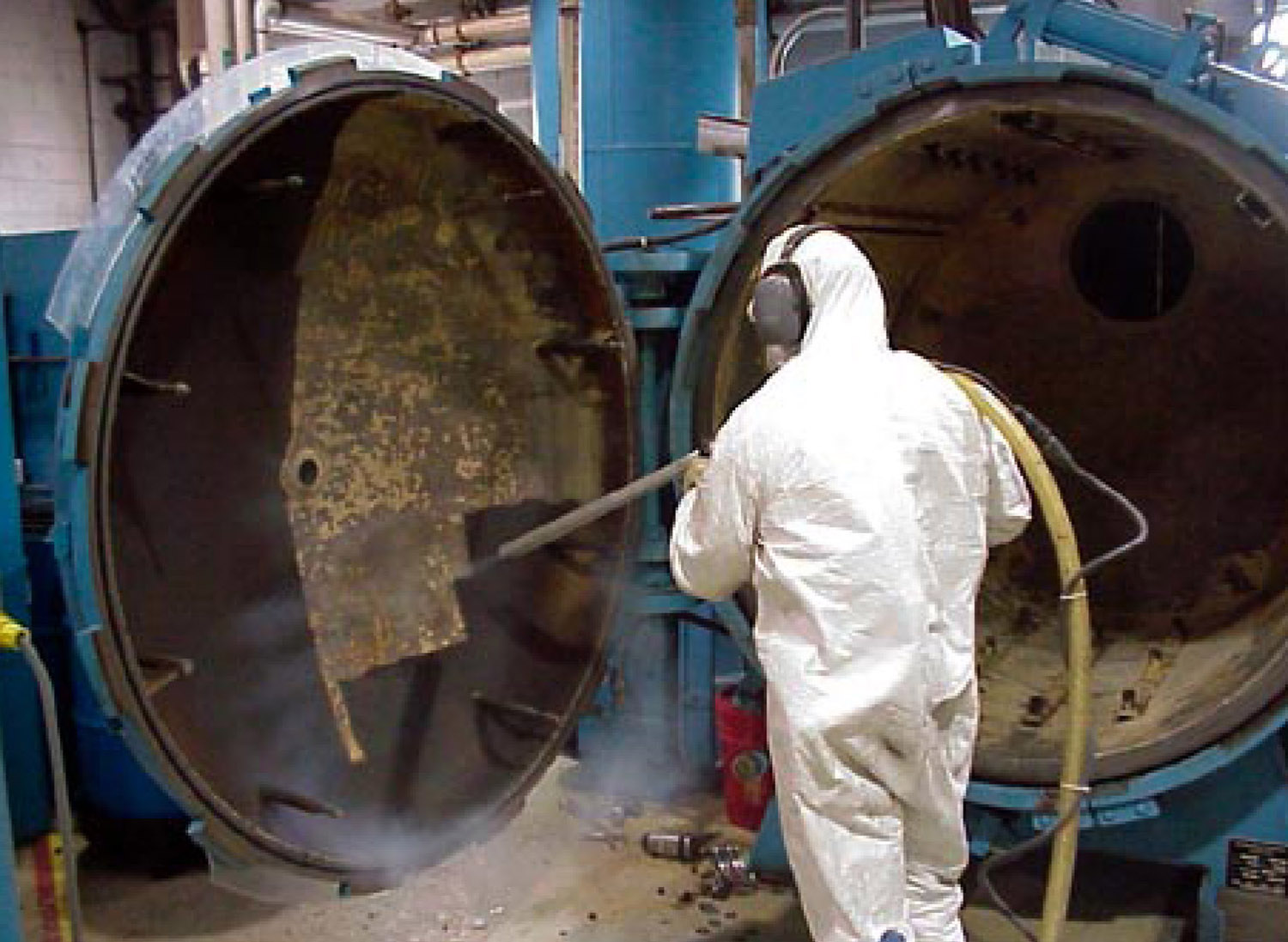
The working principle of dry ice blasting is similar to sandblasting, glass microspheres, steel shot but, unlike these, it is a non-abrasive cleaning method, because when dry ice reaches the surface at supersonic speed, it sublimates or “micro-explosions” are created by the kinetic effect of the particle that expands up to 700 times its initial volume, going from solid to gaseous without passing through the liquid.It is an industrial cleaning technique based on the projection of CO2 particles in a solid state, that is, dryice.It comes out at high speeds with the help of compressed air and acts in a similar way to the sandblasting method, which consists of accelerating an abrasive agent in a flow of pressurized air and striking a surface to clean or prepare.
Dry ice blasting, however, is a much cleaner and more effective system.Currently, the type of cleaning used to obtain the same results is more abrasive and can even damage the final surface.
In addition, it also generates more waste and requires more labour, so downtime is longer.
The materials used can be sand, solvents, water, brushes, spatulas, etc.However, dry ice blasting does not require disassembly nor does it generate more waste than the dirt you are trying to get rid of.
In addition, it is very important that it does not damage surfaces.How Does The Dry Ice Blasting System Work?Kinetic effectThe speed of the particles is critical for cleaning.The pellets of dry ice have low hardness and sublimate at the moment.Thermal shock effectThe low temperature of CO 2 (-78.5ºC) creates a temperature gradient between dirt and surface to be cleaned.Micro-cracks are caused between the layers of dirt, breaking them and separating them from the surface to be cleaned.Gas expansion effectWhen going from the solid phase to gas, the volume expands 800 times producing micro-explosions.Dirt lifts off the surface instantly.Advantages of Dry Ice BlastingThis cleaning system meets all our corporate requirements in this regard: it is respectful with the environment and is a responsible and safe cleaning method that can be used in many industrial processes.It does not leave secondary residues so it allows you to save the costs associated with the elimination of residues that arise if we use other cleaning methods.It is non-abrasive, prolonging the useful life of equipment and components and minimizing surface erosion.Health risks are reduced and operator safety improves due to the significant decrease in exposure to chemical agents and dangerous cleaning methods, achieving a much safer work environment.It is more versatile, being effective both when it comes to the need for delicate cleaning and for deep cleaning of heavy machinery.Conclusion: In what sectors is dry ice blasting used?As we said previously, this type of cleaning can be applied to a lot of different sectors: automobile, foundry, plastic, food and beverages, restoration and remodelling, graphic arts, medical instrumentation, laboratories, wood, rubber, maintenance, power generation, etc.
So if you need this cleaning in your organisation, hire dry ice blasting rental near meand clean soon.