


As the world accelerates toward sustainable mobility, electric vehicles (EVs) are increasingly becoming the norm. What’s enabling this transition is not just the advancement in battery technologies, but also the materials that shape these vehicles—enter the EV Composites Market.
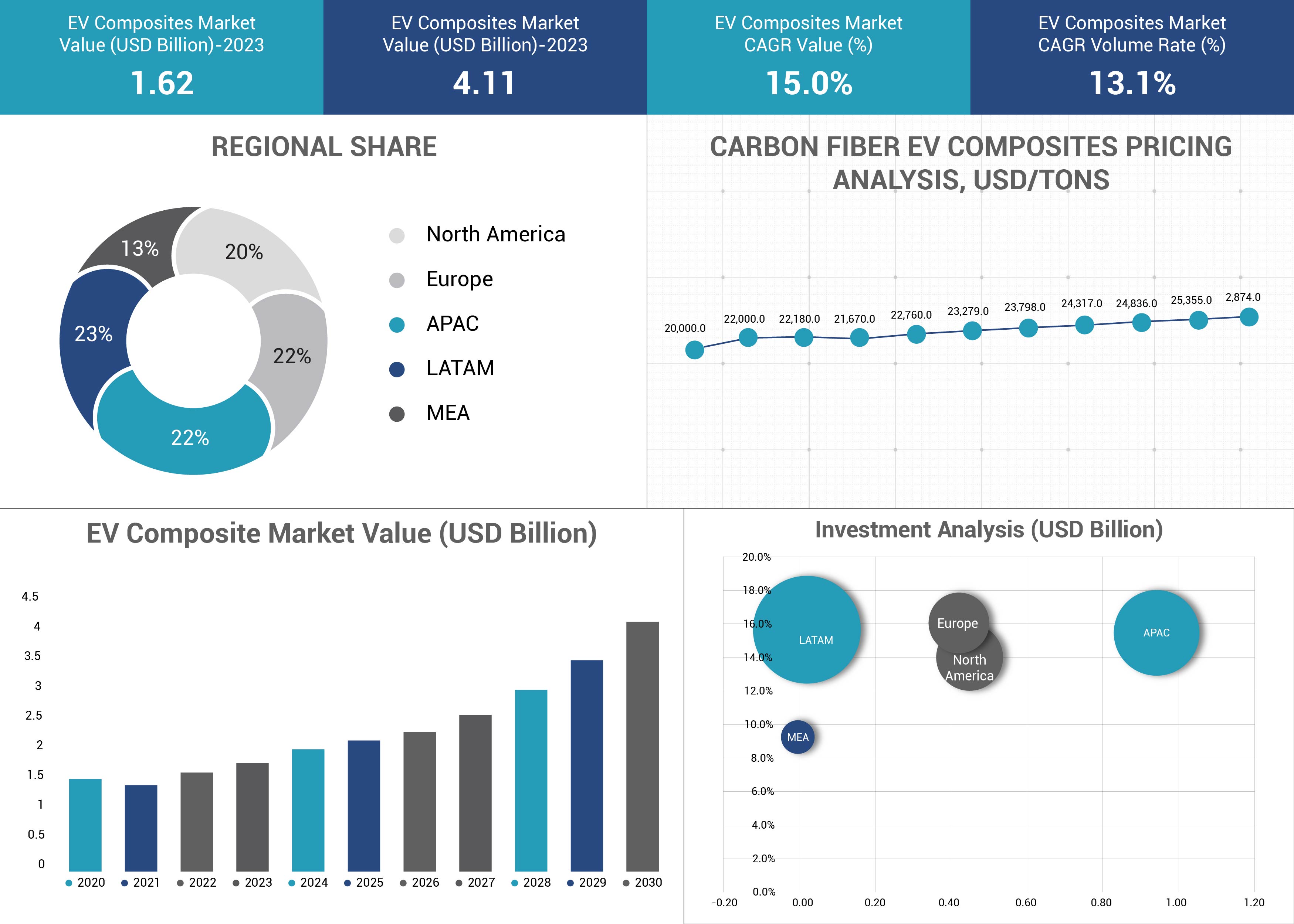
Valued at USD 1.62 Billion in 2023, the EV Composites Market is forecasted to reach USD 4.11 Billion by 2030, growing at a significant CAGR of 15.0% from 2024 to 2030. This growth reflects how integral composite materials are in reducing weight, enhancing structural integrity, and supporting energy efficiency in EVs.
A Material Shift: The Rise of Composites
Traditionally, metals like steel and aluminum were the go-to materials in vehicle manufacturing. However, the demand for lighter, safer, and more energy-efficient EVs has pushed manufacturers toward advanced composites such as:
- Carbon Fiber Reinforced Polymer (CFRP)
- Glass Fiber Reinforced Polymer (GFRP)
- Natural Fiber Composites
These materials provide superior strength-to-weight ratios, corrosion resistance, and design flexibility—benefits that directly impact EV performance, range, and battery life.
Global Trends Fueling the EV Composites Market
Across continents, the Global EV Composites Market is witnessing innovation and expansion. Europe leads with strong sustainability mandates, while Asia-Pacific and North America follow with rising EV production and investments in green technologies.
Key trends shaping the market include:
- Increased Integration in Battery Casings and Enclosures
- Adoption of Thermoplastic Composites for Recyclability
- Use of Natural Fiber Composites for Interior Applications
These trends show a shift not only in how EVs are built but also in how sustainability is approached throughout the supply chain.
Driving Forces Behind Market Growth
- Lightweighting for Better Efficiency Reducing vehicle weight directly correlates to extended driving range and improved battery performance.
- Sustainability Regulations Regulatory pressure is prompting OEMs to explore environmentally friendly materials and reduce vehicle carbon footprints.
- Cost-Efficient Manufacturing Mass production techniques like compression molding and resin transfer molding are making composites more accessible and scalable.
Challenges in the EV Composites Industry
While opportunities are vast, challenges persist. These include:
- High Material Costs: Especially for carbon fiber-based composites.
- Lack of Standardization: Varying performance benchmarks across geographies.
- Recycling Complexities: Difficulty in separating composite fibers for reuse.
However, ongoing R&D and public-private collaborations are addressing these issues through innovation and infrastructure development.
Conclusion: Composites Are the Future of EV Design
As the automotive world continues to evolve, composite materials are paving the way for safer, lighter, and more sustainable EVs. With exponential market growth and rising innovation, the EV Composites Market is set to revolutionize the industry.
For deeper insights into key players, technologies, and regional forecasts, read the complete EV Composites Market and learn how the Global EV Composites Market is powering Europe’s green mobility goals.





In this difficult time, we know how significant solid electric energizing alternatives are for you and your clients.
It's significant for charging organizations like Charge Point and our accomplices to keep on assembling, introduce, keep up, and administration basic framework during these remarkable occasions.
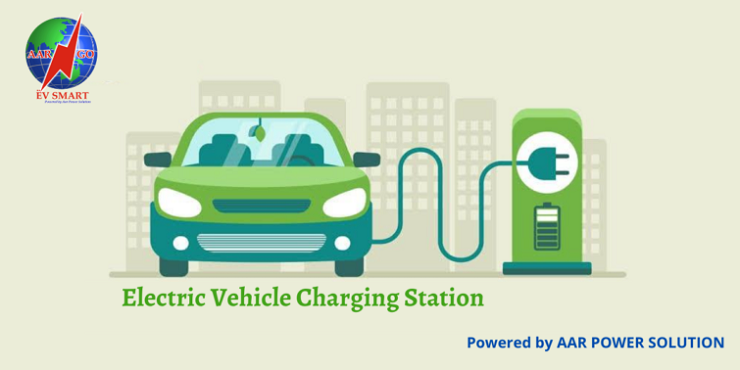
With regard to electric vehicle charging stations, there are various capacities to consider: building destinations to empower the actuation of new stations, keeping up existing stations, and charging vehicles.
For those hoping to build up an upper hand and to be outfitted to adapt to the noteworthy development of the EV market soon introducing electric vehicle charging focuses now is a savvy future-sealing move.
This won't just lift your image picture and notoriety, expanding client dedication and getting new clients, particularly as an ever-increasing number of individuals become EV proprietors.
Introducing EV chargers may likewise effectively empower naturally amicable practices among workers, customers, or inhabitants who haven't yet 'become environmentally viable.