

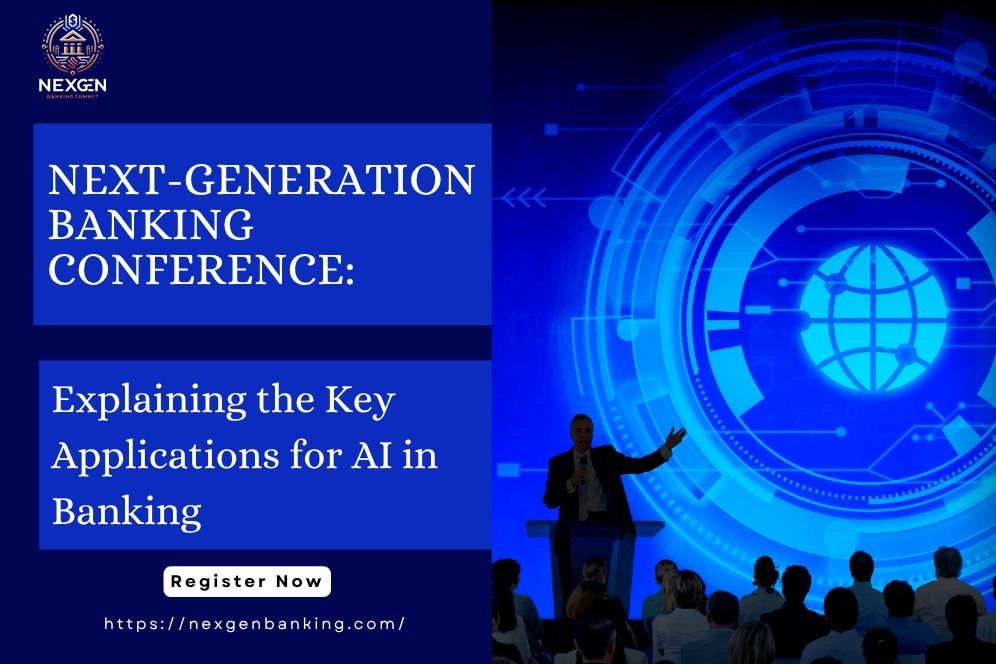
Everyone knows that industries worldwide are experiencing a transformation due to technologies like artificial intelligence, which includes the banking industry as well. Integration of AI in banks improves efficiency and promotes customer-centricity. The impact of AI on banking services is undeniable; therefore, the Next-Generation Banking Conference is offering the opportunity to be a part of the Banking Summit in London and explore various key applications for AI in the banking sector.
This article highlights the integration of AI in the banking industry to tackle complex challenges, catering to evolving customers’ expectations in a smarter and more adaptable way.
What are the Key Applications for AI in The Banking Industry?
From fraud detection and prevention to data collection and analysis, and process automation to predictive analytics, AI is striving to unlock the full potential of its applications across the banking landscape. Let us dig deeper into the details and learn more about the key applications for AI in the banking industry.
- Cybersecurity and Fraud Detection: AI acts as a vigilant guardian, analyzing patterns within a huge amount of data. It spots unusual behaviors that signal unusual patterns and fraudulent activities. This helps in revealing hidden vulnerabilities before they are exploited. AI allows banks to stay one step ahead through automated monitoring and tackling emerging potential risks. This keeps the customers reassured that their information is protected by advanced technology. With the help of AI, banks can deliver a safer and smarter banking environment while meeting strict regulatory standards.
- Chatbots and Virtual Assistants: Next-Generation Banking Event will let you explore how, by addressing customer inquiries, such as answering questions related to transactions and checking balances, AI-driven chatbots are enhancing the banking experience. Chatbots can offer personalized recommendations by analyzing data, which ultimately reduces wait times and creates a more positive customer experience. Virtual assistants assist customers outside traditional business hours, which means they are available 24/7, increasing accessibility and customer satisfaction.
- Data Collection and Analysis: Banks process a large volume of data daily, and AI helps them analyze and manage that data effectively. AI provides insights to drive better decision-making and customer experience by structuring and assessing data. By analyzing an individual’s behavior and preferences, AI allows banks to offer tailored services. The open banking summit will give you deeper insights into how AI detects anomalies, such as suspicious activities and unusual patterns, to prevent fraudulent activities and enhance data security.
- Process Automation: The Banking Conference will introduce you to the application of robotic process automation in the banking sector. This technology automates repetitive tasks to enhance operational efficiency and accuracy. Additionally, machine learning automates complex tasks, including risk management, fraud detection, and better decision-making. Process automation leads to a reduction in manual human work, enabling them to focus on more complex and value-added activities. This helps in speeding up the workflow and reducing operational costs.
- Predictive: Attendees of the Gen AI Summits in London will get the opportunity to explore how predictive analytics has become a game-changer in the banking sector. It allows banks to spot emerging trends and make informed decisions. AI predictive analytics helps banks find cross-selling options, sales opportunities, and other valuable insights for better business performance. These insights help improve operational efficiency, enhance customer experience, optimize customer engagement, and make proactive decisions, all of which contribute to revenue growth.
- Investment Banking: AI can guide investment strategies, offer tailored solutions, and assess risks while being compliant with regulations. By providing customized services and recommendations based on real-time data, AI enables investment banks to operate meticulously, optimize processes, and build stronger relationships with clients. Banking Summit London will give you the opportunity to get deeper insights into how AI is transforming investment banking, with potential benefits like new revenue opportunities and increased efficiency.
- Automated Credit Checks: The Conference will give you insights into how banks utilize automated algorithms to analyze extensive data, such as credit histories and employment details, in a fraction of the time to produce precise and accurate credit scores. Since credit assessment has been a lengthy process earlier, AI has streamlined data analysis and automated credit checks, which ultimately contributes to minimizing errors and saving time and resources.
- Regulatory Compliance: Navigating strict regulatory standards and staying up-to-date with them is a continuous challenge for banks, which often requires extensive resources. AI utilizes natural language processing (NLP) to analyze and adapt to ever-evolving regulations, ultimately enhancing compliance efforts. This improves overall accuracy, reducing reliance on manual methods. With the help of AI, banks can effectively handle compliance challenges and changing regulations, enabling compliance teams to focus on strategic priorities.
Future of AI in Banking
The Next-Generation Banking Conference offers the opportunity to learn about how the banking industry can drive innovation through advancing collaboration between banks and the applications of AI technology. It can deliver better services and improved operational efficiency to meet the needs of the ever-evolving digital world. The future of AI in banking data is promising as well as transformative, provided a perfect balance between technological advancement and responsible applications.