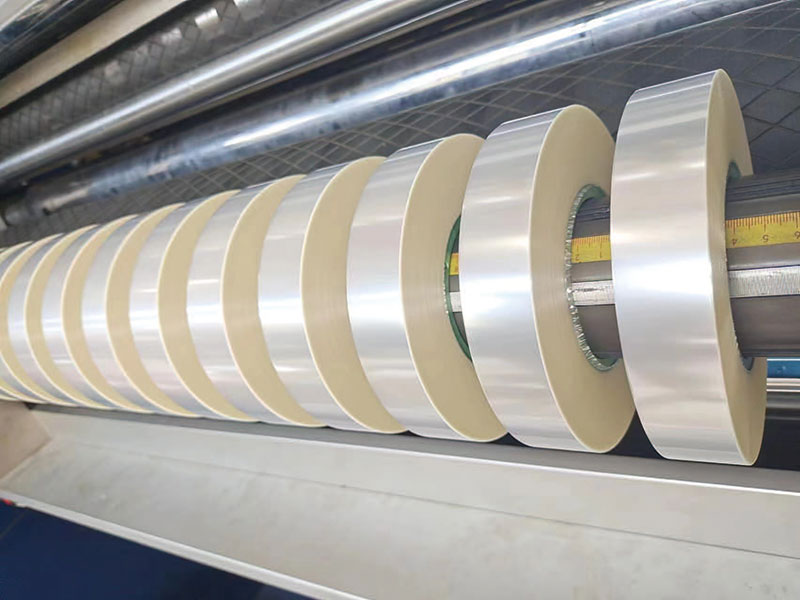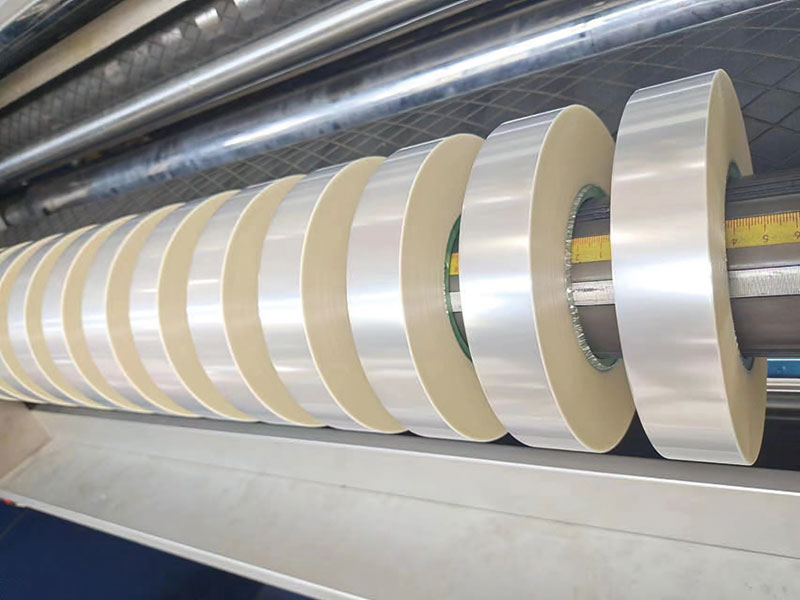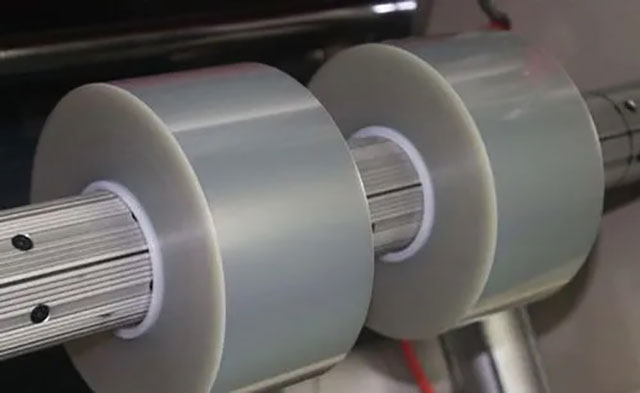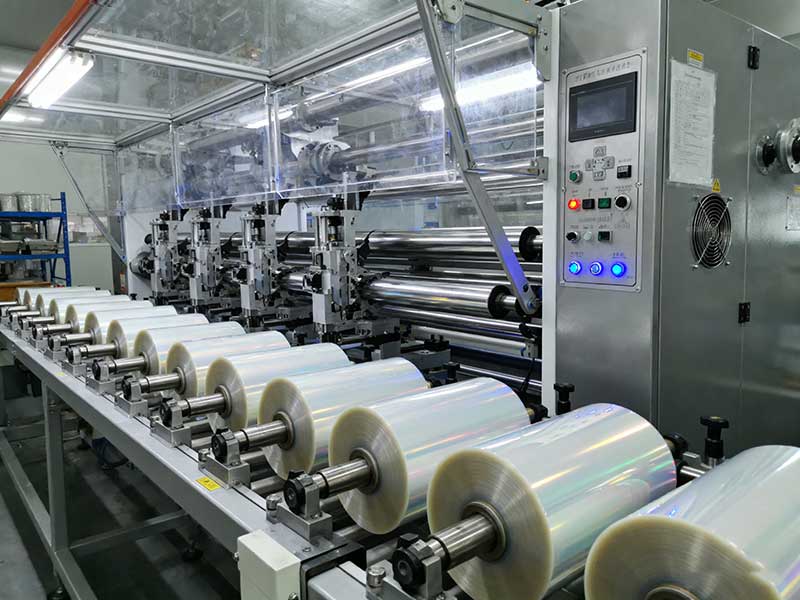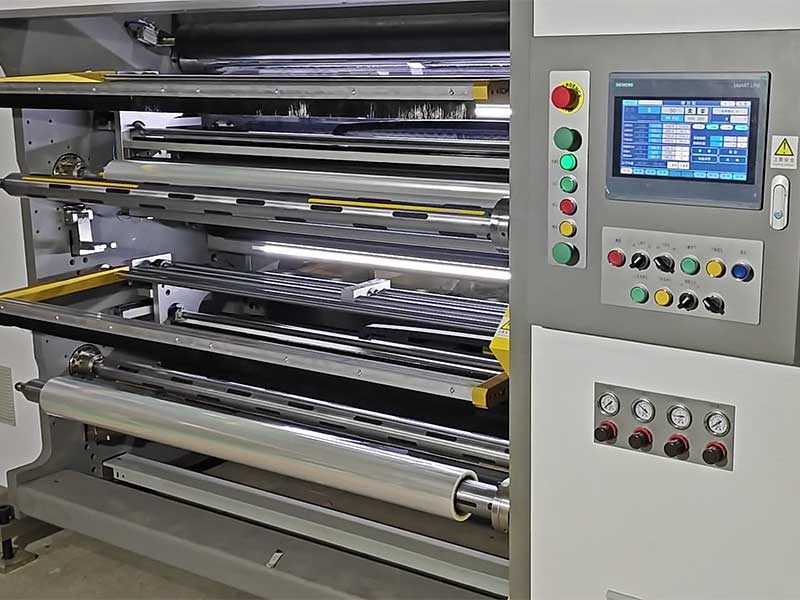


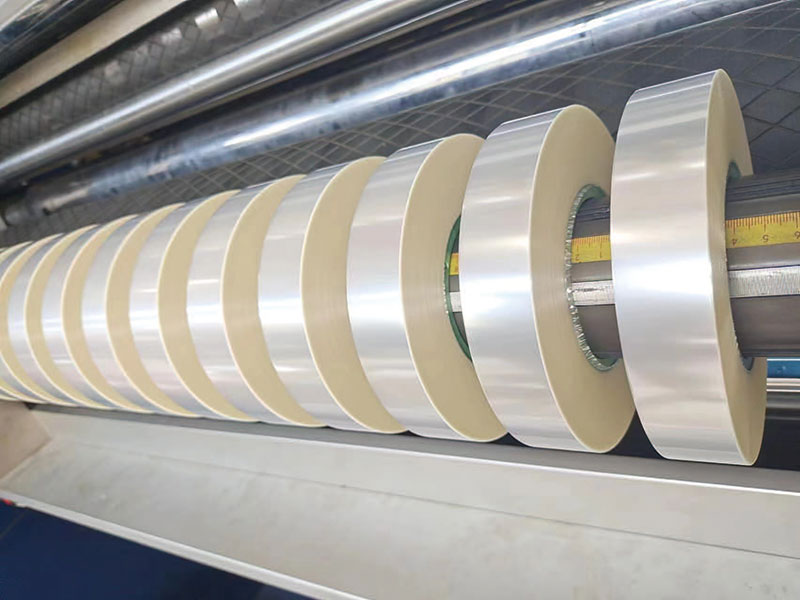
The following is a complete operation process manual of the film slitting machine from start-up to slitting parameter setting for reference:
Film Slitting Machine Operation Manual
First, preparation before start-up
1. Security checks
◦ Confirm that the power cord and air circuit of the device are not damaged, and reset the emergency stop button.
◦ Check that there is no debris around the machine, and there are no personnel near the guide rail and tool.
2. Preparation of materials
◦ Check that the roll specifications (width, thickness, material) are consistent with the production order.
◦ Confirm that the core size (e.g. 3 inches/6 inches) is compatible with the slitter.
3. Equipment inspection
◦ Clean the guide rollers and tension rollers to ensure that there is no dust or film shavings.
◦ Check the sharpness of the tool, and replace the blunt knife (it is recommended to check every 500,000 meters).
◦ Lubrication of moving parts such as rails and bearings (use specified grease).
Film Slitter Operation Manual: The complete process from start-up to slitting parameter setting
Second, the boot process
1. Power start
◦ Turn on the main power switch, start the control panel, and the system self-test (about 30 seconds).
◦ After the main interface is displayed on the touch screen, confirm that there is no alarm prompt.
2. Parameter initialization
◦ Select Production Task → enter the order number to retrieve the preset parameters (or manually create one).
◦ Set the basic parameters: material type (such as PET/PP/PE), master roll width, target slitting width.
3. Film penetration path setting
◦ Press [Film Penetration Mode] to manually bypass the film guide roller, tension roller, and correction sensor.
◦ Ensure that the film is wrinkle-free and that the edges are aligned with the centerline of the correction sensor (within ± 1mm error).
Third, slitting parameter setting
1. Slitting width setting
◦ Enter the number of slitting strips on the touch screen (e.g., 1000mm for the master roll→ 5 slitting strips for 200mm).
◦ The system automatically calculates the tool position and needs to be manually fine-tuned (it is recommended to reserve a margin of 0.5mm to prevent sticking).
2. Tension control
◦ Unwinding tension: set to 10%~15% of the tensile strength of the material (such as PET commonly used 20~30N).
◦ Winding tension: decreasing step by step (e.g. starting tension 25N, decreasing 1N per layer).
◦ Enable taper tension control (recommended taper ratio 5%~10%).
3. Speed and precision
◦ Initial low-speed (10~20m/min) test operation, stable and gradually increase (MAX reference value: 150m/min).
◦ Set the guiding sensitivity to mid-range (e.g., ± 0.3mm trigger correction).
4. Tool parameters
◦ Select the cutting method (e.g., razor slitting/round slitting).
◦ Calibration of tool pitch accuracy (need to use feeler gauge to confirm tool pitch error ≤0.05mm).
Film Slitter Operation Manual: The complete process from start-up to slitting parameter setting
Fourth, trial operation and adjustment
1. No-load test
◦ Without loading the film, the equipment is run to check the action of each component (guiding deviation, tension roller response).
◦ Simulated alarm triggering (e.g., film breakage, overtension) confirms that the safety function is normal.
2. Test cutting with material
◦ Run at low speed for 5~10 meters to check the flatness of the slitting edge (no burrs and sawtooth).
◦ Measurement of slitting width (random sampling of 3 points, tolerance ± within 0.1mm).
3. Dynamic adjustment
◦ If the end face of the winding is not uniform, increase the pressure of the winding roller (0.2~0.5MPa).
◦ In case of snaking, improve the tracking response speed or clean the photoelectric sensor.
5. Formal production and monitoring
1. Run in batches
◦ The speed is increased to the process set value, and the slitting quality is sampled every 30 minutes.
◦ Record key data: actual tension fluctuations, number of mlits, scrap rate.
2. Exception handling
◦ Film breaking: Stop the machine immediately to check whether the unwinding tension is abrupt or the guide roller is stuck.
◦ Loose rewinding: Check whether the air pressure ≥ 0.6MPa or reduce the maximum linear speed.
Film Slitter Operation Manual: The complete process from start-up to slitting parameter setting
6. Shutdown and maintenance
1. Normal shutdown
◦ After gradually reducing the speed to 10m/min, click [Stop].
◦ Mark the slitting direction (with arrow stickers) before unwinding.
2. Routine maintenance
◦ Clean up the broken film debris daily and check the air filter drainage.
◦ Weekly calibration of the tension transducer (tested with standard weights).
Attached: Quick Reference Table of Frequently Asked Questions
phenomenon Possible causes solution
Slitting edge burrs Tool wear/speed is too high Blade change or speed reduction by 20%
Rewind the tendons Excessive tension / improper taper setting The initial tension is reduced by 5N and the taper ratio is increased
Correction failure Sensor contamination/film light transmission Clean the sensor or replace the opaque film
Notes:
• No gloves on rotating parts!
• After the parameter is modified, it needs to be confirmed twice before saving.
• Complete operation requires holding the "Slitting Machine Operation Certificate".
(Note: The specific parameters need to be adjusted according to the equipment model and material characteristics, this manual takes the general model as an example)