Updating your name in official financial records is crucial—especially when it comes to shareholding. A Name Change in Share Certificates for Individuals is often necessary after marriage, divorce, legal name corrections, or inheritance. Yet, many investors are unaware of the proper process to make this update, often leading to blocked dividends, rejected dematerialisation requests, or issues during share transmission.
Why Name Correction in Share Certificates Matters
A mismatch between your name on physical share certificates and your official documents like PAN, Aadhaar, or demat account can delay or prevent:
- Dematerialisation of Shares
- Recovery of shares from IEPF
- Transfer or transmission of shares
- Receipt of dividends
- Sale or gifting of shares
In short, an incorrect or outdated name in your share certificate can block your access to your own investments.
Common Scenarios for Name Change in Share Certificates
Post-Marriage Name Change
Individuals adopting a new surname after marriage must update the same across all investment documents, including share certificates.
Legal Name Change
Due to spelling errors, court-decreed changes, numerology preferences, or gender transition.
Change in Father’s/Husband’s Name or Guardian’s Name
Especially in old physical certificates, parental/spousal details may need updating for KYC compliance.
Transmission of Shares
If the shares are inherited, the legal heir must get the name updated in place of the deceased holder.
Documents Required for Name Change in Share Certificates
While requirements vary slightly by company, these are generally requested:
- Application letter for name change
- Original share certificates
- Self-attested PAN and Aadhaar copies (old and new names)
- Copy of Gazette Notification or Marriage Certificate or Legal Affidavit
- Signature verification by bank
- Recent passport-sized photograph
- Demat account details (for dematerialisation, if applicable)
Step-by-Step Process
- Contact the Company’s Registrar and Transfer Agent (RTA)
- Get the name change form and checklist from the RTA of the company whose shares you hold.
- Prepare and Submit Documents
- Attach required identity proofs, share certificates, and the name change request. Clearly mention both old and new names.
- Verification by RTA
The RTA will check the request, verify signatures, and confirm documentation.
Issuance of Updated Certificates or Credit to Demat Account
Once approved, updated certificates are issued or the shares are directly dematerialised (if demat details are given).
Why You Should Dematerialise Shares After Name Change
Dematerialisation of Shares helps avoid physical certificate loss, simplifies transfers, and is often required for processing dividend claims, IEPF recovery, or share sales.
In fact, most companies now mandate that Name Change in Share Certificates for Individuals be followed by dematerialisation. This also allows you to link your shares to an active bank account for dividend credit.
Name Change Can Help With Unclaimed Debtor Recovery
Many unclaimed investments remain idle due to name mismatches or outdated KYC. Once your name is updated and shares dematerialised, you can initiate:
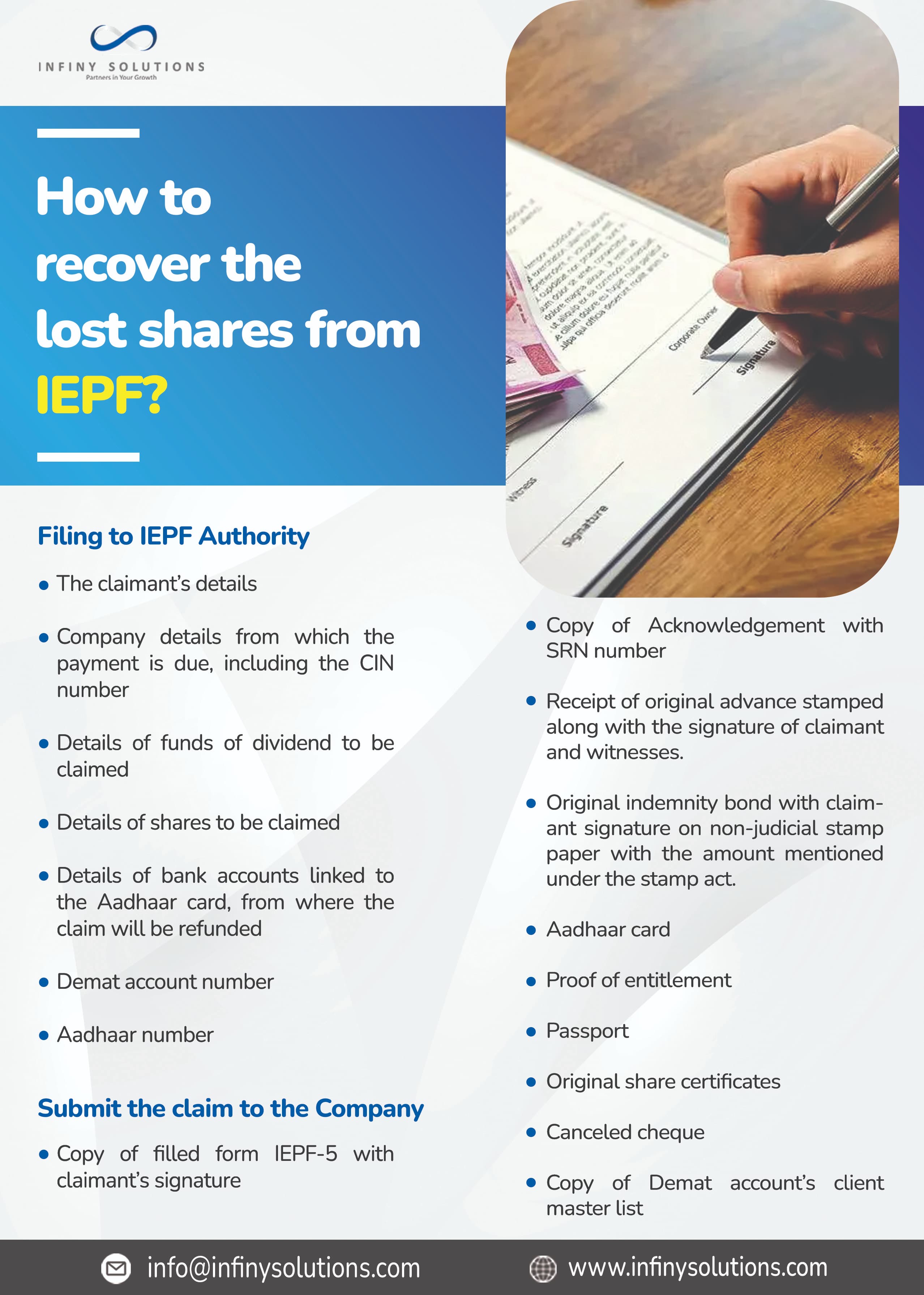
Recovery of shares from IEPF
Reactivation of in-operative bank accounts to receive old dividends
Claim processing for inherited investments
Hence, updating your name is often the first step toward Unclaimed Debtor Recovery.
What If the Linked Bank Account Is Inactive?
Many old shareholdings are tied to dormant or closed bank accounts. Once you’ve completed your Name Change in Share Certificates, make sure to also update your bank account details or apply for Reactivation of In-Operative Bank Accounts to receive dividends and payouts.
FAQs – Name Change in Share Certificates
Can I change the name in physical share certificates directly?
Yes, but most companies now require the shares to be dematerialised after name change.
What documents are needed for a name change after marriage?
Marriage certificate, new PAN/Aadhaar, old share certificate, and a name change request letter.
Is Gazette notification mandatory for name change?
Only for legal name changes, not necessarily for post-marriage updates.
Do I need to open a new demat account?
Not if your existing demat account is in the updated name.
What if shares are inherited and need to be renamed?
You must apply for Transmission of Shares followed by a name update.
Final Thoughts
Getting a Name Change in Share Certificates for Individuals is more than just a paperwork task—it’s a key step toward unlocking your investments. Whether you’re looking to recover shares, receive dividends, or simply comply with modern regulations, ensuring your name is correct is essential.
Once updated, be sure to complete Dematerialisation of Shares and check that your bank account is active to avoid any delays in asset recovery.
For many investors and heirs, this process becomes the foundation for Unclaimed Debtor Recovery, Reactivation of In-Operative Bank Accounts, and even IEPF claims.
Need help navigating the name change and demat process? Reach out for expert guidance and end-to-end support.
About the Author
Srishti Jain is a share recovery consultant helping individuals and families recover lost shares, dividends, and financial assets. With in-depth knowledge of dematerialisation, IEPF claims, and transmission of shares, she provides end-to-end support in navigating complex investment recovery processes.