Shoulder tendonitis can make even the simplest tasks painful—from reaching overhead to getting a good night’s sleep. It develops gradually, often due to overuse or poor mechanics, and can severely limit mobility if left untreated.
In this post, we break down what shoulder tendonitis is, why it happens, and how to manage it effectively with evidence-based strategies including physical therapy, massage, and integrative approaches that go beyond rest and ice.
What Is Shoulder Tendonitis?
Shoulder tendonitis is the inflammation of the tendons in the shoulder, particularly those in the rotator cuff or biceps tendon. This condition often arises when the tendons are pinched or irritated by repetitive overhead movement, poor posture, or injury.
The shoulder joint relies heavily on its soft tissues for stability. When overworked or misaligned, the tendons can become inflamed, resulting in:
- Pain during lifting or rotation
- Stiffness
- Swelling
- Reduced range of motion
Without proper care, shoulder tendonitis can progress from mild inflammation to chronic thickening or tearing of the rotator cuff tendons.
Common Causes of Shoulder Tendonitis
- Repetitive Overhead Movements: Common in sports like swimming, tennis, or professions that involve lifting
- Improper Lifting Technique: Both in the gym and in daily life Postural
- Dysfunction: Rounded shoulders and forward head posture can place constant tension on the rotator cuff
- Sudden Impact Injuries: Falls or direct blows can lead to acute inflammation
If you’re dealing with broader shoulder issues beyond tendonitis—like instability or recurring pain from postural strain—you may also want to explore our complete guide to shoulder injuries and effective rehabilitation.
Risk Factors for Shoulder Tendonitis
Shoulder tendonitis can affect anyone, but certain factors increase the risk of developing this condition. Understanding these risk factors can help you take preventive measures to avoid shoulder tendonitis.
Symptoms of Shoulder Tendonitis
Symptoms may start subtly but worsen over time:
- Dull ache at the outer shoulder tip
- Sharp pain when lifting the arm overhead
- Nighttime discomfort
- Weakness during activity
- Swelling or visible inflammation
If ignored, symptoms can lead to long-term loss of mobility or even partial rotator cuff tears.
Diagnosis: How It’s Identified
Diagnosis typically includes:
- Medical History & Physical Exam: Checking pain during movement, tenderness, and range of motion
- X-rays: May reveal bone spurs or structural impingement
- MRI or Ultrasound: To assess for fluid, tendon degeneration, or partial tears
Early detection allows for non-surgical care that can fully reverse the condition.
The 3 Stages of Shoulder Tendonitis
- Stage 1: Overuse :Mild inflammation caused by repetitive motion. Best treated with rest and early intervention.
- Stage 2: Calcific Tendonitis: Calcium deposits develop within the tendon, causing stiffness and increased pain.
- Stage 3: Partial or Full Tear: Untreated inflammation leads to tissue breakdown and tendon rupture. This may require surgical repair.
Recognizing the stage of your condition helps tailor the most effective treatment plan.
Treatment Options: What Actually Works
Rest & Activity Modification
Temporary reduction in overhead or load-bearing movements.
Physical Therapy
Essential for restoring movement patterns, strengthening the rotator cuff, and correcting shoulder mechanics. Exercises often include:
- External rotation with resistance bands
- Wall slides
- Pendulum swings
- Sleeper stretches
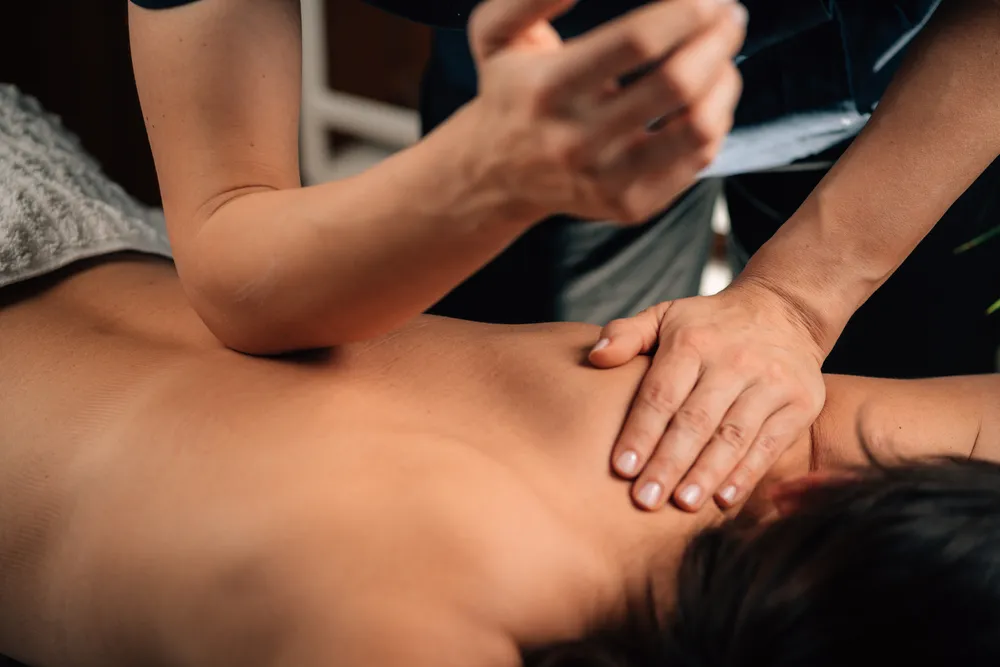
- Massage Therapy
- Manual therapy improves circulation, reduces inflammation, and relieves pain.
Explore Deep Tissue Massage in Toronto to address shoulder stiffness and dysfunction.
Trigger Point Therapy
Targets the upper trapezius, infraspinatus, and subscapularis, which often refer pain into the shoulder. Learn about our approach to Trigger Point Therapy.
Cupping Therapy
Used to promote circulation, reduce fascial restrictions, and offload overloaded tissues. Discover Cupping Therapy for Shoulder Pain.
Medical Acupuncture
Stimulates neuromuscular recovery and reduces inflammation. Explore Medical Acupuncture as part of an integrative treatment plan.
Prevention: How to Avoid Recurrence
An image depicting preventive measures for shoulder tendonitis.Adopting proactive strategies is key to minimizing the risk of shoulder tendonitis:
- Maintain upright posture (especially during desk work or lifting)
- Warm up properly before upper body workouts
- Avoid repeated overhead movements when fatigued
- Strengthen the scapular stabilizers and rotator cuff muscles
- Get regular manual therapy to maintain mobility
Book a Shoulder-Focused RMT or Athletic Therapy Session to stay ahead of chronic inflammation.
Returning to Activity Safely
Recovery takes time. Here’s how to pace it:
- Avoid overhead throwing or pressing early on
- Favor modified strokes in swimming (e.g. breaststroke over butterfly)
- Use smooth, sidearm motions when lifting or reaching
- Gradually increase resistance and intensity
If pain persists with motion, reassess before progressing further.
FAQs
- Can massage therapy help with shoulder tendonitis?
- How long does it take to recover from shoulder tendonitis?
- You Might Also Like
- Understanding Shoulder Injuries, Their Causes, and Effective Rehabilitation
- Nagging Pain Between the Shoulders? Here’s What Might Be Going On
- Deep Tissue Massage for Shoulder and Neck Pain
- The Upper Body Chronicles: Tackling Back and Shoulder Pain with a Smile at Excelsior
- Stretching Lessons from a Bali Healing Retreat
Why Choose Excelsior Integrative for Shoulder Tendonitis Treatment?
At Excelsior Integrative, our team of registered massage therapists, athletic therapists, and acupuncture providers work collaboratively to help you recover quickly and effectively. We combine hands-on care with movement education and supportive modalities to get to the root of your shoulder pain—not just mask it.
Whether you’re managing tendonitis or trying to prevent it from progressing, we build a plan that meets your lifestyle, goals, and sport or work demands.
Book a session now and take the first step toward stronger, pain-free shoulders.