Project management has evolved significantly over the past few decades. Traditional methods like the Waterfall model once dominated the landscape, focusing on linear planning and sequential execution. But with the rise of Agile methodologies, many teams now prefer tools that support flexibility, real-time updates, and iterative development. One such tool is the Redmine Agile Board Plugin, designed to bring Agile capabilities into the Redmine project management system. But how does it stack up against traditional project management?
Let’s take a closer look at how this plugin redefines project execution.
Structure vs. Flexibility
Traditional project management is driven by strict planning phases—requirements gathering, design, development, testing, and deployment—all locked in from the start. While this offers predictability, it limits adaptability when changes arise mid-project.
The Redmine Agile Board Plugin supports both Scrum and Kanban, offering flexible workflows where tasks can shift easily based on evolving needs. Teams can move issues across stages, update priorities on the fly, and work in short iterations, ensuring better alignment with changing customer needs and project realities.
Task Visualization and Control
In traditional settings, tasks are tracked using documents or software that offer little interactivity or visual feedback. This often makes it difficult to spot delays or understand workload distribution at a glance.
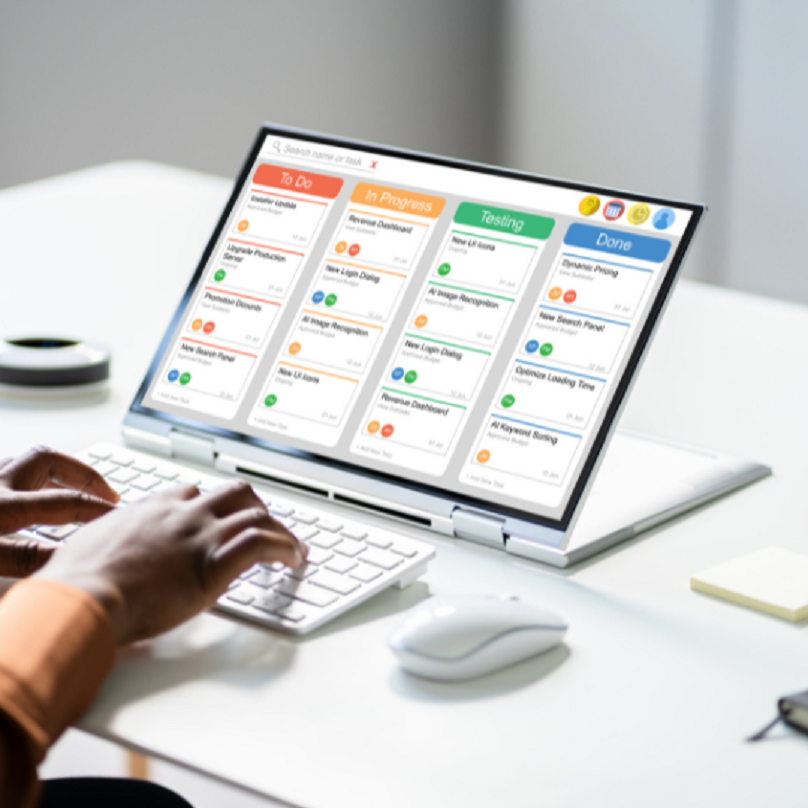
The Agile Board Plugin introduces drag-and-drop functionality with visual task cards on boards. Each card represents an issue, with color coding, tags, and priority markers that allow teams to manage workload visually. This boosts accountability, reduces confusion, and improves project transparency.
Team Collaboration and Communication
Conventional project management tends to rely on top-down communication, with status updates shared through lengthy meetings or reports. Information flow can be delayed and disconnected.
The Redmine Agile Board Plugin fosters collaboration by enabling real-time updates, comments, and shared visibility. Everyone on the team—from developers to project leads—can see task statuses, add inputs, and stay aligned without endless back-and-forth emails or meetings.
Progress Tracking and Metrics
Performance tracking in traditional models often happens at milestone stages. This approach delays insights and increases the risk of late project failures.
Agile boards, by contrast, offer continuous tracking through built-in metrics like velocity, lead time, and burndown charts. With the Redmine Agile Board Plugin, teams gain real-time performance data, helping them identify bottlenecks, improve efficiency, and optimize their workflow.
Integration and Usability
Traditional systems often require significant setup, onboarding, and customization. That can be time-consuming and costly.
Redmine Agile Board integrates directly into your existing Redmine system. Its intuitive interface requires minimal training, making it ideal for teams looking for a quick, impactful way to adopt Agile practices without a major overhaul.
Final Thoughts
The Cloud based project management tools offers a modern, adaptable approach to project management that aligns well with Agile principles. Compared to traditional methods, it enhances visibility, improves collaboration, and speeds up project delivery.
While traditional project management has its place, especially in rigid or regulated environments, teams today need tools that are agile, visual, and collaborative. Redmine’s Agile Board Plugin is a practical solution for teams ready to modernize their workflows and deliver better results.