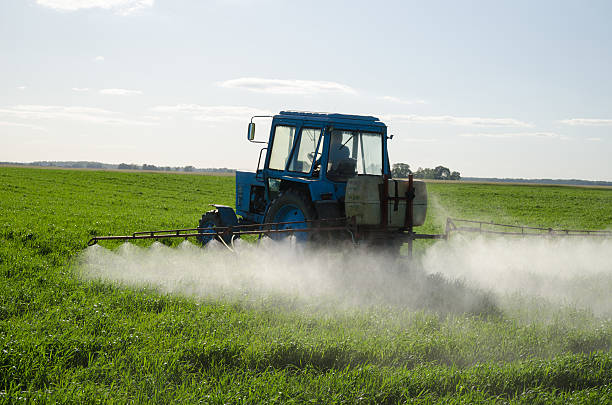



The crop protection chemicals market is estimated at USD 79.3 billion in 2024 and is projected to reach USD 101.0 billion by 2029, at a CAGR of 5.0% from 2024 to 2029.
Crop protection encompasses practices and products aimed at safeguarding crop yields, including methods to improve yield and prevent losses from diseases, insects, fungi, rodents, and more. Farmers benefit from sustainable practices, increased yields, and better returns on investments. Protection can be implemented before, during, and after cultivation using fungicides, pesticides, herbicides, and biopesticides, along with methods like seed treatments, trap cropping, and biological control. The crop protection chemicals market is growing due to the increasing need to enhance agricultural productivity and ensure food security amidst challenges like pest infestations and crop diseases.

Download PDF Brochure: https://www.marketsandmarkets.com/pdfdownloadNew.asp?id=380
In the crop type segment, the cereals & grains segment holds the largest market share in the crop protection chemicals market.
Staple crops such as wheat, rice, corn, and barley are essential for human and livestock consumption, driving substantial demand for effective crop protection solutions to ensure their high yield and quality. These crops are particularly vulnerable to a wide range of pests, diseases, and weeds, necessitating the extensive use of herbicides, insecticides, and fungicides. Additionally, the large-scale cultivation and significant economic value of cereals and grains amplify the need for crop protection chemicals, as any potential yield loss directly impacts food supply chains and market stability. Consequently, the critical importance of safeguarding these staple crops solidifies the dominance of the cereals and grains segment within the crop protection chemicals market.
The solid segment in the crop protection chemicals market is expected to grow steadily during the forecast period.
Solid formulations of crop protection chemicals include granules, pellets, and powders, which offer several advantages over liquid formulations, such as stability, ease of storage, and reduced risk of spillage or leakage during transportation and handling. Solid formulations are particularly favored in agricultural practices where precise application and prolonged efficacy are crucial, such as in soil treatments and controlled-release applications. Additionally, advancements in formulation technologies have improved the performance and versatility of solid products, making them increasingly attractive to farmers seeking cost-effective and environmentally sustainable solutions. The steady growth of the solid segment reflects the ongoing preference for these formulations due to their practical benefits and effectiveness in protecting crops against pests, diseases, and weeds while optimizing agricultural productivity.
Request Sample Pages: https://www.marketsandmarkets.com/requestsampleNew.asp?id=380
The Asia Pacific region is expected to dominate the crop protection chemicals market during the forecast period.
This dominance & rapid growth are fueled by the region's substantial agricultural base and the increasing need to enhance crop yields to feed a burgeoning population. Asia-Pacific accounts for over 60% of the world's population, with countries like China and India leading in agricultural production. In these countries, agriculture contributes significantly to the GDP, necessitating efficient crop protection solutions to ensure food security and economic stability. The region faces severe pest and disease pressures due to diverse climatic conditions, further driving the demand for effective crop protection chemicals. For instance, the prevalence of pests like the fall armyworm has led to substantial crop losses, prompting governments and farmers to invest in robust pest management solutions. The increasing adoption of modern farming practices and technologies in countries like Japan, Australia, and South Korea is boosting the market for advanced crop protection products. These advancements include precision agriculture, which optimizes the application of chemicals, reducing wastage and enhancing effectiveness.
The key players in the market include BASF SE (Germany), Bayer AG (Germany), FMC Corporation (US), Syngenta Group (Switzerland), Corteva (US), UPL (India), Nufarm (Australia), Sumitomo Chemical Co., Ltd (Japan), Albaugh LLC (US), Koppert (Netherlands), Gowan Company (US), American Vanguard Corporation (US), Kumiai Chemical Industry Co., Ltd (Japan), PI Industries (India), and Chr. Hansen A/S (Denmark). These market participants are emphasizing the expansion of their footprint via agreements and partnerships. They maintain a robust presence in North America, Asia Pacific, South America, RoW, and Europe, and they are supported by manufacturing facilities and well-established distribution networks spanning these regions.
Companies are focusing on product innovations, bio-based and eco-friendly solutions, and technology adoption for maintaining growth and competitiveness. Key players like Corteva, Bayer, and BASF are investing in R&D to develop crop-specific and environmentally sustainable pesticides.