With how busy things are in the modern workplace, having digital workflow is no longer a bonus – it's essential for getting things done. But for a lot of people, this system is clogged up, inefficient and a constant source of friction. The journey from a reactive, chaotic process to a proactive, streamlined one isn't about finding a single magic bullet. It's a commitment to making things better, using a mix of careful planning, embracing technology and always looking for ways to get better.
This article is for the more experienced user, the leader and the team member who understands that true efficiency isn't just about working faster; it's about working smarter by getting rid of waste and focusing on high-value tasks. We'll take a look at the principles, tools and practices needed to create a digital workflow that's not only robust but also a catalyst for innovation.
The Foundational Pillars of Digital Workflow Optimization
Before you can optimize, you must understand. The first and most critical step is to perform a detailed audit of your current processes. This isn't just about listing tasks; it's about mapping every single action, decision point, and dependency.
1. Process Mapping: Visualizing the Invisible
Think of your workflow as a complex flowchart. By visually mapping it out, you can identify bottlenecks, redundant steps, and moments of unnecessary waiting. Tools like Miro or even a simple whiteboard can be invaluable here.
Actionable Tip for Advanced Users: Don't just map the "happy path." Document every exception, every manual workaround, and every time a process breaks down. These are your prime candidates for optimization. Analyze the data flow between different applications and services. Is a person manually transferring data from a CRM to a spreadsheet? That's a point of failure and a significant time sink.
2. Lean Principles in Action: Eliminating Waste
Originating from manufacturing, Lean methodology is exceptionally powerful when applied to digital work. The core idea is to identify and eliminate "waste." In a digital context, this waste can be:
Overproduction: Creating content or reports nobody reads.
- Waiting: Waiting for an email response, a file transfer, or a team member to complete a task.
- Motion: Switching between too many applications, searching for files, or navigating complex folder structures.
- Defects: Reworking a project due to miscommunication or errors.
By applying a Lean lens, you focus on what adds value to the final output, and ruthlessly cut everything else.
3. Standardize and Automate
From Repetitive to Autonomous Automation is the keystone of a modern digital workflow. The goal is to offload repetitive, low-value tasks to technology, freeing up human intelligence for creative problem-solving.
- Identify Candidates for Automation: Look for tasks that are frequent, rules-based, and don't require subjective human judgment. Examples include sending routine follow-up emails, creating reports from a fixed data source, or moving files between cloud storage services.
- The Technology Stack: Your automation strategy will depend on the tools you use. Platforms like Zapier or Microsoft Power Automate can connect disparate applications, creating powerful workflows with a low-code approach. For more technical teams, building scripts with Python or leveraging APIs can offer even greater customization.
The Communication Nexus: Optimizing Your Email Workflow
Email remains a critical, and often chaotic, part of the digital workflow. The sheer volume can be overwhelming, but with the right approach and tools, it can be a highly efficient communication channel.
The Power of a Fast Email Provider
For professionals who live in their inbox, the speed of their email client is paramount. A slow, bloated interface can cost precious minutes every day, adding up to hours of wasted time each week. This is where a fast email service (like Atomic Mail) becomes a key component of an optimized workflow. These services are built from the ground up for performance and efficiency, often featuring:
- Lightning-Fast Search: Instantly find any email, attachment, or contact without waiting for an index to load.
- Keyboard-Centric Interface: For advanced users, a powerful set of keyboard shortcuts can drastically reduce the time spent navigating the inbox, composing messages, and managing tasks.
- Minimalist Design: A clean, uncluttered interface reduces cognitive load and helps you focus on what matters.
Advanced Email Management Techniques
Beyond the tool, a disciplined approach is essential.
- The "Inbox Zero" Philosophy: Not a state of having zero emails, but a system where every email has been processed. This means you have taken an action on it: deleted it, archived it, replied to it, delegated it, or deferred it.
- Strategic Use of Folders and Labels: Move beyond a simple filing system. Use labels to tag emails by project, priority, or status. Create automated rules to sort incoming emails into these categories, so your inbox only contains items that require immediate attention.
- Asynchronous Communication: For internal team communication, consider moving away from email and towards real-time messaging platforms like Slack or Microsoft Teams. Reserve email for external communication or formal documentation.
Advanced Methodologies and Tools for Coordinated Teams
Scaling an optimized workflow from an individual to an entire team requires a shift in methodology and the adoption of robust tools.
1. Agile and Kanban: Visualizing and Managing Flow Agile methodologies, often implemented with a Kanban board, are a powerful way to manage complex projects. The core idea is to create a visual representation of work in progress, with columns representing different stages of a project (e.g., "To Do," "In Progress," "Review," "Done").
- How it Works: Each task is a "card" on the board, and as it progresses, it moves from left to right. This provides instant visibility into the project's status, highlights bottlenecks (a column with too many cards), and ensures team members are always working on the highest-priority tasks.
- Tooling: Platforms like Jira are the gold standard for software development teams, while Trello or Asana offer more flexible, visually-driven solutions suitable for a variety of project types.
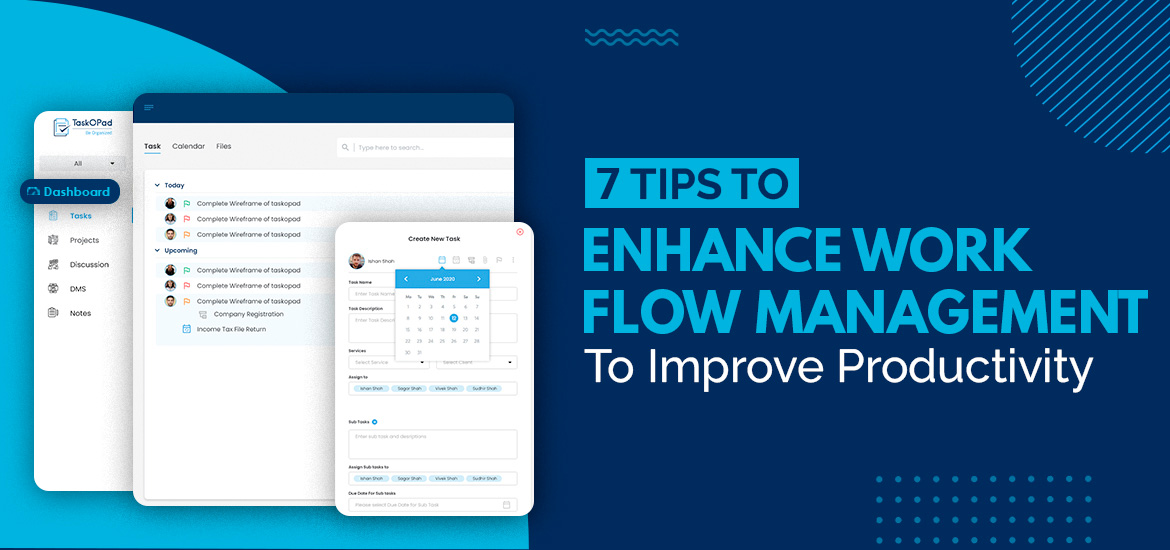
2. Resource and Task Management
For advanced readers, this goes beyond a simple to-do list. It involves:
- Dependencies: Mapping out which tasks must be completed before others can begin.
- Resource Allocation: Ensuring team members are not over-allocated and that their skills are being used effectively.
- Analytics: Using data from your project management tool to understand team velocity, identify which types of tasks take the longest, and accurately forecast project completion dates.
Tools like Monday.com and Wrike provide powerful features for enterprise-level resource and project management, allowing for deep customization and reporting.
The Mindset of Continuous Improvement
Workflow optimization is not a one-time project; it's a continuous process. Once a workflow has been streamlined, the next step is to monitor its performance and seek further improvements.
Key Performance Indicators (KPIs): Define metrics to measure the health of your workflows. This could be:
- Cycle Time: The average time it takes for a task to go from start to finish.
- Throughput: The number of tasks completed in a given period.
- Error Rate: The frequency of defects or rework.
Regular Audits and Feedback: Schedule regular reviews of your workflows. Gather feedback from team members about what is working and what is not. This feedback loop is crucial, as the people on the front lines are often the first to notice new inefficiencies.
By embedding this mindset of continuous improvement, your digital workflow will not only keep pace with change but become a powerful competitive advantage. It's the difference between a team that works hard and a team that achieves more with less effort.