

Explore how prompt engineering is shaping the future of human-AI collaboration, unlocking smarter ways to work, communicate, and innovate.
As artificial intelligence (AI) rapidly becomes a part of daily workflows, a new skill is emerging as critical for professionals across industries — prompt engineering. Whether you’re a marketer, developer, teacher, or business leader, learning how to effectively communicate with AI tools can enhance your productivity, creativity, and decision-making.
Let’s explore what prompt engineering is, how it compares to traditional programming, its benefits and challenges, and what the future holds.
How to Create an Effective Prompt?
Creating a powerful prompt is all about clarity and structure. A good prompt should:
- Be specific: Clearly state what you want the AI to do.
- Provide context: The more relevant background you offer, the better the AI can tailor the response.
- Use proper formatting: Break down complex instructions into bullet points or numbered steps.
- Test and refine: AI may not get it right the first time — adjust your prompt based on the output.
For example, instead of saying “Write a blog”, a more effective prompt would be:
“Write a 500-word blog post explaining the benefits of AI in customer service, including real-world examples.”
Prompt Engineering vs Traditional Programming
Traditional programming involves writing code using languages like Python or Java to build software applications. Prompt engineering, on the other hand, doesn’t require any coding skills. It’s about using natural language to instruct AI systems to perform specific tasks.
While coding offers full control over logic and function, prompt engineering allows for faster experimentation and rapid deployment using pre-trained AI models. This makes it accessible to non-technical users and expands the role of AI in everyday business.
Benefits and Disadvantages of Prompt Engineering
Benefits:
- Accessibility: No coding required — anyone can learn it.
- Speed: Generate results quickly by using natural language.
- Flexibility: Applicable across multiple industries and tasks.
- Cost-Effective: Reduce time and effort for repetitive tasks.
Disadvantages:
- Lack of precision: AI responses may vary and sometimes lack accuracy.
- Learning curve: Requires practice to master effective prompt writing.
- Dependence on AI limitations: You’re bound by the model’s knowledge base and biases.
Types of Prompts
There are several types of prompts you can use, such as:
- Instructional Prompts: Direct the AI to perform a task (e.g., “Summarize this article…”)
- Conversational Prompts: Engage in back-and-forth dialogue.
- Role-based Prompts: Ask the AI to assume a specific role (e.g., “Act as a data analyst…”)
- Few-shot Prompts: Provide examples to guide the response.
- Chain-of-thought Prompts: Encourage reasoning by asking the AI to explain its logic step-by-step.
Prompt Engineering in Different Domains
Prompt engineering is already transforming a wide range of industries:
- Marketing: Content generation, SEO strategy, customer insights.
- Software Development: Code generation, debugging, documentation.
- Education: Personalized learning, automated feedback, course creation.
- Healthcare: Patient communication, symptom checking, medical research.
- Legal & Finance: Drafting documents, summarizing contracts, analyzing data.
Each domain requires its own prompt style and structure based on its language and context.
Tools and Platforms for Prompt Engineering
Several platforms support and enhance prompt engineering:
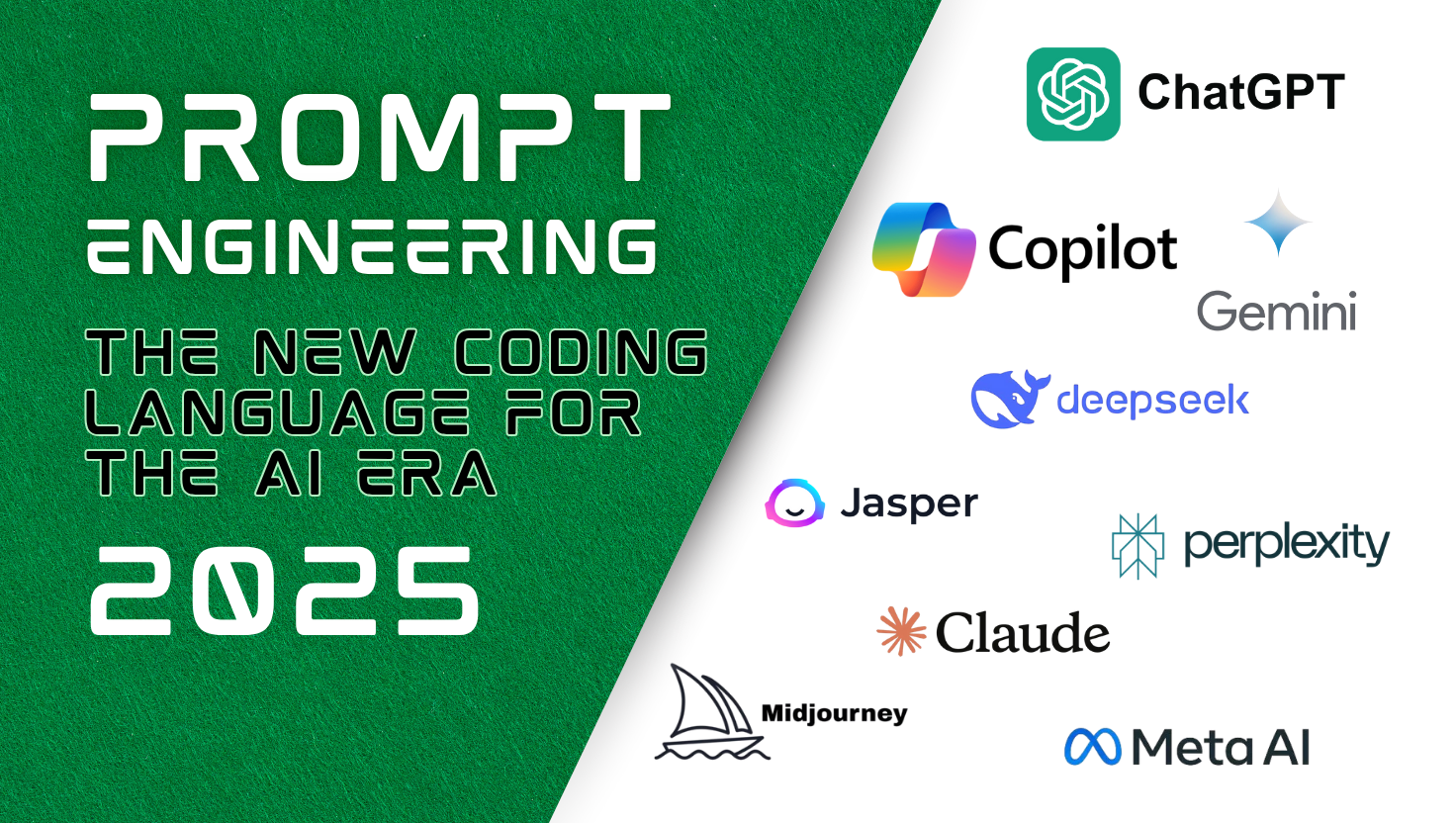
- OpenAI (ChatGPT): Popular for conversation, content, and code generation.
- Google Gemini (formerly Bard): Provides research-style responses.
- Microsoft Copilot: Integrates into Microsoft 365 to assist with business tasks.
- PromptHero: Community-driven prompt marketplace and inspiration hub.
- FlowGPT: Discover and test high-performing prompts shared by users.
- Notion AI & Jasper: Tailored for productivity and marketing content.
These tools are continuously evolving, offering more advanced prompt capabilities and integrations.
Future of Prompt Engineering
Prompt engineering is more than just a trend — it’s shaping up to be a fundamental skill in the digital workforce. As generative AI models become more advanced, prompt engineering will evolve into a structured discipline, potentially with certifications, best practices, and professional roles.
We can also expect the rise of multi-modal prompts, where users interact with AI through text, voice, images, and even video. Prompt engineering will increasingly be used to control AI agents, automate tasks, and build personalized AI experiences without writing a single line of code.
Conclusion
Prompt engineering is the bridge between human intent and machine intelligence. Understanding how to craft effective prompts can empower you to work smarter, create faster, and unlock the full potential of AI tools in your domain.
📖 Read the full article here:
👉 https://digitalconfex.com/prompt-engineering-the-new-coding-language-for-the-ai-era