

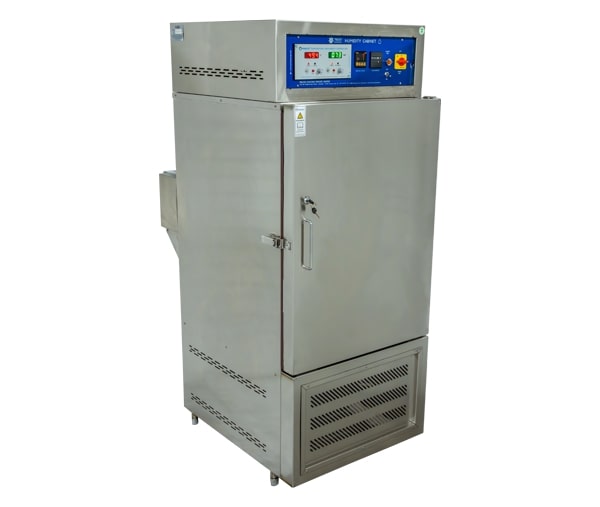
In product development and quality control, it’s not enough to check whether an item works under ideal conditions — it must also perform in the real world, where temperature and moisture can vary drastically. A humidity chamber is a vital tool for simulating such environments, ensuring that materials, components, and products can withstand varying humidity levels without compromising performance.
From electronics and pharmaceuticals to automotive parts and packaging, humidity testing helps industries deliver products that stay reliable over their entire lifespan.
What is a Humidity Chamber?
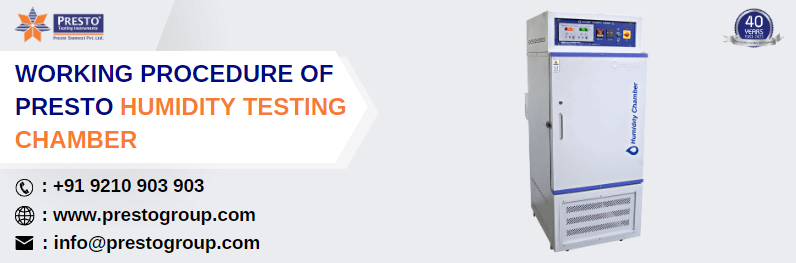
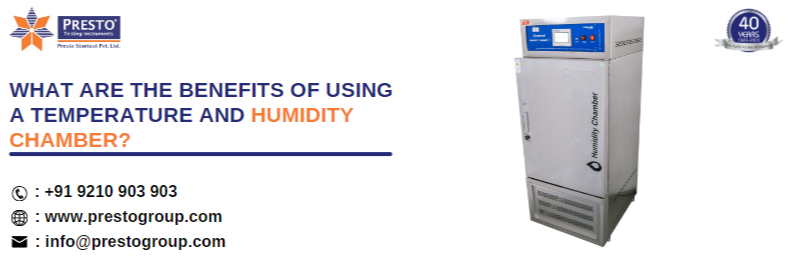
A humidity chamber is a specialized testing device used to create controlled temperature and humidity conditions. By adjusting these parameters, manufacturers can assess how a product responds to changes in moisture content over time.
Common test scenarios include:
- Evaluating corrosion resistance in metals.
- Checking dimensional stability in plastics and composites.
- Studying the effects of high humidity on electronics.
- Testing packaging integrity under moisture-rich conditions.
Programmable Humidity Test Chambers – Advanced Control for Precision Testing
While basic chambers can maintain a constant humidity level, a programmable humidity test chamber offers advanced capabilities. It allows users to set detailed environmental profiles with changing humidity and temperature cycles, simulating real-world climate variations.
Benefits of programmable models include:
- Custom Test Cycles – Create step-by-step programs to match specific standards.
- Accurate Replication – Mimic seasonal changes, day-night cycles, or extreme weather conditions.
- Data Logging – Track and record every environmental parameter for precise analysis.
Industries such as aerospace, defense, and electronics rely heavily on programmable chambers to validate products for long-term performance and compliance.
Humidity Chamber Working Principle
The humidity chamber working principle revolves around controlling two key factors: temperature and moisture content in the air. Here’s how it works:
- Humidity Generation – A water reservoir and heating system create water vapor. This vapor mixes with the chamber’s air to raise humidity levels.
- Temperature Control – A heating/cooling system ensures the chamber maintains the desired temperature range.
- Sensor Feedback – Sensors constantly monitor temperature and relative humidity (RH), sending data to the control system.
- Automated Adjustments – The control system fine-tunes heating, cooling, and vapor generation to keep conditions stable and accurate.
By precisely managing these variables, the chamber can replicate environments from tropical moisture-heavy climates to dry desert-like conditions.
Applications Across Industries
Humidity testing is essential in various sectors:
- Electronics – To prevent condensation-related short circuits.
- Automotive – To test how dashboards, seals, and components perform in different climates.
- Pharmaceuticals – To ensure product stability and packaging integrity.
- Textiles – To check shrinkage, colorfastness, and durability.
- Food Packaging – To ensure no moisture ingress that could spoil contents.
Factors Affecting Humidity Chamber Price
The humidity chamber price can vary widely depending on specifications and features:
- Size & Capacity – Larger chambers capable of housing big products are costlier.
- Temperature & Humidity Range – Wider operating ranges increase cost.
- Programmable Controls – Advanced control systems add precision but raise prices.
- Material & Build Quality – Stainless steel interiors and high-grade insulation enhance durability.
- Additional Features – Data logging, remote monitoring, and multi-cycle programming affect pricing.
While budget models may be suitable for basic research or educational purposes, industrial-grade chambers are worth the investment for their accuracy, durability, and compliance with testing standards.
Choosing the Right Humidity Chamber
When selecting a humidity chamber or programmable humidity test chamber, consider:
- Test Standards – Does your industry require compliance with ISO, ASTM, or MIL standards?
- Product Size – Will your products fit comfortably inside the chamber?
- Cycle Complexity – Do you need constant conditions or multi-step environmental programs?
- Data Requirements – Is logging and traceability important for your application?
Final Thoughts
Humidity can silently degrade materials, compromise electronics, and weaken packaging. By using a humidity chamber, manufacturers can detect weaknesses early, improve product design, and ensure compliance with global quality standards.
Whether you need a basic model for straightforward testing or a programmable humidity test chamber for complex environmental simulations, understanding the humidity chamber working principle will help you choose the right tool for your needs. And while humidity chamber price varies with features and capacity, the investment pays off in product reliability, reduced failures, and improved customer trust.
📞 Contact Us for Humidity Testing Solutions
For high-performance humidity chambers that meet international standards, get in touch:
📱 Call: +91 9210 903 903
📧 Email: info@prestogroup.com
Ensure your products perform flawlessly — in any climate.