


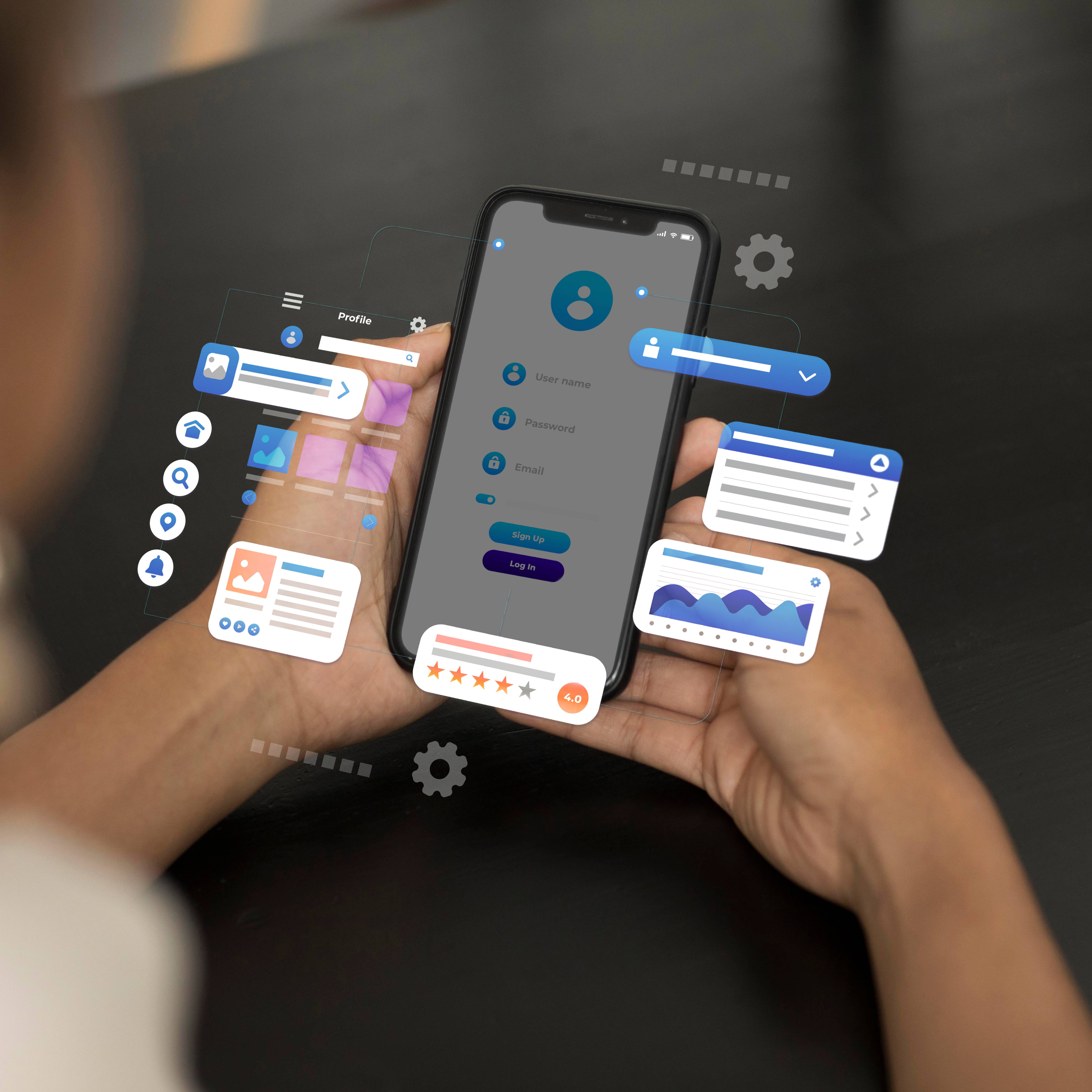
In 2025, mobile apps are no longer static creations that stay the same until the next update. With the rise of AI-powered, data-driven design, layouts can now adapt in real time—changing structure, content placement, and visual priorities based on live analytics and user behavior.
This shift marks a move away from designing for the “average user” and toward designing for each user, every time they open the app.
What Is Data-Driven App Layout Design?
Data-driven application design uses live analytics, machine learning, and AI decision-making to influence the structure and appearance of an app’s interface.
Instead of relying on one-time user testing during development, AI systems continuously collect interaction data and adjust layouts to improve usability, engagement, and conversion rates.
Think of it as A/B testing on autopilot—except instead of waiting weeks to gather results, the app self-optimizes instantly.
How It Works in 2025
Continuous Data Collection
- The app tracks interactions such as button clicks, scroll depth, session time, and drop-off points.
- Contextual signals—like time of day, device type, and location—are also captured.
AI Analytics Layer
- Machine learning models identify patterns in behavior.
- Predictive analytics forecast what changes could improve the experience for different user segments.
Dynamic Layout Adjustment
- The app’s UI components are modular, allowing AI to rearrange, resize, or highlight different elements in real time.
- Example: A shopping app may push “flash sale” banners higher on the screen during peak buying hours.
Feedback Loop
- The AI monitors results from each change and keeps or rolls back adjustments based on performance.
Benefits of Real-Time AI Layout Adjustments
Personalized Experiences
- Every user gets a layout optimized for their preferences and behavior.
Higher Engagement & Conversion Rates
- By instantly surfacing Mobile application development relevant content or calls-to-action, apps can increase key metrics without constant manual intervention.
Faster Iteration
- No need to wait for design sprints or new release cycles—changes happen automatically.
Reduced Development Costs
- Fewer manual redesigns mean smaller design budgets over time.
Example Use Cases
- E-Commerce – Show products based on the user’s browsing history and recent purchases, adapting promotions in real time.
- News Apps – Rearrange headlines so the most relevant categories appear first based on reading habits.
- Fitness Apps – Highlight workout suggestions in the morning and nutrition tips in the evening.
- FinTech Apps – Change dashboard layouts to prioritize relevant accounts or investment opportunities.
Challenges and Considerations
While real-time AI design is powerful, it also comes with challenges:
Data Privacy & Compliance
- Collecting and acting on user data requires strict adherence to regulations like GDPR and CCPA.
Avoiding “Over-Personalization”
- Too much change too quickly can confuse users or make the app feel unstable.
Maintaining Brand Consistency
- AI should optimize layouts without straying from brand guidelines.
Model Bias
- If training data is incomplete or biased, certain user groups may get less optimized experiences.
The Future of Data-Driven Design
By 2028, experts predict that AI design engines will work alongside content and marketing teams, aligning real-time layout changes with campaign goals and business KPIs.
Some apps may even use predictive mood detection—adjusting layouts, colors, and features based on how users are likely to feel when they open the app.
Conclusion
Real-time AI-driven layouts represent a new era in mobile app design—one where interfaces evolve alongside the user. Businesses that master this adaptive approach will deliver experiences that feel intuitive, relevant, and effortless, setting themselves apart in an increasingly competitive app market.




Under AI Development, Redux helps developers in understanding how the data flow works in an application.
Also, the reducer function simplifies the testing of logic that leads to faster and better application deployment.
We, at Oodles, as an emerging Machine Learning Development Company, are a team of AI Software Architects, developers, and analysts.
We employ effective tools like Redux, React, and more to build dynamic Angular applications.
Learn more: Redux in Angular Application for State Management


What would you be able to do to get this going for your application, Builders by Engineer.ai ?