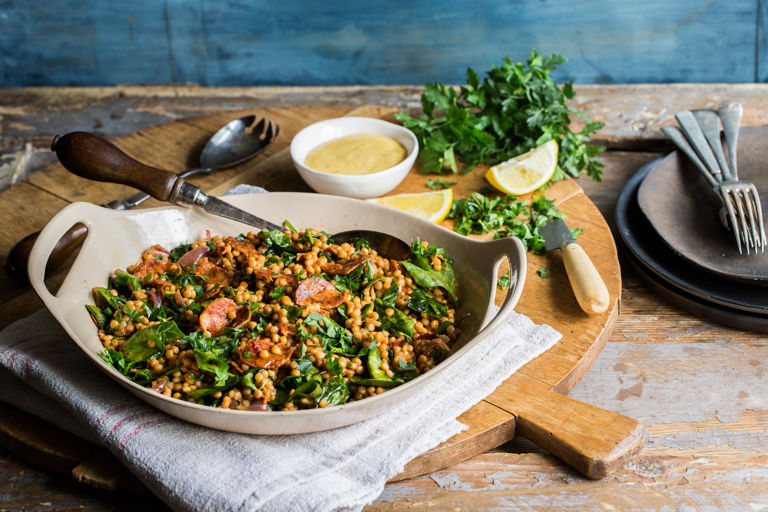


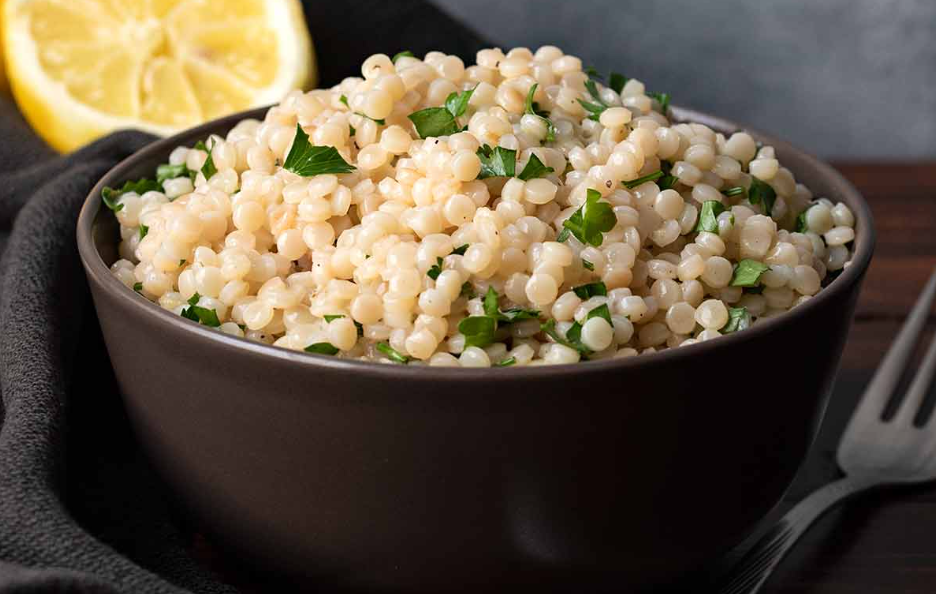
Some ingredients don’t arrive with fanfare and aren’t always plastered across supermarket endcaps. Still, slowly, dish by dish, they earn their place on the table. Pearl couscous is a prime example. With its subtle charm, chewy bite, and sleek appearance, this little pasta is worming its way into many modern kitchens.
What Is Pearl Couscous?
Pearl couscous, AKA Israeli couscous, is not a grain, despite often being lumped into the same category as quinoa, bulgur, and farro. Couscous is actually a small, round pasta made from semolina flour and water.
Traditional couscous is fine and crumbly, but pearl couscous is plump, smooth, and slightly springy. It has a texture that falls somewhere between orzo and barley. It’s exactly this texture that sets it apart. It holds sauces well, maintains its shape without going mushy, and brings an extra chew to both warm and cold dishes.
Preparing Pearl Couscous
Preparing pearl couscous properly is part of its appeal. Namely, it is not to be boiled in the same way as spaghetti, nor steamed like classic couscous. Pearl couscous benefits from the same technique you’d use when preparing risotto.
Start by toasting the couscous in a bit of olive oil until it turns golden. This step is what brings out the pasta’s earthy, roasted flavor. Then, add water or broth, but just enough to simmer and absorb. Cook uncovered, stirring occasionally, until the liquid is absorbed and the pearls are al dente. The process usually takes about 10 minutes. The result is glossy, soft but toothsome couscous ready to be dressed up or down.
The adaptability of pearl couscous is a major reason why it’s showing up in so many kitchens. This pasta plays well with nearly any flavor profile!
Toss it with roasted vegetables and crumbled feta for a Mediterranean bowl. Mix it with grilled chicken, herbs, and lemony vinaigrette for a light lunch salad. Fold it into a stew to soak up the broth, or spoon it under a braised lamb shank to catch every drop of sauce. It can be bright and summery or rich and comforting, hot or cold, simple or complex. It’s a blank canvas with character.
How to Make Pearl Couscous Photogenic
Food that photographs well has become its own kind of currency. A dish needs to be worth sharing in addition to tasting good these days. Pearl couscous never fails to deliver: its shape catches the light. It’s neat without being sterile.
Add pomegranate seeds, fresh herbs, or a drizzle of tahini, and suddenly you’ve got something striking. This is no small thing in a world where a meal can travel from kitchen to screen in under a minute.
Texture, though, is what keeps people coming back. Foodies tend to talk about flavor endlessly, but texture is often equally important. Pearl couscous has a chew that satisfies in a way that rice cannot always hope to reach.
It’s neither starchy nor sticky, and it doesn’t break down. Instead, it offers a soft resistance to the tooth that feels good in the mouth, like the bounce of fresh gnocchi. That makes it ideal for layered dishes where contrast is desired, say, a creamy purée underneath, roasted veggies on top, and couscous nestled in the middle.
It also wins on convenience. Once you know how to prepare pearl couscous, it becomes second nature. There’s no need for long cooking times or special equipment. It cooks in under fifteen minutes and pairs with almost anything you have on hand. Toss it with leftover chicken, a few cherry tomatoes, and a spoonful of pesto, and dinner is done. Serve it with seared scallops and lemon zest, and you’ve got something worthy of date night.
Owning Pearl Couscous
It’s not hard to see why chefs and home cooks alike are giving pearl couscous more attention. It invites creativity without demanding it. There are no hard rules. Swap out the broth you cook it in — chicken, vegetable, miso, or even coconut milk — and you shift the tone entirely.
Play with textures — add toasted nuts, fresh herbs, crispy shallots — and you’ve got layers. And since it doesn’t overpower, it allows the other ingredients in a dish to shine. It carries the flavors you give it, but it doesn’t overshadow others.
In a busy week, pearl couscous is a reminder that food can be simple and still feel grounding. Once you’ve made it once, it will become a go-to. Something you trust. Something that sticks. Something versatile enough to branch out into a myriad of different recipes.
Suddenly, you start to realize you don’t need to look up a recipe. You can prepare pearl couscous from memory. You know how much liquid to add, how long to simmer, and when to pull it off the heat. You learn the kind of finish you like. It becomes part of your kitchen repertoire.
There’s a reason it’s turning up on restaurant menus, often in the kind of dishes that feel comforting but elevated: braised short rib over garlicky pearl couscous or a vegetarian harissa bowl with couscous, roasted carrots, and labneh. Even dessert versions aren’t out of the question — think warm pearl couscous cooked with coconut milk, spiced with cardamom, sweetened with honey, and topped with fruit. It holds its own in all of these!
And that just might be the quiet magic of pearl couscous. It is non-intrusive or trendy. It just is. It’s solid, reliable, a bit elegant, chewy, and deeply versatile.