Sunday lunch, guests on the way, mixer running like a jet engine… and poof—power cut. The silence was loud, the fridge clicked, and my phone had 9%. Classic. That’s when I decided I’m done relying on luck and candle stash. I started looking into a power backup battery for home india setup that didn’t sound like a generator from 1998.
What does a backup battery actually do?
Think of it like a piggy bank for electricity. The grid (or your rooftop solar) fills it up, and when power bails, it quietly pays out to keep your essentials alive—lights, fans, Wi-Fi, fridge, maybe even one AC if you size it right. A good system is basically a battery + inverter combo that switches fast, so you don’t keep cursing in the dark. If you’re even mildly exploring a power backup battery for home india, you’re already smarter than my past self.
Lead-acid vs lithium: which one won’t make you babysit?
Lead-acid batteries are like those shoes that look fine but need polishing every weekend. Cheap upfront, but heavy, need top-ups, and age faster if you drain them deep. Lithium (especially LiFePO₄) is cleaner, lasts longer (3,000–6,000 cycles isn’t unusual), and charges faster. Also more efficient, so less energy gets lost pretending to be heat. If you want a “install and forget” experience, lithium wins nine times out of ten. Even local Facebook groups keep sharing “finally switched to lithium—no more headaches” posts. It’s not hype, it’s relief.
How big a system do you even need?
Keep it simple. List your “must-run” items during cuts:
2–3 fans (60–75W each), a few LED lights (10W each), Wi-Fi (10–20W), laptop (60W), fridge (150W average with compressor cycles).
That’s roughly 400–700W.
Now multiply by hours of backup you want. For 4 hours: say 600W × 4 = 2,400Wh ≈ 2.4kWh. Add a buffer because math on paper is polite and real life is not—round up to 3kWh. If you want to sneak in a 1-ton inverter AC occasionally, you’re looking more like 5–7kWh + a capable inverter. That’s the grown-up way to pick a power backup battery for home india without overpaying or underpowering.
The money talk (ugh, I know)
Is it cheap? Not really. Is it worth it? Often, yes. Especially if you pair with rooftop solar and a hybrid inverter. You can store daytime solar and use it in the evening when rates spike or the grid hiccups. I’ve seen folks on X (Twitter) flex their monthly usage graphs dropping after switching to hybrid setups. Some are totally showing off, sure, but the savings and convenience are real. And unlike a generator, no fuel runs, no angry neighbors, no fumes.
Safety checklist you shouldn’t ignore
Built-in BMS (battery management system) that handles overcharge, over-discharge, and cell balancing.
Short-circuit & surge protection.
Temperature monitoring (Indian summers are like ovens with attitude).
Reputable brand + warranty you can actually claim.
Proper install—right cable thickness, ventilation, and an installer who knows neutral/earth like second nature.
People forget the install quality matters as much as the battery itself. An average battery with a great install will beat a great battery with a sloppy install.
Heat, humidity, and where to keep the thing
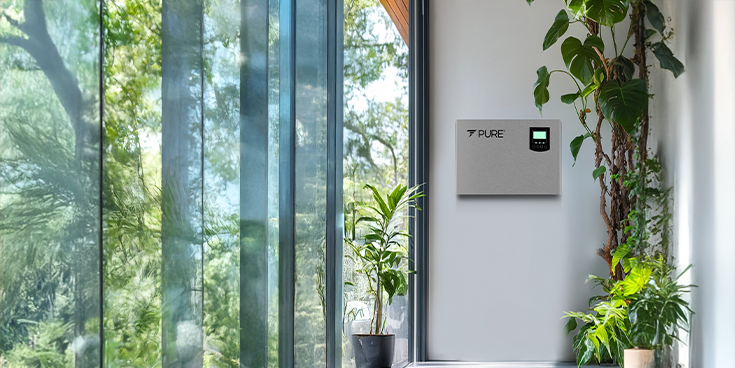
Batteries hate heat. Try a shaded, ventilated utility space. Avoid the sun-baked balcony where even plants give up. Wall-mounted lithium packs are neat and quiet—less “machine room,” more “appliance that minds its business.”
Small but useful nerd facts (I promise)
Depth of Discharge (DoD): Lithium can safely go deeper, which means you use more of what you paid for. Lead-acid throws a tantrum if you drain it too much, too often.
Round-trip efficiency: Lithium ~90–95%, lead-acid often 70–85%. That’s like getting more juice from the same orange.
Cycle life: Lithium can do 3x–5x the cycles. Long game matters.
Switchover time: Good inverter systems switch fast enough that your Wi-Fi barely blinks. Some UPS-grade units are so fast your PC won’t notice.
What people are saying online (beyond the usual noise)
On Reddit and local housing forums, the vibe is: “Lead-acid got me through college, lithium got me through marriage.” Translation: once you manage a home with fridge, gadgets, kids, and 40°C days, reliability becomes the MVP. Also, resale value of a home with solar + battery isn’t a meme anymore. Brokers mention it now like they mention modular kitchens.
My not-fancy buying advice
Decide your essentials first.
Size the battery honestly (2–3kWh for basics, 5kWh+ if you want AC or longer backups).
Consider hybrid if you have solar or plan to.
Don’t bargain away the warranty.
Choose a brand that shows real installs and specs (chemistry, cycles, DoD), not just pretty ads.
If you want a place to start window-shopping and maybe get a sane quote, check a provider focused on Indian homes and hybrid setups—something like power backup battery for home india. They speak the language of cycles, safety, and rooftop solar—stuff that actually matters.
Wrap, but not a lecture
Nobody dreams of batteries. We just want the fan to keep spinning, the food to stay cold, and the Wi-Fi to not abandon us during a movie night. A solid power backup battery for home india won’t make your house famous, but it’ll make it calm. If you’ve had one too many candlelit “surprises,” it might be time to pick the right setup and move on with life. Start here if you want straightforward options: power backup battery for home india.