

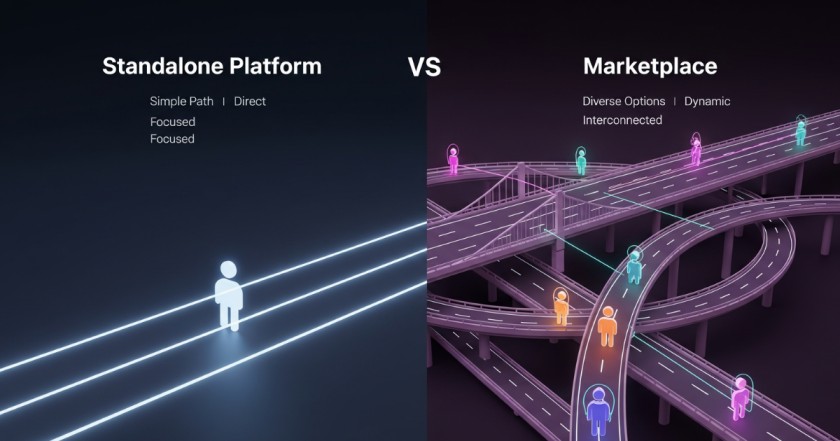
Online marketplaces are no longer limited to consumer shopping. Today, we have different models such as B2B (business-to-business), B2C (business-to-consumer), and P2P (peer-to-peer) platforms, each designed to serve unique audiences. While B2C and P2P focus heavily on individual buyers, B2B marketplaces cater to businesses that need bulk purchasing, long-term contracts, and structured workflows.
So, what makes B2B marketplaces stand apart? Let’s explore the key features that differentiate them from B2C and P2P platforms.
Complex Buying Cycles
B2C and P2P transactions are typically quick. A customer sees a product, compares prices, and makes a purchase. In B2B marketplaces, the buying process is much more complex.
- Businesses often deal with bulk orders instead of single purchases.
- Decision-making involves multiple stakeholders.
- Approval processes, negotiations, and contract agreements are standard.
This means B2B platforms require features that support long sales cycles and formal business transactions.
Bulk Ordering and Tiered Pricing
A defining feature of B2B marketplaces is the ability to handle large-scale orders. Unlike B2C stores that sell individual units, B2B buyers often purchase in bulk.
To support this, B2B platforms include:
- Tiered pricing models based on quantity
- Minimum order value requirements
- Bulk discounts and custom quotes
These features make transactions smoother for businesses while ensuring sellers can manage pricing effectively.
Advanced Vendor Management
In B2C and P2P marketplaces, vendors are typically small-scale sellers or individuals. B2B marketplaces, however, bring together manufacturers, distributors, and wholesalers.
This requires:
- Dedicated vendor dashboards for managing bulk inventory
- Tools for tracking shipments and supply chain logistics
- Features for negotiating terms directly with buyers
Vendor management in B2B platforms is more structured and formal than in consumer-focused models.
Secure and Flexible Payments
While B2C and P2P platforms rely on quick digital payments like credit cards or wallets, B2B marketplaces need more flexibility. Businesses often rely on invoicing, credit terms, and international transactions.
That’s why B2B platforms usually include:
- Multiple payment methods, including wire transfers and credit lines
- Escrow services for secure international trade
- Integration with ERP and accounting systems
This level of financial flexibility is critical for handling high-value, recurring transactions.
Customized Workflows and Integrations
B2C and P2P platforms are built for simplicity, but B2B marketplaces need to integrate with existing business systems. For example:
- ERP and CRM integrations help businesses manage inventory and customers.
- Custom approval workflows allow managers to authorize purchases.
- Contract management systems ensure long-term deals are tracked properly.
Such integrations make B2B platforms highly functional for enterprise-level needs.
Stronger Focus on Trust and Compliance
While reviews and ratings are enough to build trust in B2C or P2P platforms, B2B marketplaces go further. They need:
- Verified business profiles
- Compliance checks and certifications
- Secure contract handling and dispute resolution
These measures ensure businesses only deal with reliable partners.
Conclusion
B2B marketplaces are designed for complexity, scale, and long-term relationships. Unlike B2C or P2P platforms that focus on quick consumer transactions, B2B platforms support bulk orders, flexible payments, detailed vendor management, and compliance features.
By integrating advanced tools and workflows, B2B marketplaces create a structured environment where businesses can collaborate confidently. For any company targeting enterprise buyers, understanding these differences is essential when planning marketplace development.