

Introduction
The global solar industry is booming, with solar installation capacity projected to cross 500 GW annually by 2030. As solar panel installation companies scale up, competition, regulatory pressure, and operational complexities are mounting.
One silent game-changer in this transformation is Enterprise Resource Planning (ERP) software.
ERP is no longer just about accounting it’s about creating integrated ecosystems that connect sales, projects, inventory, field operations, and compliance. For solar panel installers, adopting ERP can mean the difference between scaling efficiently or falling behind.
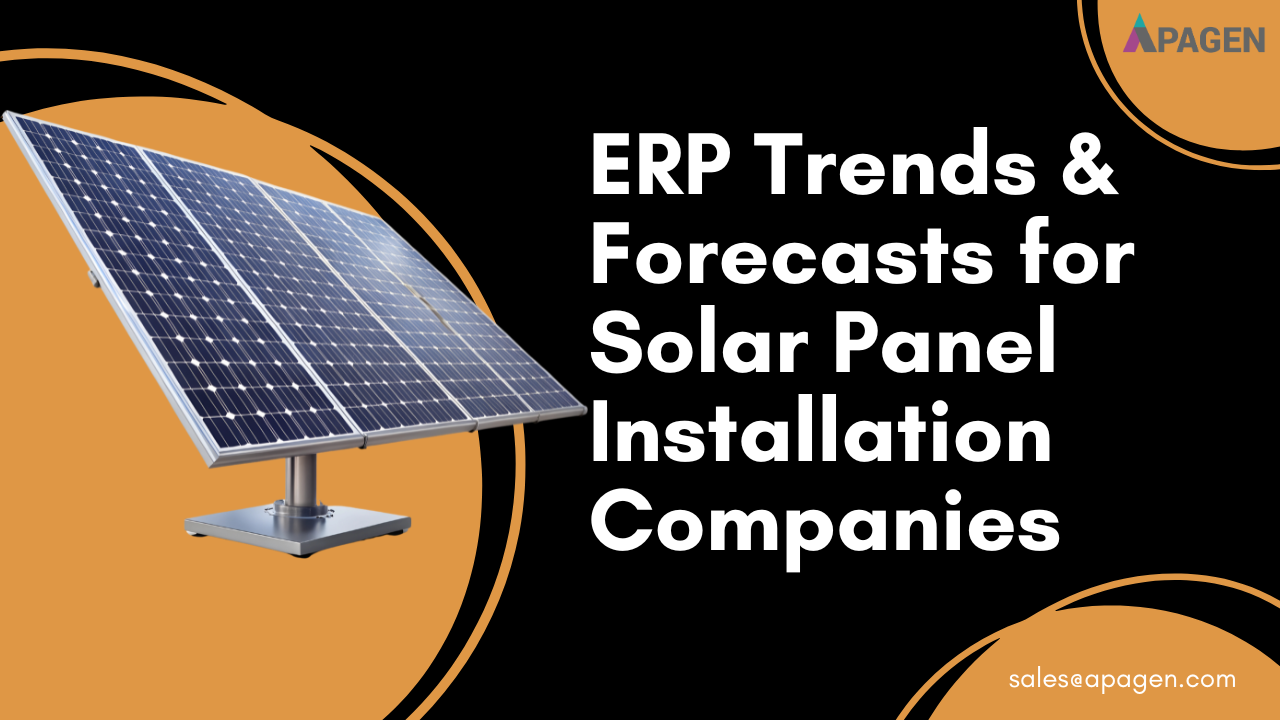
In this blog, we highlight the top ERP trends and forecasts shaping solar panel installation companies and why now is the right time to invest in future-ready ERP solutions like Odoo.
1. End-to-End Project Management Is Becoming the Norm
Trend
Solar installation projects are becoming larger, more complex, and spread across multiple sites. Companies are shifting to ERP systems with integrated project management features to track costing, schedules, labor allocation, and material usage in real time.
Forecast
By 2027, over 70% of solar EPC and installation companies will run project execution through ERP modules to ensure tighter cost control and on-time delivery.
2. Inventory & Supply Chain Visibility Is Critical
Trend
Supply chain disruptions and fluctuating raw material costs (e.g., panels, inverters, batteries) are a constant challenge. ERP platforms are enabling real-time inventory tracking, vendor integration, and demand forecasting to optimize procurement.
Forecast
By 2026, solar companies using ERP-driven supply chain automation will lower inventory carrying costs by at least 15–20% compared to those using siloed systems.
3. Rise of Field Service ERP Integration
Trend
Field installation teams need real-time access to project data, scheduling, and issue resolution. ERP systems are now integrating with field service apps for mobile access, technician tracking, and automated service reports.
Forecast
Within the next 3 years, 60% of solar panel installers will deploy mobile-enabled ERP systems to connect field technicians with back-office teams, ensuring faster response times and better customer satisfaction.
4. Financial Transparency & Compliance Are Driving ERP Adoption
Trend
With subsidies, tax incentives, and carbon credits in play, financial compliance in solar projects is complex. ERP systems are being used to automatically manage GST, subsidies, government reporting, and tax compliance.
Forecast
By 2028, regulatory-driven ERP adoption in solar will increase by 40%, as governments enforce stricter reporting on renewable energy subsidies and carbon reduction metrics.
5. AI-Powered Forecasting & Predictive Maintenance
Trend
ERP is evolving from reactive management to predictive intelligence. For solar, AI-driven ERP can forecast energy yield, predict equipment maintenance needs, and optimize resource allocation.
Forecast
By 2030, AI-embedded ERP platforms will become a standard, helping solar installers reduce project downtime by 25% and improve ROI forecasting accuracy by 30–35%.
6. Modular, Cloud-Based ERP Is Becoming the Default
Trend
Solar companies are moving away from rigid, on-premise ERP setups. Instead, they are adopting cloud ERP platforms like Odoo, which allow modular deployments across CRM, sales, invoicing, inventory, and project management.
Forecast
By 2026, 80% of solar panel installation firms will adopt cloud-based ERP systems, driven by scalability, remote accessibility, and reduced upfront IT costs.
7. Customer Experience as a Growth Driver
Trend
With solar becoming mainstream, differentiation is shifting from price to customer experience. ERP systems with integrated CRM + project lifecycle tracking are empowering solar companies to give customers real-time visibility into their projects.
Forecast
By 2027, customer-centric ERP adoption will increase by 50%, with companies prioritizing transparency and engagement to win long-term contracts.
Strategic Takeaway for Solar Companies
The solar industry is entering a new era where ERP is no longer optional it’s a strategic necessity.
Whether it’s streamlining installation projects, managing field teams, automating compliance, or forecasting ROI, ERP platforms like Odoo are enabling solar panel companies to operate at scale with agility.
The companies that digitize early with ERP will be best positioned to capture new market opportunities, ensure profitability, and sustain long-term growth in the renewable energy boom.
If you’re a solar panel installation company looking to scale efficiently, cut costs, and deliver projects faster, now is the right time to adopt a future-ready ERP system.
At Apagen, we specialize in helping renewable energy businesses implement customized Odoo ERP solutions that cover everything from CRM to project execution, compliance, and analytics.
Let’s talk about how ERP can transform your solar operations. Drop us a line at sales@apagen.com or call us on +91 9971800665.