




Choosing between custom e-commerce platforms and ready-made solutions is a pivotal decision for businesses launching or scaling online. Each option offers distinct advantages, but the best choice depends on your business size, goals, and resources. With global e-commerce sales soaring in 2025, understanding these platforms ensures you optimize performance, user experience, and growth.
What Are Ready-Made E-Commerce Platforms?
Ready-made platforms are pre-built solutions designed for quick setup. Popular options like Shopify, Woo Commerce, and Big Commerce provide templates, hosting, and tools for inventory, payments, and marketing. These platforms suit small to medium businesses due to their affordability and ease of use.
Benefits of Ready-Made Solutions
Ready-made platforms shine in accessibility. They require minimal technical expertise, enabling businesses to launch stores within days. Monthly subscriptions keep costs predictable, often starting at low rates. Built-in features like SEO tools, mobile responsiveness, and secure payment gateways streamline operations. Regular updates and customer support ensure reliability, while app marketplaces add functionality, such as analytics or email marketing integrations.
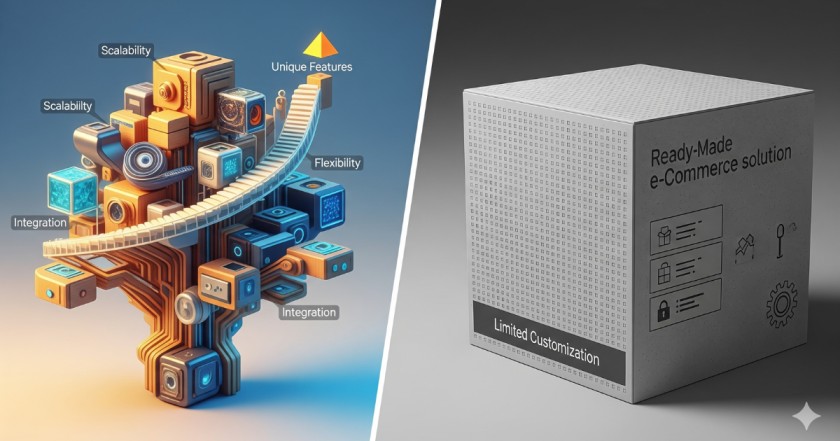
However, customization is limited. Templates restrict design flexibility, and scaling complex operations may require costly add-ons. Businesses with niche needs might find these platforms restrictive.
Check out this: Marketplace Development Services
What Are Custom E-Commerce Platforms?
Custom platforms are built from scratch, tailored to a business’s unique requirements. Using frameworks like Django or Magento, developers create bespoke solutions for specific workflows, branding, or integrations. These suit large enterprises or businesses with specialized needs.
Advantages of Custom Platforms
Custom platforms offer unmatched flexibility. Businesses can design unique user interfaces, integrate specific payment systems, or build proprietary features like personalized product recommendations. Scalability is a key strength, supporting high traffic or complex inventory systems. Custom solutions also enhance brand identity with tailored aesthetics and functionality, creating memorable customer experiences.
On the downside, development costs are high, often requiring significant upfront investment. Build times can span months, delaying launches. Ongoing maintenance, including updates and security patches, demands dedicated technical teams, adding to expenses.
Comparing Key Factors
When deciding, consider budget, timeline, and technical resources. Ready-made platforms are cost-effective, with plans starting at affordable rates, while custom builds can cost tens of thousands. Launch speed favors ready-made solutions, ideal for businesses needing quick market entry. Customization and scalability tilt toward custom platforms, which adapt to unique needs and growth.
User experience is critical. Ready-made platforms offer mobile-optimized templates, but custom platforms can deliver tailored, seamless interactions. Security is robust in both, though custom platforms require proactive management to stay secure. Integration with tools like CRMs or ERPs is smoother with custom builds, while ready-made platforms rely on plug-ins, which may have limitations.
Which Is Right for Your Business?
Small businesses or startups with limited budgets benefit from ready-made platforms for their simplicity and speed. Established brands or niche markets may prefer custom solutions to differentiate and scale. Hybrid approaches, like using a ready-made platform with custom extensions, can balance cost and flexibility.
Testing demos of ready-made platforms or consulting developers for custom builds clarifies fit. In 2025, aligning your choice with business goals whether rapid deployment or unique functionality drives success in the competitive e-commerce landscape.
Check out this: On-Demand App Development Services


E-commerce is here to stay, which means it is useless to examine how drastically it will shape the future of retail and customer behavior since it already has!
The things are e-commerce is a very competitive space that has gone through the most intense technological transformations over the recent years and the change isn’t going to stop sooner.
After serving millions of customers over the last few years, e-commerce businesses have not only gained experience and industry insight but also a large pool of data.
This data was considered a wastage of resources a few years ago, recent development in machine learning, pattern recognition etc.
has made it virtually a gold mine through which invaluable information can be extracted about the consumer behavior.
A few years ago, these technologies have been used by just large corporations mainly due to high cost, but now they are increasingly getting cheaper and widely accessible to enable small businesses to reap the benefits as well- i.e.


Of course, they won't deal with manufacturing and they won’t deal with require to worry about unsold goods or stock which can make a huge loss.
Coming years has a drastic change in the Manufacturing, Supply Chain, Retail units with the logistic companies.
It's been agreed that now 40% of purchases are happening over the logistic companies such as e-commerce and woo-commerce businesses and expected to reach 75% in coming days.
If you are stepping to enter in a Logistical business sector then you must reach this article.
Many reasons to say “why having an e-commerce app is beneficial to businesses.” And how advantageable it is to have an e-commerce mobile app for your business: It helps you target the audience globally.Increases online visibility of your business.Helps in building brand recognition.Makes it easy for the customers to reach.Allows you to communicate with the customers and interact with them.Keeps the customers engaged with your products.Quick updates to customers about your business regarding discounts or sale through push notifications.
Folks are now super busy with own schedules hence their is highly less preferred ones who spare some to buy at a local shop in limited choices unless they have a tight time to buy or unexpected plan.