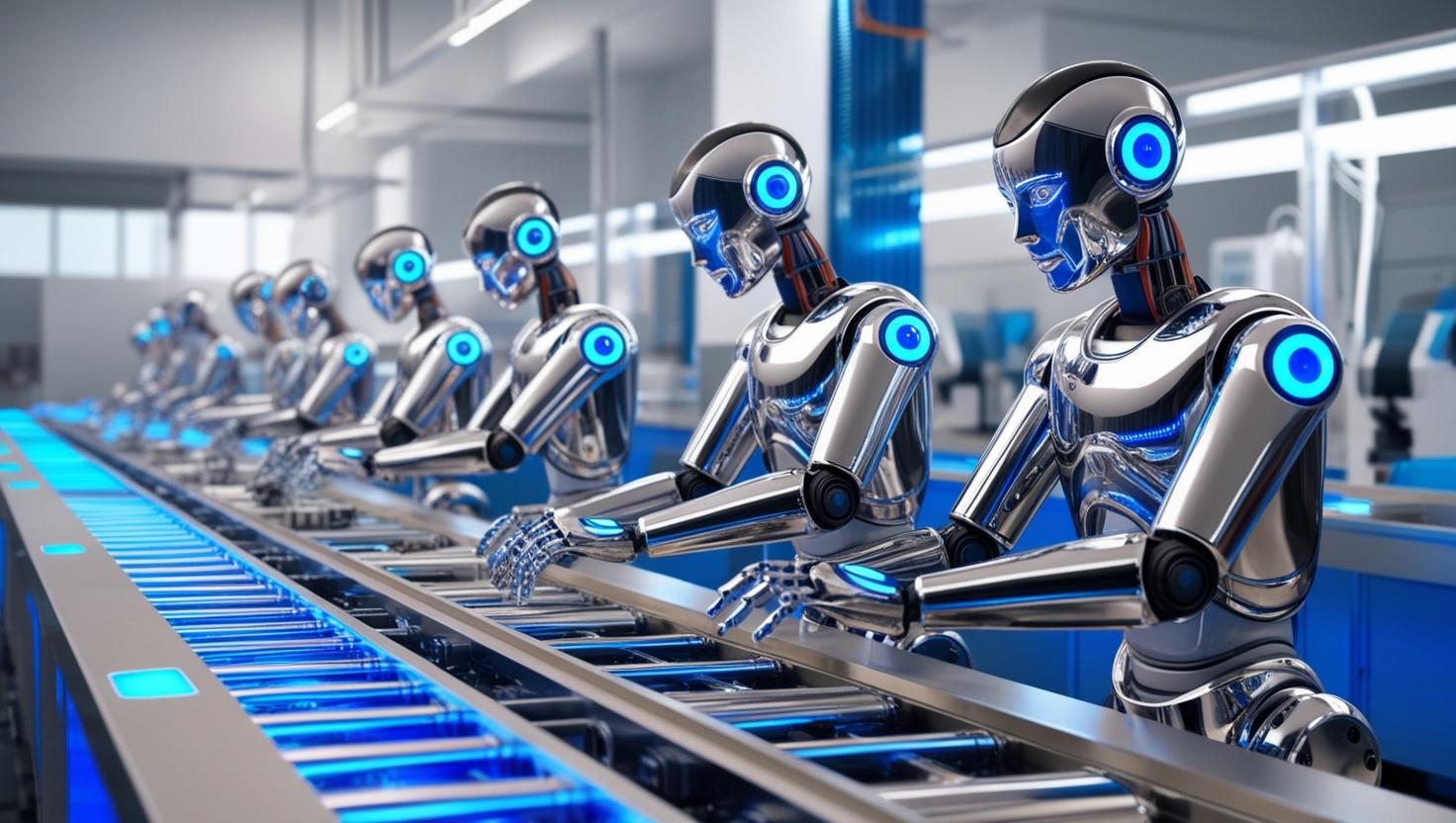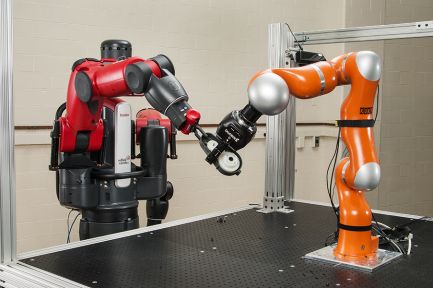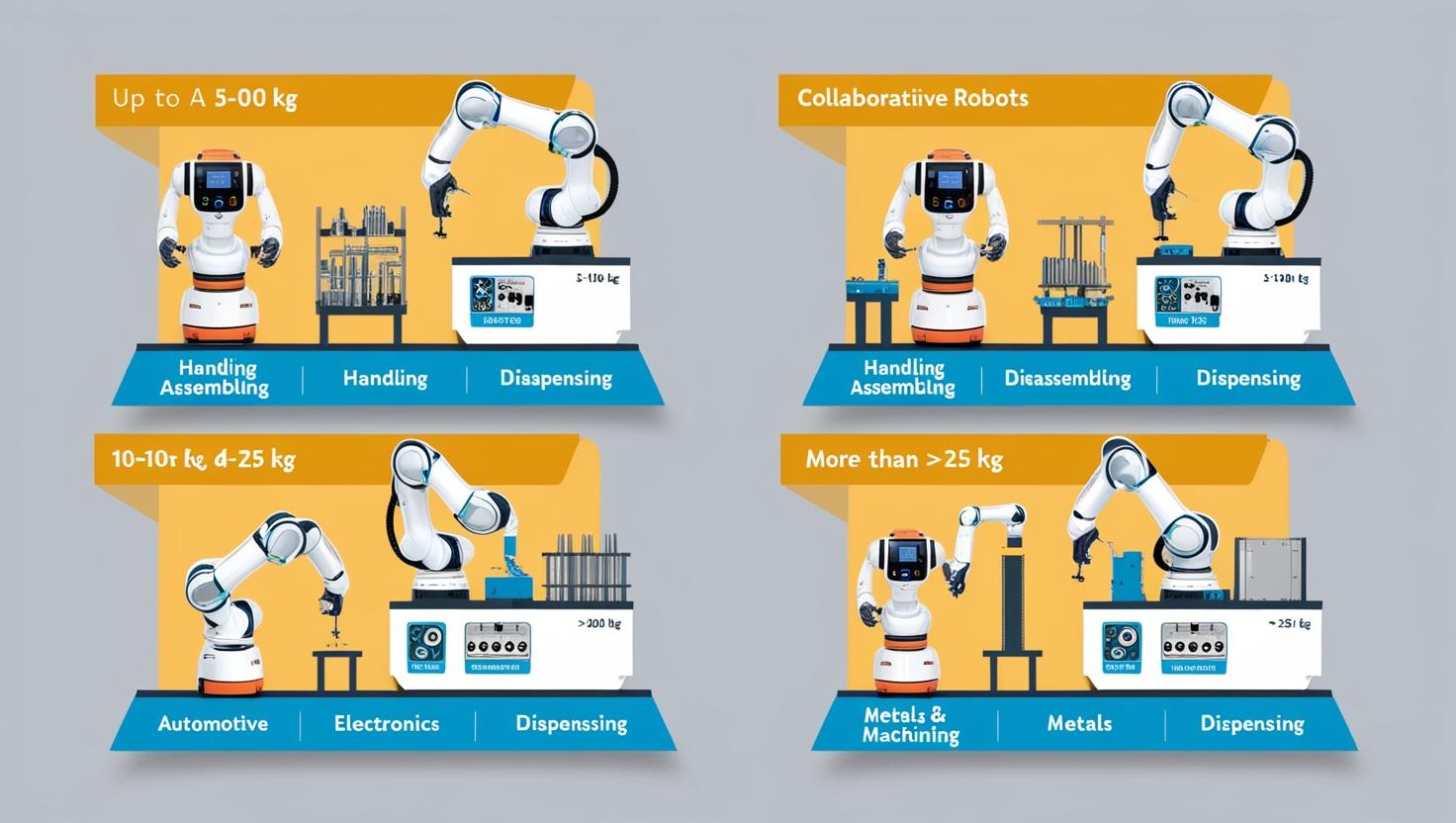
The industrial landscape is being transformed by a new class of automation: collaborative robots, or cobots. Unlike traditional robots built for isolated, repetitive tasks behind safety barriers, cobots are designed to work alongside humans, sharing tasks, adapting in real-time, and enhancing workforce productivity. At the core of this evolution is the seamless integration of Artificial Intelligence (AI), which has unlocked a new era of human-machine interaction. As industries pursue greater agility and smarter automation, the collaborative robots market is poised for exceptional growth.
The Rise of Collaborative Robotics
Collaborative robots first emerged as a solution for making robotics more accessible and flexible for small and mid-sized enterprises. Early cobots were limited in functionality and required manual programming. However, their ability to operate safely near humans—thanks to integrated sensors and force-limiting technology—gave them a unique edge over traditional industrial robots. Over the past decade, their capabilities have rapidly expanded. Today’s cobots are mobile, intelligent, and adaptive, making them suitable for a wide range of sectors from manufacturing to medical technology.
This broader adoption has been fueled by a growing need for safer workplaces, more efficient operations, and workforce augmentation amid labor shortages. The result is a collaborative robots market that has shifted from niche to mainstream, with increasing investments in R&D, hardware innovation, and software intelligence.
AI-Powered Human-Machine Interaction
The real turning point in the cobot story is the integration of AI. Artificial Intelligence now enables cobots to do more than follow simple instructions—they can perceive, interpret, and respond to their environments. Vision systems powered by AI allow cobots to identify objects, read labels, and detect humans in real-time. Voice recognition systems can interpret verbal commands, making interaction more intuitive. Machine learning algorithms let cobots learn from historical data and past performance to improve their own efficiency and adaptability.
This AI-driven interaction has made cobots far easier to deploy. Instead of relying on complex code or reprogramming, operators can teach cobots new tasks through demonstration or simple interfaces. This has significantly lowered the barrier to entry for smaller companies and expanded the market potential. With each iteration, cobots are becoming less like machines and more like intelligent collaborators capable of understanding human intention and working proactively to achieve shared goals.
Download PDF Brochure @ https://www.marketsandmarkets.com/pdfdownloadNew.asp?id=194541294
Market Growth Fueled by Diverse Applications
While cobots initially found their home in automotive assembly lines, their evolution has sparked adoption across a broad range of industries. In electronics manufacturing, cobots handle small, delicate components with precision and consistency. In logistics, they support warehouse operations by automating packaging, picking, and palletizing. Healthcare applications range from surgical assistance to laboratory automation, where cobots help reduce human error and increase throughput.
This cross-sector appeal has made the collaborative robots market one of the fastest-growing segments within industrial automation. As AI capabilities improve and deployment costs continue to fall, more industries are exploring how cobots can complement human labor rather than replace it. This has helped redefine automation from a cost-cutting strategy into a value-adding partnership between people and machines.
Human-Centric Design and Safety
One of the most important aspects of cobots is their inherently human-centric design. Built to safely operate near and interact with humans, cobots are engineered with torque sensors, speed limiters, and automatic shutdown capabilities to prevent accidents. Unlike traditional robots, which require safety cages, cobots can work on open production floors, saving space and increasing workflow flexibility.
AI enhances this safety by adding a layer of perception and anticipation. Predictive modeling allows cobots to adjust their behavior based on human proximity, movement, and patterns, reducing risk and enabling smoother collaboration. As AI continues to evolve, future cobots will be capable of recognizing emotional cues or stress in human counterparts, creating an even more empathetic and responsive working environment.
Future Outlook: Intelligence Meets Autonomy
The future of the collaborative robots market lies in further enhancing autonomy, connectivity, and intelligence. Ongoing advancements in edge AI, 5G connectivity, and cloud robotics will soon enable cobots to make faster decisions, share data across networks, and work collectively as part of intelligent ecosystems. This could lead to scenarios where multiple cobots autonomously coordinate their efforts across an entire production line, warehouse, or even hospital ward.
Additionally, technologies such as augmented reality (AR) may play a role in simplifying how humans interact with cobots, making setup, training, and task assignment even more intuitive. With these advancements, collaborative robots are not just tools—they become dynamic, cognitive assets within the workplace.
The collaborative robots market is experiencing rapid growth, driven by innovation in AI and a shift toward more human-centric automation. These machines are no longer just performing tasks—they are learning, adapting, and engaging with people in ways that enhance productivity and transform the work experience. As human-machine interaction becomes more natural and intelligent, cobots are poised to become integral to the future of work across virtually every industry. For businesses looking to balance efficiency with flexibility, the age of collaborative robotics has truly arrived.
About MarketsandMarkets™
MarketsandMarkets™ has been recognized as one of America's Best Management Consulting Firms by Forbes, as per their recent report.
MarketsandMarkets™ is a blue ocean alternative in growth consulting and program management, leveraging a man-machine offering to drive supernormal growth for progressive organizations in the B2B space. With the widest lens on emerging technologies, we are proficient in co-creating supernormal growth for clients across the globe.
Today, 80% of Fortune 2000 companies rely on MarketsandMarkets, and 90 of the top 100 companies in each sector trust us to accelerate their revenue growth. With a global clientele of over 13,000 organizations, we help businesses thrive in a disruptive ecosystem.
The B2B economy is witnessing the emergence of $25 trillion in new revenue streams that are replacing existing ones within this decade. We work with clients on growth programs, helping them monetize this $25 trillion opportunity through our service lines – TAM Expansion, Go-to-Market (GTM) Strategy to Execution, Market Share Gain, Account Enablement, and Thought Leadership Marketing.
Built on the 'GIVE Growth' principle, we collaborate with several Forbes Global 2000 B2B companies to keep them future-ready. Our insights and strategies are powered by industry experts, cutting-edge AI, and our Market Intelligence Cloud, KnowledgeStore™, which integrates research and provides ecosystem-wide visibility into revenue shifts.
To find out more, visit www.MarketsandMarkets™.com or follow us on Twitter , LinkedIn and Facebook .
Contact:
Mr. Rohan Salgarkar
MarketsandMarkets™ INC.
1615 South Congress Ave.
Suite 103, Delray Beach, FL 33445
USA: +1-888-600-6441
Visit Our Website: https://www.marketsandmarkets.com/