

Children learn and grow not just through books or technology, but also through play and creative activities. Traditional crafts and toys play a significant role in shaping their development by offering experiences that are hands-on, imaginative, and deeply connected to culture. These timeless practices not only keep children entertained but also teach them essential life skills such as patience, creativity, problem-solving, and emotional balance. In a world dominated by screens, revisiting traditional crafts gives children the opportunity to explore play in its purest and most enriching form.
Exploring Heritage Through Play
Parents who encourage their kids to engage with cultural play often find that it shapes both creativity and identity. When children view collection of traditional toys, they are introduced to heritage in a playful and meaningful way. Wooden spinning tops, clay figurines, handmade dolls, and folk games represent much more than fun they embody stories, traditions, and values passed down through generations. This exposure fosters cultural pride while allowing children to appreciate the artistry of local craftspeople, keeping traditions alive through everyday play.
Enhancing Motor Skills and Coordination
Traditional crafts and toys often involve movement, touch, and dexterity, which help children strengthen their motor skills. Activities like folding paper, weaving mats, painting earthen pots, or playing with a classic wooden toy such as spinning tops require hand-eye coordination and fine motor control. These small yet impactful practices build the foundation for writing, drawing, and other academic skills. Unlike digital toys, traditional crafts encourage children to engage their bodies fully, turning playtime into a form of natural learning.
Boosting Creativity and Imagination
One of the greatest benefits of traditional crafts is how they spark creativity. When children are given clay, cloth, or wooden blocks, they are free to shape, design, and create something new. This process nurtures problem-solving and imagination, allowing them to experiment without fear of failure. Unlike pre-programmed electronic games, traditional crafts encourage open-ended play where the child defines the outcome. This freedom of expression builds confidence and inspires lifelong creativity.
Building Patience and Focus
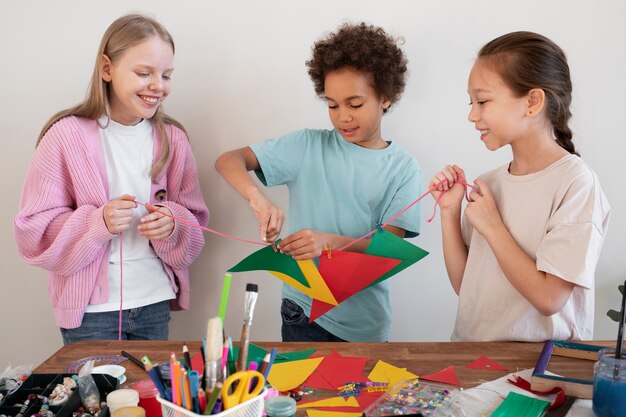
In a fast-paced world, traditional crafts help children slow down and concentrate. Making a kite, threading beads, or painting a kolam (rangoli) requires focus and steady effort. Through such tasks, children learn the value of patience and persistence. These qualities are transferable to academics, sports, and personal growth, making traditional crafts not only entertaining but also a valuable tool for developing discipline.
Strengthening Social Bonds
Crafts and traditional toys are often enjoyed in groups, fostering teamwork and collaboration. Games like Pallanguzhi (a traditional board game) or creating festival decorations encourage children to interact with peers and family members. Such group activities strengthen social connections and teach children how to share, negotiate, and celebrate collective success. These experiences build emotional intelligence and resilience, essential traits for navigating real-world challenges.
Preserving Cultural Identity
Every region has its unique crafts and toys that reflect its culture, history, and values. By engaging in these activities, children not only develop skills but also connect with their cultural roots. For instance, crafting dolls for festivals, learning folk art patterns, or playing indigenous games allows them to absorb traditions in a natural, joyful way. These practices serve as bridges between generations, ensuring that cultural knowledge is preserved and celebrated in modern times.

Supporting Emotional Well-Being
Craft-based play is also therapeutic for children. Activities such as painting, sculpting, or weaving provide a sense of calm and fulfillment, reducing stress and anxiety. The tactile experience of handling clay or natural materials connects them to the environment and promotes mindfulness. These simple yet powerful activities help children manage emotions, build self-esteem, and feel grounded amidst the pressures of academic and social life.
Eco-Friendly Learning and Sustainability
Unlike mass-produced plastic toys, traditional crafts are often made from natural and eco-friendly materials like wood, clay, or cloth. Introducing children to these toys not only promotes sustainability but also builds environmental awareness from a young age. They learn that fun does not have to come at the cost of nature. By playing with handmade, biodegradable crafts, children begin to appreciate the importance of protecting the environment while enjoying creativity in its purest form.
Encouraging Lifelong Skills
The skills children gain through traditional crafts extend well into adulthood. Creativity, patience, problem-solving, and cultural pride become part of their personality. Many of these children grow up with an appreciation for art, sustainable living, and mindfulness qualities that enrich their lives and careers. In this sense, traditional crafts are not just childhood pastimes but stepping stones toward well-rounded adulthood.
Conclusion
The role of traditional crafts in children’s development cannot be overstated. They enhance creativity, motor skills, patience, and cultural identity while also providing emotional and social benefits. In an age where digital distractions dominate, these timeless practices offer a grounding alternative that nurtures both the heart and mind. By introducing children to traditional toys and crafts, parents and educators can ensure that cultural heritage thrives while children grow into creative, mindful, and responsible individuals.