


Market Overview
U.S. Antibiotics Market size and share is currently valued at USD 18.09 Billion in 2024 and is anticipated to generate an estimated revenue of USD 25.24 Billion by 2034, according to the latest study by Polaris Market Research. Besides, the report notes that the market exhibits a robust 3.4% Compound Annual Growth Rate (CAGR) over the forecasted timeframe, 2025 - 2034
The U.S. antibiotics market encompasses a wide range of prescription medications designed to treat bacterial infections, including broad-spectrum and narrow-spectrum agents across multiple drug classes such as penicillins, cephalosporins, macrolides, fluoroquinolones, and newer-generation agents like carbapenems and lipoglycopeptides. The market includes both generic and branded formulations, with generics dominating in volume due to cost-effectiveness and widespread insurance coverage. However, branded antibiotics—particularly those developed to address multidrug-resistant organisms—are gaining traction in hospital and specialty care settings.
The market is supported by a well-established healthcare delivery system, strong R&D capabilities, and active involvement from federal agencies such as the FDA and CDC in monitoring antibiotic use and resistance patterns. Despite the availability of numerous treatment options, the rising prevalence of resistant bacterial strains continues to challenge clinical outcomes, prompting renewed investment in next-generation antimicrobials and stewardship programs.
Growth Drivers
Several factors are fueling the expansion of the U.S. antibiotics market. First, the persistent burden of bacterial infections—including pneumonia, urinary tract infections, skin and soft tissue infections, and hospital-acquired infections—ensures consistent demand for effective treatments. Additionally, the aging population in the United States is more susceptible to infections due to weakened immune systems and comorbidities, further increasing antibiotic utilization.
Second, government initiatives such as the Combating Antibiotic-Resistant Bacteria (CARB) initiative and the Generating Antibiotic Incentives Now (GAIN) Act have created a supportive environment for pharmaceutical innovation. These programs offer extended exclusivity periods and funding for research, encouraging biotech and pharmaceutical companies to develop new antibiotics targeting resistant pathogens like MRSA, VRE, and carbapenem-resistant Enterobacteriaceae.
Third, the integration of rapid diagnostic technologies is transforming treatment approaches. Faster identification of pathogens enables more precise antibiotic selection, reducing unnecessary prescriptions and improving patient outcomes. This trend supports the shift toward targeted therapy and strengthens the value proposition of newer, more specific antibiotics.
Major Key Players:
Cumberland Pharmaceuticals, Inc.
Entasis Therapeutics (now part of Innoviva)
Melinta Therapeutics LLC
Merck & Co., Inc.
Nabriva Therapeutics PLC
Paratek Pharmaceuticals, Inc.
Pfizer Inc.
Spero Therapeutics
Venatorx Pharmaceuticals
Viatris, Inc.
Market Challenges and Opportunities
Despite these positive developments, the market faces significant challenges. Antimicrobial resistance remains a major public health threat, with the CDC estimating millions of resistant infections and tens of thousands of deaths annually. Overuse and misuse of antibiotics in both human medicine and agriculture have accelerated resistance, limiting the effectiveness of existing drugs.
Additionally, the economic model for antibiotic development is under strain. High R&D costs, low reimbursement rates, and the need to reserve new drugs for severe cases have discouraged investment from large pharmaceutical firms. As a result, many antibiotic developers are small biotech companies reliant on public funding and partnerships.
However, these challenges also present opportunities. There is growing momentum toward public-private partnerships, such as the AMR Action Fund, aimed at revitalizing the antibiotic pipeline. Furthermore, advancements in synthetic biology, phage therapy, and narrow-spectrum agents offer promising alternatives to traditional antibiotics. The increasing adoption of antibiotic stewardship programs in healthcare facilities also creates a framework for more sustainable use, improving long-term market viability.
𝐄𝐱𝐩𝐥𝐨𝐫𝐞 𝐓𝐡𝐞 𝐂𝐨𝐦𝐩𝐥𝐞𝐭𝐞 𝐂𝐨𝐦𝐩𝐫𝐞𝐡𝐞𝐧𝐬𝐢𝐯𝐞 𝐑𝐞𝐩𝐨𝐫𝐭 𝐇𝐞𝐫𝐞: https://www.polarismarketresearch.com/industry-analysis/us-antibiotics-market
Market Segmentation
The U.S. antibiotics market can be segmented by drug class, route of administration, distribution channel, and end-user. By class, beta-lactams remain the most widely used, followed by macrolides and fluoroquinolones. Intravenous antibiotics dominate in hospital settings, particularly for severe infections, while oral formulations are prevalent in outpatient care.
Distribution channels include hospital pharmacies, retail pharmacies, and e-pharmacies, with hospital procurement accounting for a significant share due to the use of injectable and high-cost agents. End-users span acute care hospitals, long-term care facilities, ambulatory surgery centers, and home healthcare, reflecting the diverse settings in which antibiotics are administered.
Regional Analysis
While the U.S. functions as a unified market, regional variations exist in antibiotic prescribing patterns and resistance rates. The Northeast and Midwest report higher usage of broad-spectrum antibiotics, often linked to dense urban populations and large medical centers. Southern states face challenges with higher rates of certain resistant infections, prompting targeted public health interventions. The West, particularly California, has been a leader in antibiotic stewardship and surveillance programs, setting benchmarks for responsible use.
Federal and state-level policies, insurance coverage models, and access to specialty care further influence regional dynamics. Telemedicine expansion has also improved access to appropriate antibiotic prescriptions in rural areas, reducing inappropriate use.
Summary
The U.S. antibiotics market stands at a pivotal juncture, balancing the ongoing need for effective bacterial infection treatments with the imperative to address antimicrobial resistance. Driven by demographic trends, policy support, and technological innovation, the market continues to evolve. While challenges in drug development and resistance persist, emerging opportunities in diagnostics, stewardship, and novel therapeutics offer a pathway toward a more sustainable future. As stakeholders across healthcare, industry, and government collaborate, the U.S. remains at the forefront of efforts to ensure antibiotics remain a cornerstone of modern medicine.
More Trending Latest Reports By Polaris Market Research:
Artificial Intelligence in Agriculture Market
Athletic Footwear Market
Small Caliber Ammunition Market
Head And Neck Cancer Market
Cloud Mobile Backend as a Service (BaaS) Market
Virtual Reality Market
Laminated Busbar Market
Automotive Aftermarket Market
Head And Neck Cancer Market

The global Frozen Food Market size is expected to value at USD 360.36 billion by 2024.
The market is subject to witness a substantial growth due to the changing lifestyle patterns, shifting preferences among consumers towards ready-to-cook meals, increasing demand for convenience food, and growing focus towards hygienic food products.
Frozen food products are able to retain maximum vitamins and minerals.The freezing allows longer shelf life for the food products and limits any form of microbial growth that leads to food spoilage.
In addition, increasing penetration by e-commerce retail stores is expected to fuel the growth of frozen food industry in the upcoming years.
Increasing demand form staple food products from developed economies across the globe is propelling market growth as well, in the recent years.
Increasing demand for frozen fruits and vegetables from developed and developing economies is expected to positively affect market performance of frozen food industry in the upcoming years.
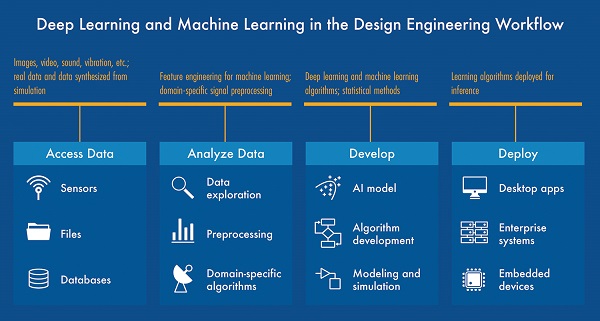
FEB 27, 2020: The global Machine Learning market size is expected to reach USD 96.7 billion by 2025, according to a new report by Radiant Insights, Inc.
In case of businesses, the use of ML models that are open source and have a standards-based structure has increased in recent years.
These models can be easily deployed in various business programs and can help companies bridge the skills gap between IT programmers and information scientists.
Developments such as fine-tuned personalization, hyper-targeting, searching engine optimization, no-code environment, self-learning bots, and others are projected to change the machine learning landscape.
The development of capsule network has replaced neural networks in order to provide more accuracy in pattern detection, with fewer errors.
These advanced developments are anticipated to proliferate market growth in the foreseeable future.Further key findings from the report suggest:The emergence of connected AI is expected to enable ML algorithms to learn continuously based on newly available information.
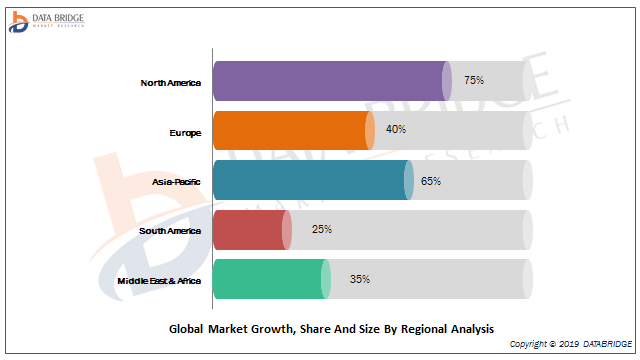
Data Bridge Market Research has provides the Qualitative and informative knowledge by adding titled “Mobile Video Surveillances Market by By Offering (Hardware, Software and Services), By application (Trains and Trams, Buses, Transport Vehicles and others), By Vertical (Transportation, Law Enforcement, Industrial and Military & Defense) and By Geographical Segments ((North America, South America, Europe, Asia-Pacific, Middle East and Africa Analysis and Forecast, 2019 – 2025”.
In this report, Researchers have analyzed Strength, Weakness, opportunities and threats in the market and provides the unbiased picture of the market with the Qualitative and informative knowledge.
Few of the leading organizations’ names are listed here- 3Xlogic, Apollo Video Technology, Avigilon, Axis Communications, Bosch Security Systems, Clearly Insight, Costar Video Systems, Dahua, Dallmeier, Danner’s, Eagle Eye Networks, Flir, Hanwha Techwin, Hikvision, Infinova, Ivideon Video Surveillance, United Technologies, Tyco International, Pelco, Seon, Apollo Video Technology The Global Mobile Video Surveillances Market accounted for USD 1.37 billion in 2017 and is projected to grow at a CAGR of 9.1% the forecast period of 2018 to 2025Get Access to PDF Sample of Global Mobile video surveillance market Size, Status and Forecast 2019-2025 @ https://www.databridgemarketresearch.com/request-a-sample/?dbmr=global-mobile-video-surveillances-marketMarket Definition: Global Mobile Video Surveillances MarketThe mobile video surveillance has gained pace in various application territories, for example, transportation, modern, military and barrier, and law authorization.
In different enterprises including vitality and power, mining, marine, and assembling and development, remote survey and administration of surveillance cameras has picked up footing as of late, encouraging the arrangement of portable video observation frameworks on an expanding scale Major companies covered in the Report Some of the key players in the global mobile video surveillance market are 3Xlogic, Apollo Video Technology, Avigilon, Axis Communications, Bosch Security Systems, Clearly Insight, Costar Video Systems, Dahua, Dallmeier, Danner’s, Eagle Eye Networks, Flir, Hanwha Techwin, Hikvision, Infinova, Ivideon Video Surveillance, United Technologies, Tyco International, Pelco, Seon, Apollo Video Technology, Mid State Instruments, Floatograph Technologies, LLC.
Maxxess Systems, Inc., Strongwatch Corporation, Safety Vision, LLC, Rosco Vision Systems, Maryland Security Professionals, among others.Mobile video surveillance market Scope and Market SizeThe global mobile video surveillance market is segmented based on offering, application, vertical and geographical segments.Based on offering, the global mobile video surveillance market can be segmented into Hardware, Software and Service.
Law and enforcement can be further sub segmented into city surveillance and prisons and correctional facilities.