When you start thinking about putting up a fence in your yard, it’s usually because you want a little more privacy, some extra security, or maybe just to make your outdoor space look nicer, but if your yard happens to be sloped, the whole project can feel way more complicated than you expected, especially when you’re dealing with wood fences, which need to be strong, stable, and lined up properly to look good and hold up over time.
Installing a wood fence on flat ground is pretty straightforward—you just measure, mark, dig, and build—but when your property has hills, uneven ground, or gradual slopes, things can get tricky fast, and that’s where knowing the right techniques and taking your time really pays off.
I’m going to walk you through everything you need to know about installing a wood fence on sloped terrain, and I’ll also touch on why some people choose wood, while others look at chain link fences, and how both options can work in residential, commercial, and even industrial settings in places like Fort Lauderdale and nearby areas.
Why Sloped Terrain Changes the Game
When you’re dealing with sloped terrain, the biggest issue is figuring out how to keep the fence sturdy and visually appealing, because gravity and uneven ground don’t exactly make things easy. A slope creates gaps, awkward angles, and unstable footing if you just try to build a fence like you would on a level yard, so you have to pick a method that works with the land instead of against it.
There are two main approaches most people use: stepping and racking (or following the contour). Each method has its pros and cons, and your choice depends on the type of slope you have, the look you want, and the function the fence needs to serve.
Stepped Fence Method
A stepped fence is built almost like stairs across the slope, with each section of the fence being level, and then the next section stepping up or down to meet the change in ground height. This works especially well if your slope is steep, because trying to angle boards at such a sharp incline can look odd or be structurally weak.
The stepped method is often used for wood fences with panels or pickets, because you can keep the rails straight, and the only adjustment is in how the posts are set at different heights. The downside is that stepping leaves triangular gaps at the bottom of the fence, which may not be a big deal if you’re just marking property lines, but if you’ve got pets, small children, or you’re trying to keep wildlife out, those gaps can be a problem.
You can fill the gaps with landscaping, boards cut to fit, or even gravel, depending on the look you’re going for, but the important thing is knowing that those spaces will exist when you choose this style.
Racked Fence Method
The other option is racking, sometimes called following the contour, and this is where the fence actually angles to match the slope of the land. Instead of stepping, the rails are slanted, and the pickets follow along, so the bottom of the fence is closer to the ground the whole way.
This gives a smoother, more natural look, and it’s especially useful if your slope is gradual rather than sharp. For wood fences, it takes more careful measuring and cutting, since your pickets need to stay evenly spaced while also being angled. Chain link fences, interestingly enough, are easier to rack because the mesh naturally bends along the contour without leaving gaps, which is why chain link is often the go-to solution for large sloped properties in commercial or industrial areas.
Planning Your Fence for a Sloped Yard
Before you even pick up a post hole digger, you’ll want to plan out exactly where the fence is going, what type of wood you’ll use, and whether you want a stepped or racked design.
Here are some steps that make the planning stage smoother:
Walk the property line carefully. Take note of where the slope changes, how steep it is, and whether the ground is consistent or bumpy.
Mark your corners and ends. Use stakes and string to visualize the fence line, and don’t be afraid to adjust if the layout looks awkward on a hill.
Check property codes and rules. If you’re in Fort Lauderdale or nearby, you might have local regulations on fence height, materials, or even style, so it’s worth a quick check before you start.
Decide on wood type. Cedar and pressure-treated pine are common choices, since they handle weather well, but your budget and style preference will play a role too.
Think about gates. Gates on sloped terrain need extra planning so they swing properly without dragging on the ground, and sometimes that means regrading a little section of the yard to make it work.
Tools and Materials You’ll Need
If you’ve decided on a wood fence, here’s a list of what you’ll probably need:
- Wooden posts (treated for outdoor use)
- Fence pickets or panels
- Horizontal rails
- Concrete mix for setting posts
- Gravel for drainage in post holes
- Post hole digger or auger
- Level
- String line and stakes
- Circular saw or handsaw for cutting boards
- Hammer or nail gun
- Galvanized nails or screws
- Tape measure
For chain link fences, the materials list looks different, but the concept is similar—posts, rails, mesh, and hardware—just with fewer boards to cut and align.
Step-by-Step Installation Guide
Step 1: Mark and Dig Post Holes
Start by marking your corner posts, then stretch a string line between them to mark the fence path. Dig your post holes deep enough for stability, usually about a third of the post’s height underground. Add gravel at the bottom for drainage.
Step 2: Set the Corner Posts
Set your corner posts first, making sure they’re level and aligned with the string. Use concrete to secure them, and let them cure for at least 24 hours before you move on.
Step 3: Place Line Posts Along the Slope
Measure your sections and dig holes for the line posts. On a slope, it’s important to keep them plumb (straight up and down) even if the ground angles, because crooked posts will ruin the fence line.
Step 4: Attach Rails According to Method
If you’re stepping, attach your rails level and adjust each section up or down. If you’re racking, angle the rails to follow the slope, and double-check spacing so your pickets line up correctly.
Step 5: Add Pickets or Panels
Install your pickets or panels, keeping them evenly spaced. For stepping fences, the tops will line up level but the bottoms will follow the step pattern. For racked fences, each picket will need to be cut and placed carefully so the top line looks smooth.
Step 6: Secure and Finish
Once everything is up, walk the fence line and secure any loose boards, trim any uneven tops, and check the stability of the posts. Staining or sealing your wood is a smart move in Florida weather since humidity and rain can wear down untreated lumber quickly.
Choosing Between Wood and Chain Link on Slopes
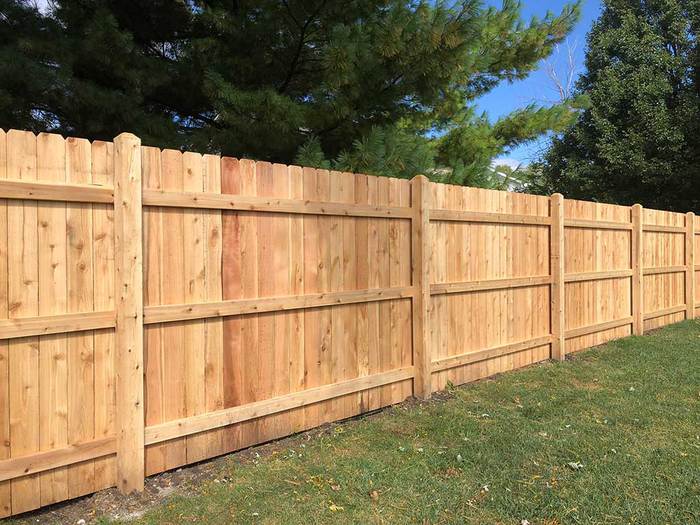
Wood fences look classic, provide privacy, and add real curb appeal, especially in residential areas. On slopes, they require a bit more work but can be customized to fit the style of your home. Chain link fences, on the other hand, are practical, cost-effective, and naturally contour to the ground without leaving big gaps, which is why they’re so common for commercial and industrial clients in sloped areas around Fort Lauderdale.
Some homeowners even mix the two, using wood in the front for looks and chain link in the back for function, especially if the back yard slopes into a wooded area or canal.
Common Mistakes to Avoid
Skipping drainage prep. Without gravel at the base of posts, water collects and rots wood faster.
Not planning for gates. A gate that drags because of a slope is frustrating and wears down quickly.
Uneven post spacing. This makes the fence look sloppy and weak.
Forgetting about neighbors. Make sure you’re not building over the property line or creating an eyesore on the other side.
When to Call in the Pros
While installing a wood fence on a slope is definitely a project you can tackle with patience and the right tools, sometimes it makes sense to call in a professional, especially if the slope is steep, the yard is large, or you’re juggling both wood and chain link sections. A local expert knows the soil conditions, weather patterns, and permitting process, and they’ll make sure your fence lasts.
If you’re in Florida and searching for help, a trusted Fencing Company Fort Lauderdale can handle residential, commercial, and industrial fence projects with the right mix of durability and style.
Final Thoughts
Installing a wood fence on sloped terrain takes some extra effort, but it’s completely doable with the right method, whether you go for the stepped look or the racked style. Both wood and chain link fences have their place, and the choice really comes down to your yard’s slope, your needs for privacy or security, and your personal style. With a little planning, some careful measuring, and a willingness to adapt to the land, you can have a fence that not only works perfectly but also adds value and character to your property.