DevOps has become a disruptive software delivery method in the last ten years. DevOps practices help organizations to deliver software to users more quickly, with fewer defects, and more coordination across teams by closing the development-operations divide. But to many small and mid-sized businesses (SMBs) and even large enterprises, an in-house DevOps team is both costly and resource-intensive to put together and maintain. DevOps as a Service (DaaS) has also come into the picture here as a viable, cost-efficient scaling solution.
DaaS is the offloading of DevOps functions to a set of specialized service providers managing the process of infrastructure automation, continuous integration, and deployment. Businesses can no longer afford to get full in-house teams when they can now procure the highest level of DevOps expertise on demand. This model is characterized by a unique combination of agility and efficiency that enables organizations to work on the primary business objectives and apply the latest tools and practices to stay competitive.
Recommended read: Top DevOps Consulting Companies in 2025
What Is DevOps as a Service (DaaS)?
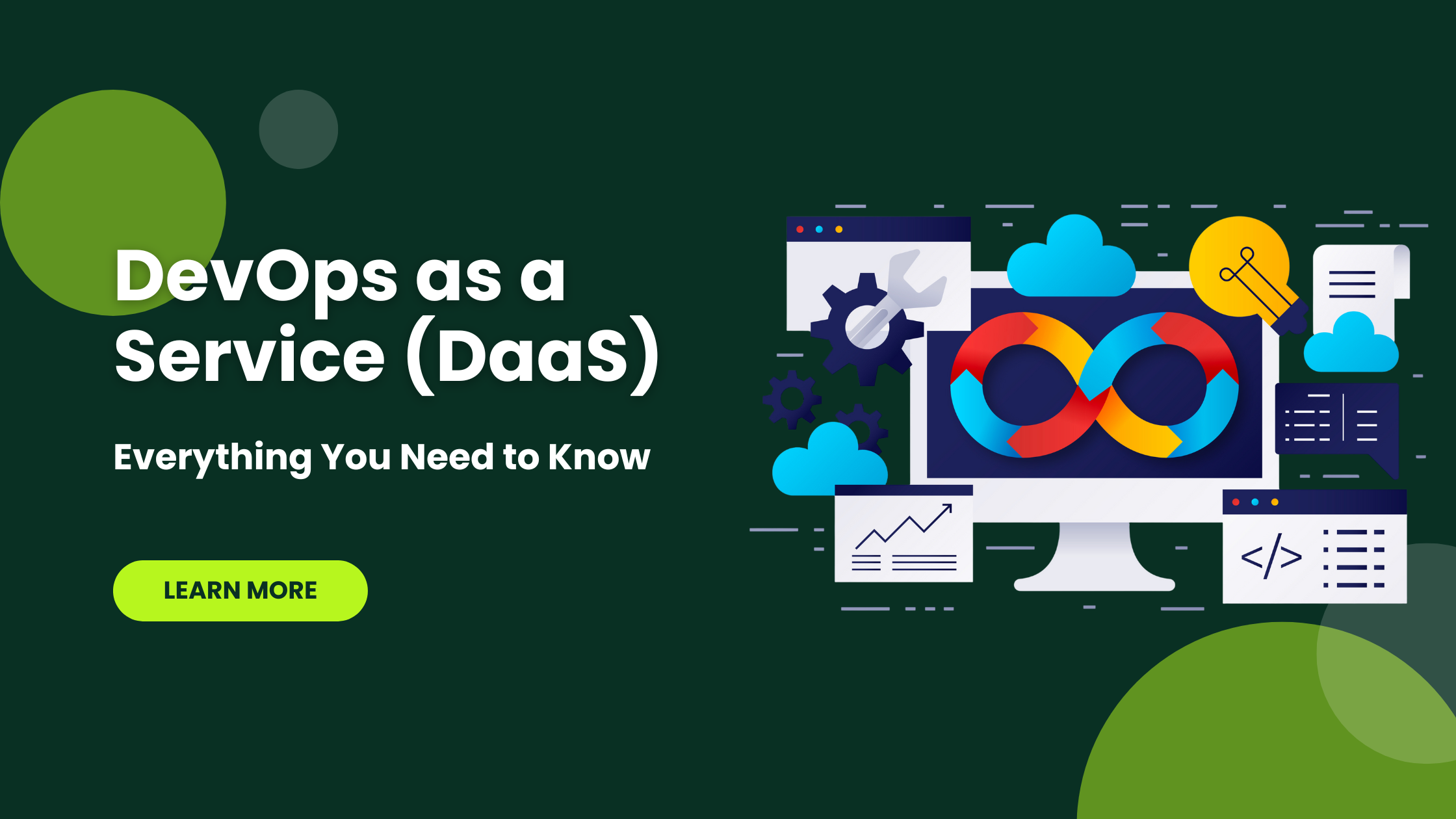
DevOps as a Service is a managed services model of providing DevOps capabilities in its simplest form. The traditional model is where businesses have their own DevOps engineers, tools, and cloud infrastructure. Conversely, DaaS companies assume the burden of establishing, operating and scaling such environments on their behalf. In this model of outsourcing, the company does not have to incur the cost of hiring, training, and retaining DevOps professionals.
The service often includes the key domains such as continuous integration/continuous delivery (CI/CD), infrastructure as code (IaC), monitoring, logging, and automated testing. Companies that adopt DaaS get access to best-in-class practices without a learning curve or the overhead of constructing on their own. It is a solution that fits both SMBs who need to grow quickly and enterprises that need to upgrade large systems with the least amount of disruption.

Why DevOps as a Service Matters
DaaS is a relatively inexpensive option that allows SMBs to embrace the best practices of DevOps without straining constrained budgets. It is costly to hire and maintain a team of qualified DevOps professionals, and there is high turnover in this domain. Through DaaS, smaller businesses are able to tap into the same expertise as larger organizations, putting them on an even footing in terms of speed and quality of software development.
The assets of DaaS to enterprises are scalability and modernization. Silos and old systems that drag down innovation are common in large organizations. Collaboration with a DaaS provider can assist them in speeding up change by incorporating the latest technologies and practices into current processes. One can afford to roll out updates more quickly, improve cooperation, and make the entire system more reliable.
Benefits of DevOps as a Service
The emergence of DaaS is not accidental-it introduces quantifiable advantages that match the current business requirements.
Cost savings is one of the largest benefits. The in-house DevOps team will require the recruitment, remuneration, benefits, training, and infrastructure expenses. DaaS removes such burdens by making experts and tools accessible via a subscription model. Businesses only pay for what they utilize, making it a scalable solution as the business grows.
Another key benefit is speed. DevOps practices can be onboarded quickly with DaaS since providers already have pre-built frameworks, automation pipelines, and expertise. This can help organizations respond quickly to market demands and customer needs by cutting the implementation time of DevOps down to weeks instead of months.
Key Features of DevOps as a Service
All DaaS products are similar and appealing to companies. These include CI/CD pipelines, infrastructure automation, monitoring and alerting, and container orchestration. These characteristics ensure that companies can deploy software quickly, reliably, and at scale.
Multi-cloud and hybrid cloud support is also offered by many providers, providing businesses with the flexibility to select the appropriate infrastructure to suit their needs. Security and compliance are often part of the service, such that the software delivery is of industry standard and is compliant with regulatory requirements. All these aspects form a solid base of digital transformation.
How DevOps as a Service Works
When a company hires the services of a DaaS provider, the process typically starts with an evaluation stage. The provider measures the existing infrastructure, workflows, and pain points of the client. On this basis, they develop a tailored DevOps roadmap that defines tools, procedures, and duties.
At that stage, the provider implements CI/CD pipelines, automates infrastructure provisioning, and adds monitoring solutions. The developers of the client keep on developing the code as normal, but the DevOps team of the provider does the deployment, scaling, and monitoring. This gives a smooth model of collaboration where the client is always focused on development and the provider is focused on smooth operation.
When Should Businesses Consider DaaS?
DaaS is not required by all businesses at this moment, but there are cases when this system can be very useful. An example is that startups that require rapid expansion may not be able to afford to build in-house DevOps capabilities. Equally, SMBs that seek to increase digital operations usually find it difficult to afford and recruit a complete staff.
Instead, businesses might resort to DaaS as part of a digital transformation effort, cloud migration, or modernization project. In such situations, DaaS vendors introduce a wealth of experience in the most up-to-date practices and tools, assisting organizations in breaking the bottlenecks and speeding up change.
Challenges and Considerations
Despite the numerous benefits of DaaS, it is not without problems. Dependency on external providers is one concern. Companies need to make sure that they do not become entirely dependent on a supplier. Another important aspect is data security-infrastructure management outsourcing should be accompanied by high levels of trust and compliance, and governance agreements.
Cost unpredictability may also be an issue when businesses fail to closely track usage. Because most DaaS vendors provide a flexible pricing option, costs can be inflated without warning in case the workload grows. To avoid this, firms are advised to sign clear contracts with their providers and ensure that there is constant communication between the two.
How to Choose the Right DaaS Provider (Pointers Section)
Selecting the right partner is critical to maximizing value from DevOps as a Service. Keep these points in mind:
- Experience and expertise: Look for providers with proven track records in your industry.
- Toolset flexibility: Ensure they support a range of DevOps tools and cloud platforms.
- Security and compliance: Confirm they adhere to regulations relevant to your sector.
- Scalability: Choose providers who can grow with your business.
- Transparent pricing: Avoid hidden costs by demanding clear pricing models.
- Collaboration style: The provider should integrate seamlessly with your internal teams.
Making the right choice ensures your DaaS partnership drives measurable results and long-term success.
DaaS for SMBs
In the case of SMBs, the implementation of DevOps practices may seem like an unattainable task due to small budgets and resources. DaaS alters this equation by providing enterprise-level DevOps skills at an affordable rate. SMBs do not have to worry about developing an in-house team, but instead they can work on developing great products and leave the complexities of deployment, scaling, and monitoring to an outsourced team.
This democratization of DevOps puts SMBs in a better position than their competitors, who are still languishing in manual processes. With the help of DaaS, smaller businesses can be as agile and efficient as industry leaders, which puts them in a better position to grow and innovate more quickly.
DaaS for Enterprises
Silos, outdated systems, and complicated compliance requirements are common among large organizations. To them, DaaS acts as a mediator between the old processes and the new ones. Providers are able to develop bespoke roadmaps to incorporate DevOps into existing workflows so enterprises can modernize without interrupting current operations.
Also, businesses usually have access to multi-cloud or hybrid cloud environments. DaaS vendors are specialists in operating such environments with high levels of security, compliance, and scalability at all levels. This not only makes DaaS an effective cost-saving tool but also an enterprise-wide change agent.
Future of DevOps as a Service
DaaS has a bright future, and its usage will increase in all sectors. The need to deliver software faster and more reliably will only increase as businesses continue to focus more on digital transformation. DaaS will be at the forefront to help organizations fulfill these needs without the baggage of traditional models.
More sophisticated capabilities, such as AI-based monitoring, predictive analytics, and intelligent automation, can also be expected of providers. These innovations will further streamline DevOps processes and make them more proactive to enable businesses to remain ahead of the competition in fast-paced markets.
Final Thoughts
DevOps as a Service is not only an outsourcing model, but also a strategic enabler of businesses, both large and small. DaaS is flexible, fast, and cost-effective, whether you are an SMB looking to scale or an enterprise looking to modernize complex systems. With the right provider and a partnership-oriented approach, you will be able to speed up your DevOps process and achieve long-term value.
In the modern high-speed digital economy, organizations are increasingly integrating their DevOps approaches with other development requirements. As an example, numerous firms do not just seek to Hire DevOps Developers, but also seek to Hire mobile app developer talent to create integrated teams that can not only drive product innovation, but also deploy with agility. This is a close fit that keeps businesses competitive without losing focus on their core strengths.