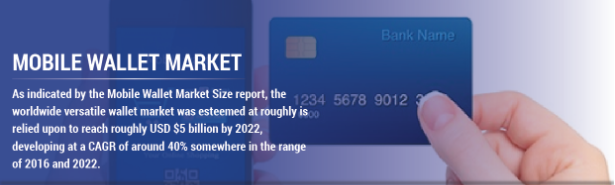



Indonesia mobile wallet market is projected to witness a CAGR of 17.22% during the forecast period 2025–2032, growing from USD 297.20 million in 2024 to USD 1,059.41 million in 2032F, owing to high smartphone penetration, government support, rising super apps, and e-commerce boom. Indonesia mobile wallet market is rewriting the nation’s payment narrative. Once cash-reliant and fragmented, the archipelago is now rapidly adopting app-based financial services, driven by a smartphone-savvy population, rising e-commerce penetration, and government-led efforts to promote financial inclusion.
Report Attributes
Details
Base Year
2024
Forecast Period
2025–2032F
Historical Period
2018–2023
Projected Growth Rate
CAGR of 17.22% between 2025 and 2032
Revenue Forecast in 2032
USD 1,059.41 million
The movement began with ride-hailing giants offering digital payment features. Then came the super apps. Today, mobile wallets are not just for paying bills, they are for splitting lunch tabs, investing in mutual funds, topping up mobile data, and even accessing BNPL. With over 200 million internet users and a strong digital-first youth demographic, mobile wallets are becoming embedded in daily commerce.
Urban centers such as Jakarta, Surabaya, and Bandung lead the way in usage. However, rural penetration is growing rapidly, driven by partnerships between fintechs and local banks, agent networks, and QRIS (Indonesia’s national QR standard). The result is a dynamic payments ecosystem where loyalty, cashback, convenience, and reach are key levers of competition.
For instance, in May 2025, Bank Indonesia (BI) announced that Indonesians will be able to use the Quick Response Code Indonesian Standard (QRIS) for payments in Japan and China starting August 17, 2025, according to Antara. Preparations for the Japan rollout are on track, with BI and Japanese payment authorities having agreed on key technical steps. Sandbox testing is scheduled to begin in mid-May, with the official launch planned for Indonesia’s Independence Day.
Proximity Mobile Payments See Widespread Adoption in Urban Areas Aiding Market Growth
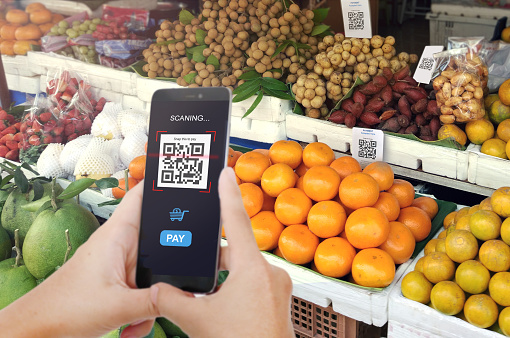
Indonesia’s dense urban environments are ideal for proximity payments, whether it’s tapping to pay at Alfamart or scanning a QR code at a food stall. NFC and QR technologies have made in-person, smartphone-based transactions seamless for both merchants and consumers. For instance, in May 2025, Indonesian digital wallet giant OVO took a significant step in its transformation into a comprehensive financial ecosystem with the launch of OVO Nabung, a digital savings product developed in collaboration with Superbank. This demonstrates how these giants are expanding into new systems to attract more customers.
The move reflects OVO’s ambition to evolve beyond its roots in e-wallet and payment services and compete more aggressively in the rapidly advancing digital finance space. This trend indicates that physical commerce remains the king, but now it’s being digitally paid for.
National Push for QRIS Drives Payment Standardization, Giving Rise to Market
QRIS is Indonesia’s national QR standard, enabling interoperability across wallets and banks. Bank Indonesia’s QRIS (Quick Response Code Indonesian Standard) is revolutionizing the way digital payments are scaled. By unifying QR code infrastructure across wallets and banks, QRIS allows any user to scan and pay at any registered merchant, regardless of provider. This standardization is crucial for Indonesia’s vast informal economy, enabling smartphones to serve as universal wallets for both users and microbusinesses.
For instance, Bank Indonesia reports in October 2024 that QRIS transactions surged by 209.6% YoY, with 53.3 million users and 34.23 million merchants. They have also waived off the merchant discount rate (MDR) for transactions up to USD 32 (Rp 500,000) made through the Quick Response Indonesian Standard (QRIS) system since December 2024.
Download Free Sample Report
Dominance of Individual Consumers in Mobile Wallet Usage
While businesses are increasingly using mobile wallets for disbursements and payroll, individual consumers dominate usage in terms of both transaction volume and frequency. Wallets are used for groceries, ride-hailing services, peer-to-peer transfers, mobile top-ups, and even gaming. This trend highlights how wallets are not just financial tools, but lifestyle apps embedded in everyday routines.
For instance, in July 2023, GoTo Financial officially rolled out the GoPay app across Indonesia, making digital financial services accessible to all, including those who do not use Gojek or Tokopedia. Starting today, users in every Indonesian city can download the app on Android and iOS, gaining access to features such as up to 100 free transfers per month, discounted phone credit and bill payments, and an expense report tool for better financial planning. The new GoPay app helped individual consumers by simplifying mobile wallet usage, offering a secure and user-friendly platform that enables instant, cashless transactions and facilitates easier financial management.
Report Scope
“Indonesia Mobile Wallet Market Assessment, Opportunities and Forecast, 2018–2032F”, is a comprehensive report by Markets and Data, providing in-depth analysis and qualitative and quantitative assessment of the current state of Indonesia mobile wallet market, industry dynamics, and challenges. The report includes market size, segmental shares, growth trends, opportunities, and forecasts between 2025 and 2032. Additionally, the report profiles the leading players in the industry, mentioning their respective market share, business models, competitive intelligence, etc.
Click Here:https://www.marketsandata.com/industry-reports/indonesia-mobile-wallet-market
About Us:
Markets and Data provides a comprehensive/ panoramic understanding of markets at global, regional, and country levels. Examine changing consumer preferences, emerging challenges, underlying trends, and growth prospects to accelerate your business strategies.
Contact
Mr. Vivek Gupta
5741 Cleveland street,
Suite 120, VA beach, VA, USA 23462
Tel: +1 (757) 343–3258
Email: info@marketsandata.com
Website: https://www.marketsandata.com