


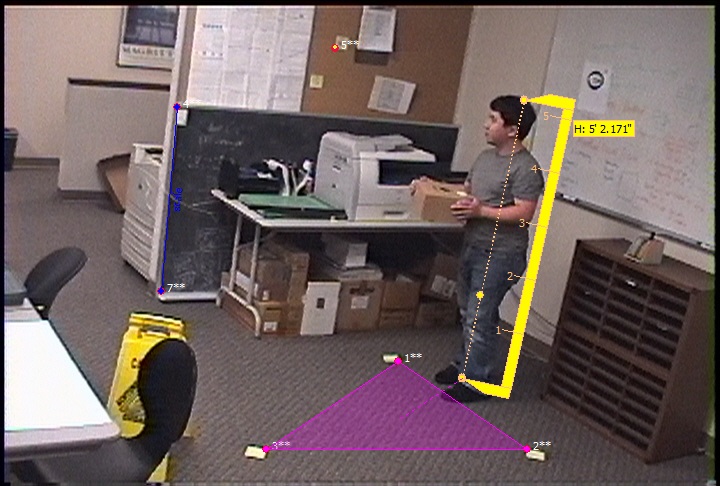
In today’s era of advanced digital forensics, investigators rely on cutting-edge tools to capture, analyze, and reconstruct crime scenes with the highest level of accuracy. Among these innovations, photogrammetry software has become a game-changing solution for every crime scene investigator. By converting photographs and video footage into precise 3D reconstructions, this technology enhances crime scene video analysis and supports evidence presentation in court. Whether investigating homicides, traffic accidents, or property crimes, photogrammetry ensures no critical detail is overlooked.
The Role of Photogrammetry Software in Modern Crime Scene Investigation
The shift from traditional methods to high-tech forensic tools has redefined how crime scenes are documented. Photogrammetry software provides investigators with the ability to turn 2D images into reliable 3D models, ensuring spatial accuracy and enhancing investigative workflows. For a crime scene investigator, this means more than just capturing evidence—it means having a scientific basis to recreate scenarios and support legal arguments.
How Photogrammetry Software Works
Photogrammetry is based on extracting geometric information from overlapping images. In crime scene video analysis, multiple frames from different angles are processed through algorithms that calculate scale, depth, and distance. This generates highly accurate models that:
Document exact measurements of objects, distances, and surfaces.
Allow for virtual walkthroughs of the scene.
Preserve evidence digitally for long-term use.
Such features enable a crime scene investigator to revisit and reassess evidence with clarity, long after the actual scene has been cleared.
Benefits of Photogrammetry in Crime Scene Video Analysis
The integration of photogrammetry software into investigative workflows offers numerous benefits:
Accuracy & Reliability – Precise calculations of distances and dimensions strengthen courtroom testimony.
Efficiency – Reduces manual sketching, saving valuable time.
Visual Impact – 3D reconstructions provide powerful visuals for judges and juries.
Evidence Preservation – Digital storage ensures long-term access to data.
For a crime scene investigator, these advantages mean enhanced confidence in presenting findings and reduced chances of misinterpretation.
Applications in Real Investigations
Crime scene video analysis combined with photogrammetry has been applied in various scenarios, including:
Traffic Accidents – Reconstructing vehicle movements and collision points.
Homicides – Analyzing weapon trajectories and suspect positions.
Burglary Scenes – Documenting entry points and stolen property.
Public Spaces – Using surveillance video to identify suspect movements.
Each application underscores how photogrammetry software brings objectivity and precision to forensic work.
Challenges and Considerations for Crime Scene Investigators
Despite its power, photogrammetry requires proper training and best practices. A crime scene investigator must ensure:
Correct image capture with adequate overlap and angles.
Calibration to eliminate camera distortions.
Secure digital storage to maintain chain of custody.
Attention to these details ensures the results of crime scene video analysis remain admissible in court.
Final Thoughts
As forensic technology evolves, the role of photogrammetry software in assisting a crime scene investigator grows increasingly vital. Its ability to transform raw imagery into scientifically validated 3D reconstructions makes it an indispensable tool for crime scene video analysis. Ultimately, this technology not only supports justice but also ensures investigations are conducted with unmatched accuracy and reliability.
FAQs
Q1: What is photogrammetry software in forensic science?
Photogrammetry software is a tool that converts photos and videos into precise 3D models for crime scene reconstruction and analysis.
Q2: How does it help a crime scene investigator?
It allows investigators to measure distances, angles, and spatial relationships digitally, ensuring greater accuracy in documentation.
Q3: Why is crime scene video analysis important?
It provides additional perspectives and details that might be missed during on-site investigation, helping reconstruct events with clarity.
Q4: Can photogrammetry evidence be used in court?
Yes. When properly collected and processed, photogrammetry evidence is admissible and highly persuasive in legal proceedings.
Q5: What are the limitations of photogrammetry software?
It requires high-quality images, proper calibration, and trained operators to ensure reliable results.



Do a detective agency in Delhi work with the police?
Anyone who has seen the film, and remembers the number of times he shows up on crimes, wonders – when ordinary citizens are not allowed why they are allowed at the crime scene.
Because the law is not private agents, private investigators are classified as ordinary citizens who provide investigative services to other citizens.