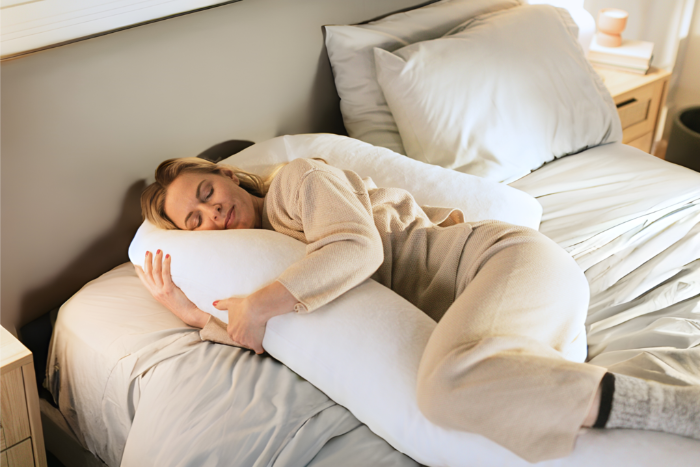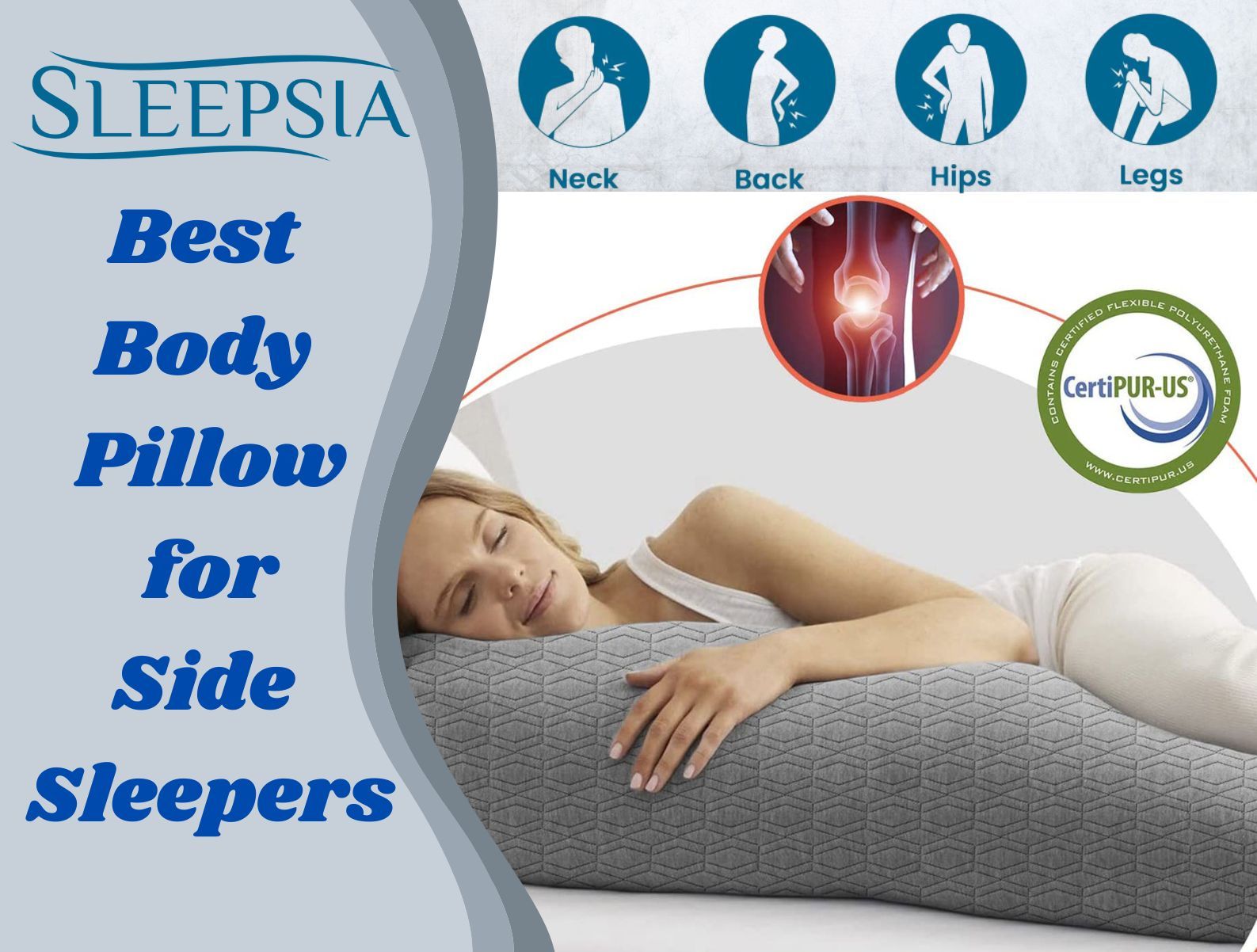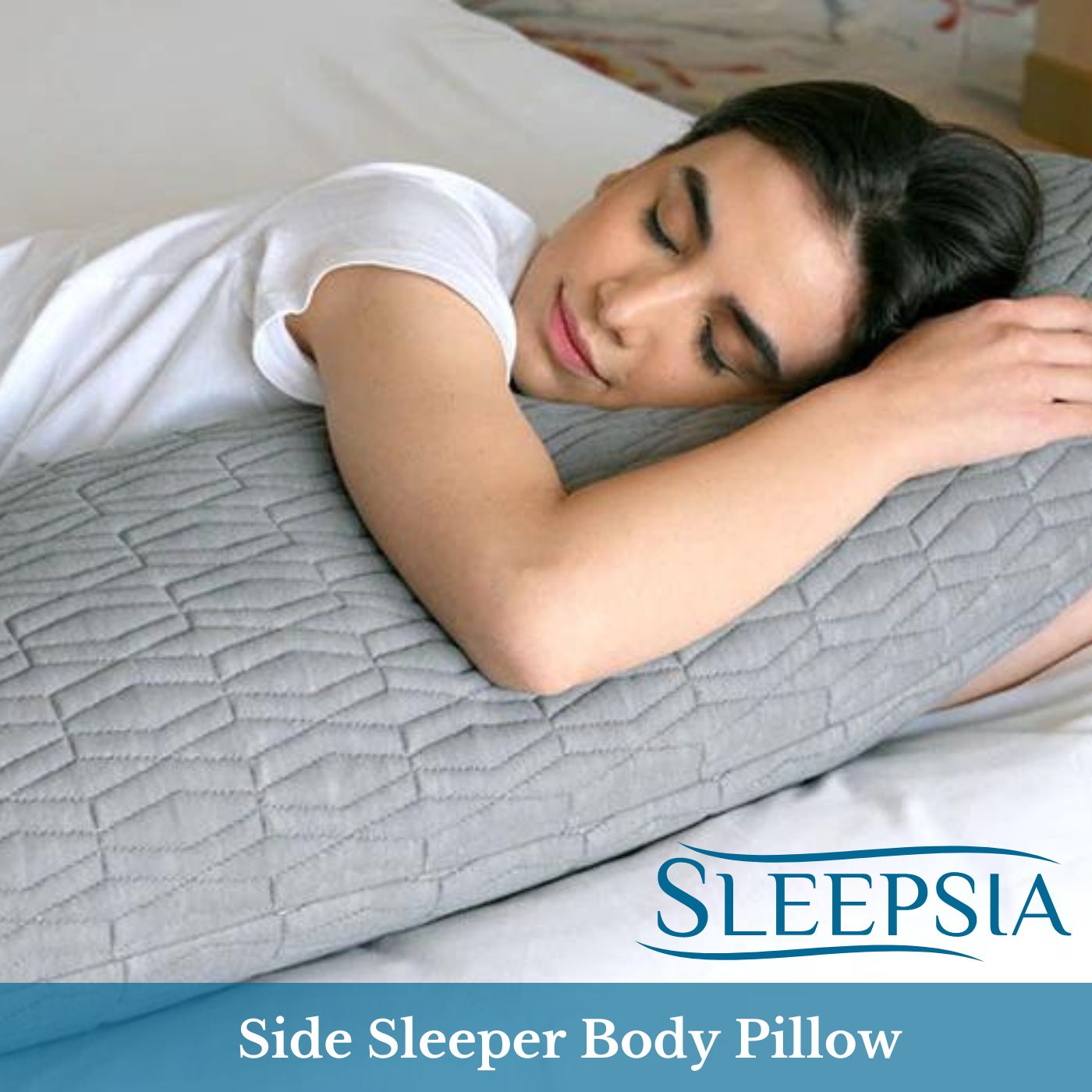


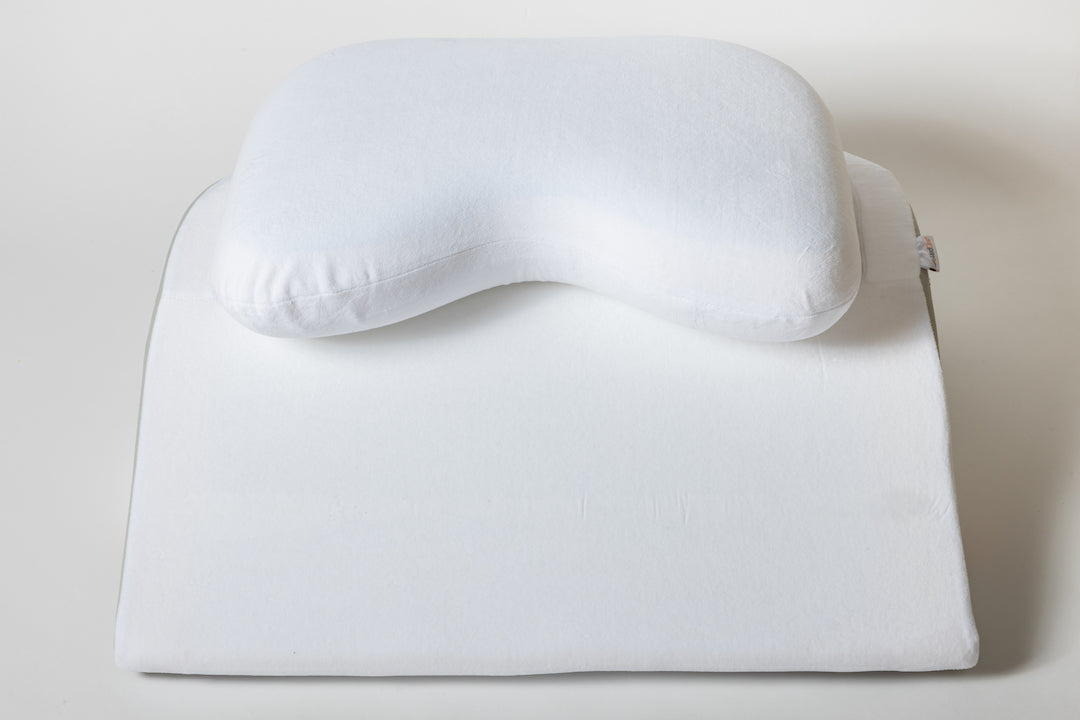
It’s a fact that many people sleep on their side. In this position, the right pillow is very important. That’s why pillows for side sleepers should fill the space between your shoulder and your head.
Doing this keeps your neck straight with your spine. When your pillow is right, you sleep more deeply and wake up with less pain.
But the best pillow is not the same for everyone. Everyone has different requirements like your body shape, your mattress, and what feels good to you, all matter.
In this easy-to-understand write-up, we explain what makes a good side-sleeper pillow, the best fillings, and how to choose one that fits you.
Best Pillow for Side Sleepers
Generally, pillows for side sleepers are thicker (higher “loft”) than pillows for back or stomach sleeping. That’s because your shoulder creates a bigger gap between your head and the mattress when you lie on your side. A pillow for side sleepers should fill that gap so your neck stays neutral, neither tilted up nor falling down.
The best pillow is personal and according to the person’s taste. A warm sleeper with broader shoulders and a firm mattress may need a taller, more supportive pillow.
On the other hand, a petite sleeper on a soft mattress may prefer something a little lower or adjustable. If you tend to change positions (side to back), a medium loft with an adaptable shape is often the sweet spot.
Your best pillow depends on you:
- Broader shoulders or a firm mattress → you may need a taller pillow.
- Smaller frame or a soft mattress → you may need a lower pillow.
- Switching side and back → try a medium loft or an adjustable pillow.
Quick check:
- If your ear tilts toward your shoulder, the pillow is likely too low.
- If your ear tilts away from your shoulder, the pillow is likely too high.
Why adjustable pillows help: You can add or remove fill to get the height just right. This makes adjustable pillows for side sleepers a smart pick for many people.
Note: Your mattress also matters. Softer beds let your shoulder sink in more, so you may want a slightly lower pillow. Firmer beds keep you higher, so you may need a taller one.
Why a Good Pillow Matters
The wrong pillow can cause neck pain, upper-back pain, or headaches. It can also make you toss and turn. The right pillows for side sleepers hold your head and neck in line. This lowers pressure, helps you fall asleep faster, and helps you wake up feeling better.
Tip: A good pillow works best with a good mattress for side sleepers. Look for a mattress that cushions your shoulder and hip but still supports your spine.
Benefits of Side Sleeping
When your head and neck are supported correctly, side sleeping offers several perks:
- Less snoring: Side sleeping helps keep your airway more open.
- Reduced acid reflux: Keeping your upper body aligned can lower reflux risk.
- Pregnancy-friendly: Most professionals recommend left-side sleeping during pregnancy for comfort and circulation.
- Comfort for many body types: With the right pillow and mattress, side sleepers often find pressure relief at the shoulder and hip.
A small drawback for the beauty-conscious: side sleeping can create more sleep wrinkles over time due to facial contact with the pillow. A smooth, breathable pillowcase (like silk or sateen cotton) can help.
Best Materials for Side-Sleeper Pillows
The filling changes how a pillow feels, supports, and stays cool. Here are common choices for pillows for side sleepers:
Memory foam
- Feel: Soft hug that shapes to you.
- Support: Great pressure relief for the neck and head.
- Heat: Can feel warm, but many have cooling cuts or gels.
- Best for: People who like contouring support.
Cold foam (HR foam)
- Feel: Bouncy and quick to spring back.
- Support: Good support with less sink.
- Airflow: Open cells breathe better than many foams.
- Best for: People who want support without a slow “melt-in.”
Latex
- Feel: Lively, springy support.
- Health: Naturally hypoallergenic; resists mold and dust mites.
- Life: Often lasts longer than many foams.
- Best for: Side sleepers who want cool, buoyant lift.
Down (or down/feather blends)
- Feel: Very soft and airy.
- Support: Can be too soft for some side sleepers unless the loft is high or the pillow has inner chambers.
- Care: Needs fluffing; look for responsibly sourced down.
- Best for: People who love a cloud-like feel.
Shredded memory foam or microfiber (down alternative)
- Feel: Shredded foam lets you change the height; microfiber feels like down but with more support.
- Support: Adjustable versions are great for dialing in loft.
- Care: Many have zip covers so you can add or remove fill.
- Best for: Budget-friendly, flexible options.
Conclusion
The right pillows for side sleepers keep your head and neck in line with your spine, reduce pressure, and help you sleep deeper.
Focus on loft, firmness, and material, and remember that adjustability makes dialing in your perfect fit much easier.
Pair your pillow with a supportive mattress for side sleepers, and you’ll set yourself up for pain-free, high-quality rest night after night.