Material identity and standards landscape

CK45 vs 42CrMo4: chemical composition and equivalents
CK45: medium carbon steel ≈ C45/SAE 1045 (0.43–0.50% C), primarily ferrite–pearlite in normalized condition; readily surface hardened.
42CrMo4: chromium–molybdenum alloy steel ≈ AISI 4140 (0.38–0.45% C, 0.9–1.2% Cr, 0.15–0.3% Mo); high hardenability, designed for quench & temper.
What “chrome rod” implies
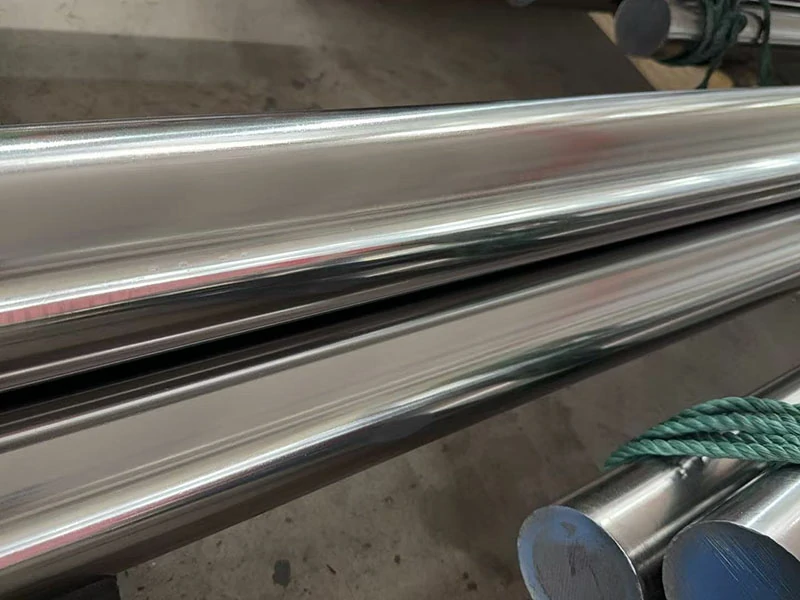
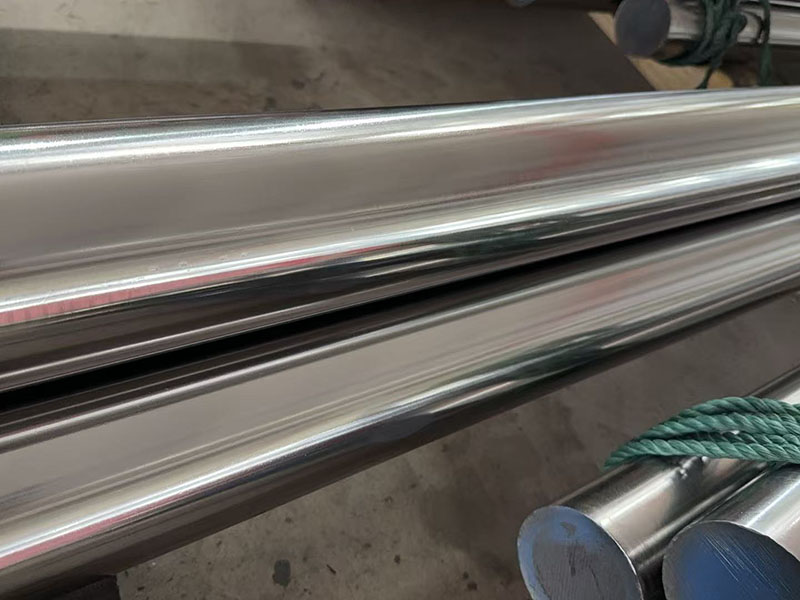
A chrome rod is a precision ground steel bar with hard chrome plating on the OD. Typical specifications include ISO f7 diameter tolerance, Ra ≤ 0.2 μm surface finish, straightness ≤ 0.2 mm/m, and plating hardness around 850–1150 HV with 20–30 μm thickness (up to 50 μm in harsh service).
Sourcing realities
Reliable supply hinges on mill certificates (MTR), heat numbers, and batch-to-batch variability control. For 42CrMo4, pay close attention to heat-treat charts and core hardness uniformity, especially for large diameters.
Microstructure and heat-treat response
Pearlite–ferrite vs tempered martensite
CK45 (normalized) presents ferrite–pearlite, good machinability, moderate strength.
42CrMo4 (Q&T) yields tempered martensite with significantly higher yield/UTS and better fatigue resistance at equivalent geometry.
Hardenability curves and critical section size
42CrMo4 maintains hardness through thicker sections; CK45’s properties fall off more quickly with diameter. This matters for long-stroke, large-diameter cylinders and thick-walled or induction-hardened designs.
Quench/temper windows and trade-offs
Raising strength via Q&T increases sensitivity to hydrogen embrittlement and notches. Optimal windows balance strength, toughness, and residual stress, not just headline hardness.
Mechanical properties head-to-head
Yield/UTS bands and scatter
CK45 (normalized): YS ~ 300–380 MPa, UTS ~ 550–700 MPa.
42CrMo4 (Q&T): YS ~ 650–950 MPa, UTS ~ 850–1100+ MPa (heat-treat dependent).
Scatter widens with diameter and heat-treat uniformity; specify ranges by size class.
Impact toughness and low-temperature behavior
42CrMo4 generally sustains higher Charpy V-notch energy at equal strength levels. For sub-zero operation, CK45 requires conservative safety factors; 42CrMo4 with proper tempering retains better toughness.
Elastic modulus parity
Modulus (E ~ 210 GPa) is essentially identical. Stiffness differences arise from geometry and heat-treat, not alloy choice alone.
Fatigue, bending, and buckling performance
High-cycle vs low-cycle fatigue
With chrome surfaces, fatigue performance is governed by surface integrity and residual compressive stress. 42CrMo4’s higher strength ceiling supports higher endurance limits when surface defects are controlled.
Surface integrity, residual stress, notch sensitivity
Transition radii, thread roots, cross-holes, and undercuts drive failures. Induce beneficial compressive stress (e.g., burnishing/shot-peen) and maintain Ra ≤ 0.2 μm post-plating to suppress crack initiation.
Slenderness ratio and Euler buckling
Buckling capacity follows Pcr = π² E I / (K·L)². Same alloy, same E: section inertia (I) dominates. For long, slender rods, consider larger OD with minimal weight penalty (hollow options) before chasing alloy upgrades.
Surface engineering and chrome plating synergy
Plating targets that actually work
Thickness: 20–30 μm standard; 40–50 μm for abrasive or corrosive duty.
Hardness: 850–1150 HV; microcrack density influences wear and corrosion pathways.
Finish: Ra ≤ 0.2 μm mitigates seal wear and friction heating.
Adhesion, hydrogen embrittlement, bake-out
Mandate pre-plate activation, monitor adhesion (bend/strip tests), and bake at 190–220 °C for 2–4 h post-plate for high-strength 42CrMo4 to reduce embrittlement risk.
Seal wear and lubricant cleanliness
Seal life is a system variable. Control surface finish, roundness, hardness, and oil cleanliness (ISO 4406 targets) to achieve predictable wear rates.
Dimensional control and machinability
Tolerance and runout that protect seals
Hold ISO f7 or tighter where required. Keep TIR and straightness ≤ 0.2 mm/m across full stroke to prevent side-loading and uneven seal lip pressure.
Process parameters by alloy
CK45 machines cleanly at higher material removal rates. 42CrMo4 (Q&T) prefers sharp tooling, lower DOC in finishing, adequate coolant, and stable fixturing to avoid white-layer or burn during grinding.
Detail features and stress risers
Generous fillets (≥0.5–1.0 mm), rolled threads where feasible, and de-burred cross-holes reduce notch sensitivity—critical for high-strength 42CrMo4.
Weldability, repair, and rework
Weldability contrast
CK45 welds with standard preheat; 42CrMo4 typically requires higher preheat and careful PWHT to avoid HAZ cracking. For critical rods, avoid structural welds on the chromed length.
Hardfacing and chrome repair
Define strip-and-replate criteria: adhesion loss, corrosion pitting depth, or dimensional loss beyond spec. Hardfacing at ends/eyes is viable with controlled heat input and stress relief.
Distortion control
Thin-wall or long strokes demand symmetrical clamping, low-heat input, and inter-pass straightness checks to avoid permanent bow.
Corrosion resistance and environmental exposure
Base steel under defects
Pinhole defects or edge damage expose base steel; 42CrMo4 offers no intrinsic corrosion advantage over CK45 once plating is breached. Protection strategy must be coating-centric.
Salt-spray expectations
Specify 96–240–480 h salt-spray thresholds in line with duty and maintenance intervals. Pair with proper post-plate sealing and packaging to protect as-plated surfaces.
Alternatives for harsh environments
Where chrome is challenged: stainless overlays, HVOF carbides, or duplex systems (e.g., nickel underlayers) improve barrier performance—at added cost and process time.
Cost model: from billet to ready-to-install rod
Raw material price deltas and yield
42CrMo4 billet typically carries a 15–35% premium over CK45. Yield losses grow with diameter and heat-treat complexity.
Process cost stack
Heat-treat (Q&T), precision grinding, polishing, plating, QA/NDE, and potential bake-out add layers. 42CrMo4’s total process cost rises with tight hardness bands and stricter distortion control.
Hidden drivers
Scrap from plating defects, rework after grind burns, and downtime carry disproportionate cost. Track first-pass yield and Cp/Cpk to prevent margin erosion.
Total cost of ownership by application
Mobile vs industrial hydraulics
Mobile equipment sees variable load spectra and shock; 42CrMo4 often returns value via lower failure incidence. Industrial lines with steady cycles may favor CK45 if fatigue margins are sufficient.
Service life, seals, maintenance
Surface specification parity yields similar seal wear; alloy advantage shows in core strength and fatigue reserve. Plan predictive maintenance around oil cleanliness and stroke counts.
Energy and availability
Mass reduction (geometry optimization) often beats alloy upgrades on energy use. Fewer unplanned stoppages with 42CrMo4 improve machine availability economics.
Application-specific selection guidance
Heavy shock and long stroke
Choose 42CrMo4 (Q&T) with verified core properties, controlled transitions, and conservative buckling safety factors.
Moderate duty with budget constraints
CK45 delivers excellent value-per-kN when paired with correct plating, finish, and straightness.
High-corrosion or hygiene zones
Neither carbon steel is ideal. Consider stainless substrates, duplex coatings, or hybrid designs with protected exposed sections.
Risk, reliability, and safety factors
Design to real spectra
Base calculations on measured duty cycles, not nameplate loads. Include mean stress effects and overload events.
Practical safety factors
Strength: 1.5–2.0; fatigue: ≥1.3 on endurance limit with surface factors; buckling: ≥2.0 where failure is catastrophic. Adjust for consequence class.
NDE regimes
Adopt UT/MT at raw bar, post-heat-treat, and post-grind checkpoints. Record traceability to heat and plating batch.
Quality assurance and compliance
Documentation that prevents disputes
MTRs, hardness maps, heat-treat charts
Plating adhesion and bake-out records
Full dimension and roughness reports with calibrated instruments
Process capability targets
Aim Cp/Cpk ≥ 1.33 for diameter and Ra, higher for critical fits. Trend data, not snapshots.
Standards mapping
Map to ISO/DIN/ASTM for materials and tolerances; ensure plating chemical compliance to REACH/RoHS where applicable.
Case studies and comparative scenarios
Same geometry, different alloys
Replacing CK45 with 42CrMo4 at constant geometry typically increases yield margin by 40–70% and extends fatigue life when surface quality is controlled.
Same performance, optimized geometry
Holding performance targets constant, 42CrMo4 can allow mass reduction via smaller section or longer stroke at equal buckling safety—translating into energy and handling benefits.
Field failure autopsies
Root causes routinely trace to surface damage, stress risers, or plating defects, not just base alloy. Corrective actions: geometry transitions, finish control, and process discipline.
Procurement checklist for buyers
Technical callouts
Material grade & condition (CK45 normalized / 42CrMo4 Q&T, hardness range)
Diameter tolerance (ISO f7), straightness, TIR
Surface: Ra target, chrome hardness/thickness, post-plate bake
Inspection plans and certificates
NDE plan (UT/MT stages), FAI requirements, measuring equipment lists
Certificates: MTR, heat-treat, plating adhesion, roughness, dimensions
Packaging and logistics
End caps, oil film, VCI, moisture indicators
Wooden crating and anti-scuff separators for long lengths
Decision framework and quick-pick matrix
Three-axis trade-off
Strength: advantage 42CrMo4
Cost/lead time: advantage CK45
Risk/uptime criticality: advantage 42CrMo4
When to upgrade vs stay
Upgrade to 42CrMo4 for heavy shock, long stroke, low-temperature duty, or high downtime costs. Stay with CK45 for moderate duty, stable cycles, and tight budgets—with robust surface specs.
Gate reviews
Define gates for prototype → pilot → mass production with frozen drawings, PPAP/FAI evidence, and capability baselines before ramp.
Contact Myler
For application-specific sizing, alloy selection, and plating stacks that match your duty cycle, share the drawing, load spectra, stroke, environment, and target life. A concise engineering review returns a clear CK45 vs 42CrMo4 recommendation, a costed process route, and a delivery plan aligned to your build schedule.