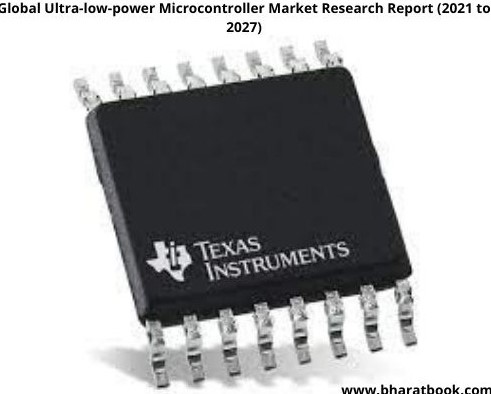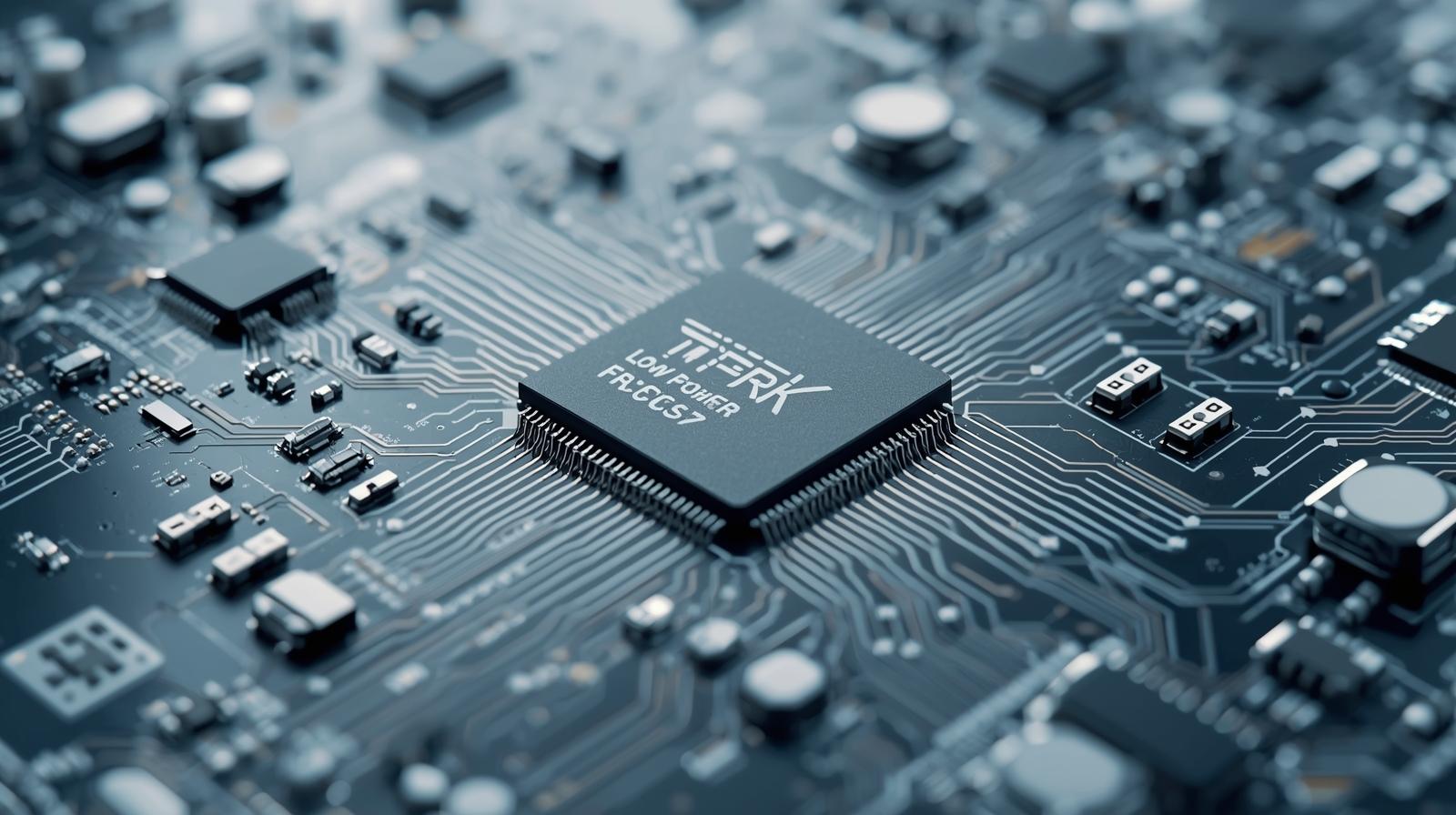
In the era of hyper-connectivity, the demand for devices that can think, communicate, and respond in real-time—without constant human intervention or frequent battery replacements—has surged. From smart cities and precision agriculture to healthcare wearables and industrial automation, the rise of next-generation Internet of Things (IoT) and edge computing devices is transforming how we live and work. At the heart of this revolution lies a key enabler: the ultra-low-power microcontroller, or ULP MCU.
These microcontrollers are designed specifically to handle embedded tasks with minimal energy consumption. As such, the ULP MCU market has emerged as a critical segment of the broader semiconductor industry, accelerating the shift toward intelligent, autonomous, and energy-efficient edge devices. The market is not only growing rapidly but also evolving technologically to meet the increasingly sophisticated requirements of modern applications.
Understanding Ultra-Low-Power Microcontrollers
Ultra-low-power microcontrollers are specialized computing chips designed to perform data processing, control, and communication functions in devices that operate on very limited power budgets. Unlike general-purpose microcontrollers, ULP MCUs are optimized to reduce energy usage across all operating states, including active execution, sleep, standby, and deep sleep modes.
These microcontrollers achieve their efficiency through architectural innovations, energy-aware peripheral design, and advanced manufacturing processes. The core design philosophy centers on enabling devices to perform meaningful tasks—such as sensing environmental changes, processing data locally, and transmitting information—while consuming as little energy as possible. This makes ULP MCUs essential for battery-operated or energy-harvesting applications that require multi-year operation without maintenance.
The Role of ULP MCUs in Edge and IoT Ecosystems
Edge and IoT ecosystems are built around a fundamental constraint: limited power. Whether it's a smart water meter installed in a remote village, a wildlife tracker attached to a migrating bird, or a fitness band worn daily on a human wrist, these devices must operate efficiently for extended periods without access to a continuous power source.
ULP microcontrollers make this possible by serving as the intelligent “brains” of such devices. They process sensor inputs, execute application logic, manage wireless communication protocols, and often perform security functions—all while staying within tight energy budgets. In many cases, these microcontrollers also support edge intelligence, enabling localized decision-making without the need to send all data to the cloud. This reduces latency, minimizes bandwidth usage, and enhances data privacy—factors that are especially important in industrial, medical, and mission-critical applications.
Download PDF Brochure @ https://www.marketsandmarkets.com/pdfdownloadNew.asp?id=206772623
Integration of Intelligence at the Edge
As IoT and edge devices grow more complex, the demand for localized computing continues to rise. ULP MCUs are evolving to meet this demand by incorporating machine learning capabilities and digital signal processing features. This allows devices to analyze patterns, detect anomalies, and make decisions on the fly.
For example, a condition-monitoring sensor in a factory might use a ULP MCU to detect unusual vibrations in a motor, determine whether maintenance is needed, and send alerts—all without draining its battery or relying on cloud computation. In healthcare, a wearable could monitor heart rate trends and trigger alerts in real time if abnormalities are detected, again relying entirely on ultra-efficient, local processing.
These capabilities are transforming edge devices from passive data collectors into intelligent agents capable of autonomous operation, predictive action, and real-time analytics.
The Expanding Range of Application Areas
The versatility of ultra-low-power microcontrollers allows them to support a wide range of applications across multiple sectors. In consumer electronics, ULP MCUs are at the core of smartwatches, wireless earbuds, and sleep monitors, enabling responsive interfaces and continuous biometric tracking with minimal power draw. These devices often need to last for days or weeks on a single charge, which would be impossible without the efficiencies offered by ultra-low-power technology.
In industrial environments, ULP MCUs power wireless sensor networks used for equipment monitoring, environmental sensing, and inventory tracking. These systems often function in isolated or hazardous areas where regular maintenance is not feasible, making ultra-low power operation a fundamental requirement.
The medical field is also a major beneficiary. Portable diagnostic tools, drug delivery systems, and patient monitoring devices increasingly rely on ULP MCUs for compact, reliable, and energy-efficient performance. These microcontrollers enable always-on functionality while ensuring safety and longevity in life-critical use cases.
Smart buildings, agriculture, and environmental monitoring represent additional sectors where ULP MCUs are enabling significant innovation. Devices such as automated irrigation systems, energy-efficient thermostats, and air quality monitors benefit from extended operating life and autonomous control, all made possible by ultra-low-power embedded solutions.
Technological Advancements Driving Market Growth
The ultra-low-power microcontroller market is being driven not only by demand but also by rapid technological innovation. Chipmakers are pushing the limits of energy efficiency while also increasing performance, integration, and functionality. Many next-generation ULP MCUs now feature advanced wireless communication stacks such as Bluetooth Low Energy, Zigbee, Thread, or LoRa, which are essential for seamless connectivity in decentralized networks.
Hardware-based security is also becoming standard in ULP MCUs, ensuring data encryption, secure boot, and protected communication—critical features in today’s cyber-threat landscape. Some devices now integrate neural processing units (NPUs) or machine learning accelerators, enabling real-time AI inference at the edge without requiring significant computational power or energy.
Additionally, advancements in semiconductor fabrication processes—such as transitioning to smaller process nodes and using advanced power-gating techniques—are allowing manufacturers to design MCUs with dramatically lower leakage currents and power consumption, even during idle states.
Market Outlook and Future Potential
According to industry projections, Ultra-low-power Microcontroller Industry worth $15.27 billion by 2030. The proliferation of smart, connected devices in consumer, industrial, and commercial sectors is creating sustained demand for energy-efficient computing at the edge. Furthermore, the increasing focus on sustainability and low-energy design is encouraging manufacturers to adopt ULP MCUs as part of their green initiatives.
Emerging markets such as smart agriculture, connected infrastructure, and environmental conservation offer exciting new growth opportunities for ultra-low-power microcontrollers. As governments and enterprises invest in energy-efficient technologies to meet climate goals and regulatory standards, the importance of ultra-low-power solutions is only set to grow.
Innovation in artificial intelligence, edge computing, and low-power wireless communication will continue to shape the future of the ULP MCU industry. Vendors that can strike the right balance between power efficiency, performance, security, and integration will be well-positioned to lead in this dynamic and expanding market.
Conclusion: The Foundation of Smart, Sustainable Systems
Ultra-low-power microcontrollers are more than just efficient processors—they are the foundation of a new era in smart, autonomous systems. By enabling devices to think, communicate, and act on limited energy, ULP MCUs are unlocking the true potential of IoT and edge computing across virtually every industry.
As innovation accelerates and the demand for intelligent, energy-aware devices continues to rise, the ULP MCU market will remain central to the future of technology. Whether powering the next generation of healthcare wearables, optimizing industrial processes, or supporting sustainable infrastructure, ultra-low-power microcontrollers are not just part of the trend—they are driving it.
About MarketsandMarkets™
MarketsandMarkets™ is a blue ocean alternative in growth consulting and program management, leveraging a man-machine offering to drive supernormal growth for progressive organizations in the B2B space. We have the widest lens on emerging technologies, making us proficient in co-creating supernormal growth for clients.
The B2B economy is witnessing the emergence of $25 trillion of new revenue streams that are substituting existing revenue streams in this decade alone. We work with clients on growth programs, helping them monetize this $25 trillion opportunity through our service lines - TAM Expansion, Go-to-Market (GTM) Strategy to Execution, Market Share Gain, Account Enablement, and Thought Leadership Marketing.
Built on the ’GIVE Growth’ principle, we work with several Forbes Global 2000 B2B companies - helping them stay relevant in a disruptive ecosystem. Our insights and strategies are molded by our industry experts, cutting-edge AI-powered Market Intelligence Cloud, and years of research. The KnowledgeStore™ (our Market Intelligence Cloud) integrates our research, facilitates an analysis of interconnections through a set of applications, helping clients look at the entire ecosystem and understand the revenue shifts happening in their industry.
To find out more, visit www.MarketsandMarkets™.com or follow us on Twitter, LinkedIn and Facebook.
Contact:
Mr. Rohan Salgarkar
MarketsandMarkets™ INC.
630 Dundee Road
Suite 430
Northbrook, IL 60062
USA : 1-888-600-6441



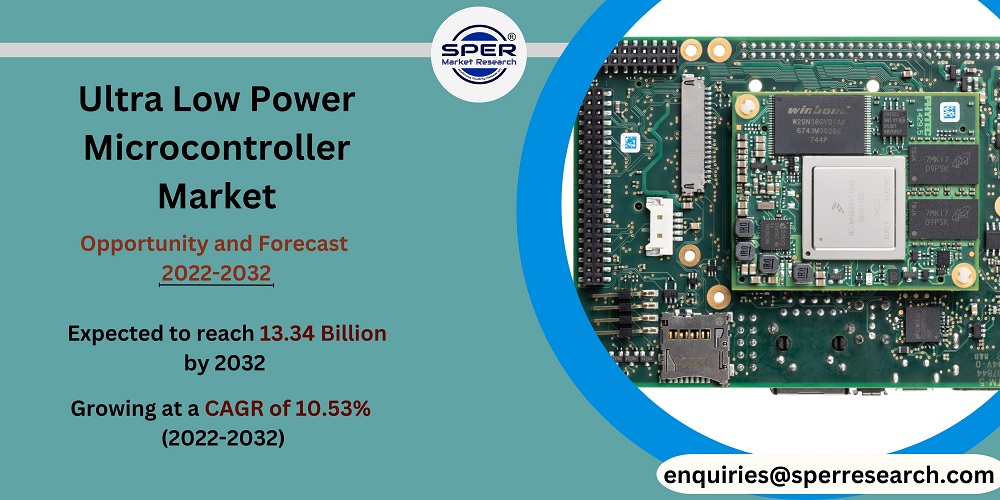

The report "Ultra-low-power Microcontroller Market by Peripheral Device (Analog Device and Digital Device), Packaging Type (8-bit Packaging, 16-bit Packaging, and 32-bit Packaging), End-use Application, and Region - Global Forecast to 2024", is expected to be worth USD 4.4 billion in 2019 and is projected to reach USD 12.9 billion by 2024, at a CAGR of 24.1% from 2019 to 2024.
This helps to meet the needs of power-constrained or low-power applications seeking battery-savvy functionality for the Internet of Things (IoT) and connected devices.
Analog devices expected to grow at the highest CAGR during the forecast period The market for ultra-low-power microcontrollers with analog devices is high as low power devices are majorly used in different applications to fetch real-world signals such as temperature, pressure, acceleration, and speed, which are measured and converted into digital signals.
Along with the shrinking size of electronic components in electronic devices, manufacturers also focus on producing devices that consume lower power.
Asia Pacific held the largest share of the ultra-low-power microcontroller market in 2019 The demand for consumer electronics and automobiles is increasing in this region.
The report profiles key players, including Texas Instrument Inc. (US), Microchip Technology Inc. (US), STMicroelectronics (Switzerland), Renesas Electronics Corporation (Japan), Cypress Semiconductor Corporation (US), NXP Semiconductors N.V. (The Netherlands), Silicon Laboratories, Inc. (US), Maxim Integrated (US), Analog Devices, Inc. (US), and ON Semiconductor (US).