


As the world moves toward clean energy and carbon neutrality, solar technology continues to evolve. One of the fastest-growing segments in this space is thin-film solar, an innovative and flexible alternative to traditional silicon-based solar panels. While conventional photovoltaic (PV) modules dominate the global solar market, thin-film solar technology is carving out a unique and rapidly expanding niche, driven by material innovation, design flexibility, and new application potential.
This article explores the key reasons behind the growth of the thin-film solar market, highlighting major trends, technological breakthroughs, and emerging opportunities across industries.
What Is Thin-Film Solar Technology?
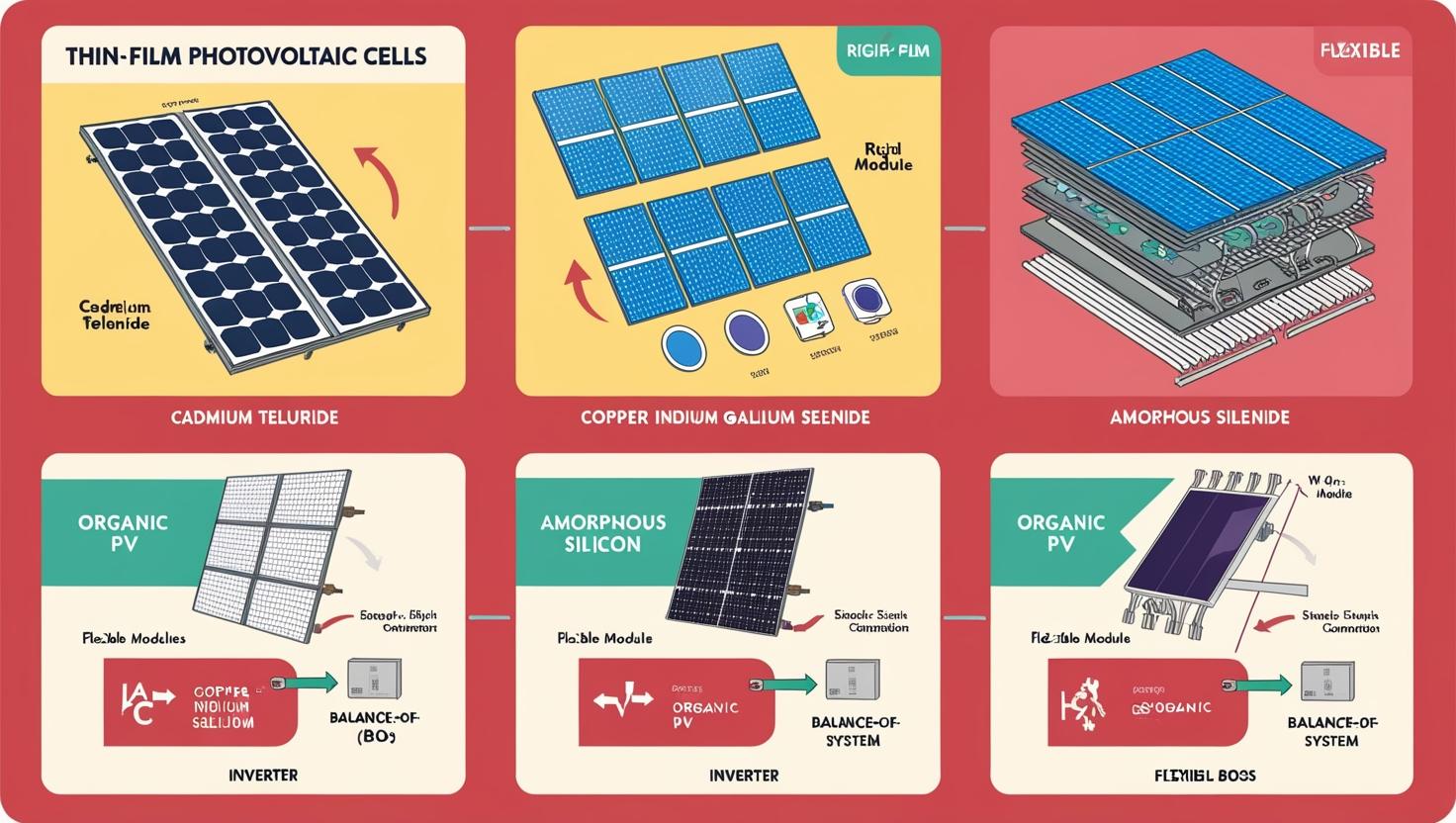
Thin-film photovoltaic (TFPV) technology involves the deposition of one or more thin layers of photovoltaic materials onto a substrate such as glass, metal, or plastic. These layers are significantly thinner than traditional crystalline silicon wafers — sometimes as thin as a few micrometers.
Popular thin-film materials include:
Cadmium Telluride (CdTe)
Amorphous Silicon (a-Si)
Copper Indium Gallium Selenide (CIGS)
Perovskites (emerging)
The result is a lightweight, flexible, and often semi-transparent solar panel that can be applied in ways standard panels cannot.
Why the Thin-Film Solar Market Is Growing
1. Demand for Lightweight and Flexible Solar Solutions
Traditional PV panels are bulky and rigid, limiting their installation to strong, flat surfaces such as rooftops or solar farms. Thin-film modules, in contrast, are lightweight and flexible, making them ideal for:
Building-integrated photovoltaics (BIPV)
Curved architectural surfaces
Portable solar chargers and mobile energy units
Automotive and aerospace applications
IoT devices and wearables
This versatility is driving adoption across industries where traditional solar technology is either impractical or impossible to deploy.
2. Cost-Effective Manufacturing at Scale
Thin-film technologies, particularly CdTe and CIGS, can be manufactured using low-cost, high-throughput techniques such as roll-to-roll printing or sputtering, which reduce both energy use and raw material consumption.
Although the initial efficiencies of thin-film panels were lower than those of crystalline silicon, continued R&D has closed much of that gap, with some technologies now competing directly on both cost per watt and efficiency.
Download PDF Brochure @ https://www.marketsandmarkets.com/pdfdownloadNew.asp?id=31
3. Expanding Off-Grid and Portable Energy Demand
As the need for decentralized and off-grid power solutions grows — especially in remote or underserved areas — thin-film solar presents an ideal solution. Its portability, low weight, and ease of integration into backpacks, tents, and transportable shelters have made it a go-to option for:
Emergency response
Military operations
Outdoor recreation
Off-grid rural electrification
This segment alone is fueling a significant portion of thin-film solar’s market growth.
4. Innovations in Perovskite Solar Cells
One of the most exciting developments in solar energy is the emergence of perovskite-based thin-film solar cells. Perovskites offer:
High theoretical efficiency
Low-cost, scalable fabrication
Compatibility with flexible substrates
Potential for tandem cell integration
While still facing challenges related to long-term durability and stability, perovskites are pushing the envelope of what's possible in thin-film technology and attracting significant investment and research attention.
5. Government Support and Sustainability Goals
Governments around the world are increasingly supporting the deployment of next-generation solar technologies through subsidies, tax incentives, and green energy mandates. Many of these programs specifically target innovative and sustainable materials, creating a favorable policy landscape for thin-film solar adoption.
Furthermore, thin-film panels often have a lower carbon footprint during production, especially in terms of energy and material use. This aligns well with global ESG (Environmental, Social, Governance) trends and corporate sustainability goals.
Challenges the Market Still Faces
While the thin-film solar market is growing rapidly, it isn’t without hurdles:
Lower efficiency (in some variants) compared to mono- or polycrystalline silicon
Toxicity concerns related to materials like cadmium (CdTe)
Limited manufacturer base compared to traditional PV
Shorter lifespan and degradation for some technologies, especially in harsh climates
However, ongoing R&D, stricter environmental regulations, and improved encapsulation techniques are addressing many of these concerns.
Market Outlook and Key Opportunities
Thin-Film Photovoltaic Industry worth $12.4 billion by 2029, driven by:
Rising demand in Asia-Pacific for urban solar solutions
Growth in electric vehicles and solar-integrated transportation
Integration of thin-film panels in consumer electronics and IoT
Scaling of floating solar farms, where weight and water resistance matter
Increased commercial BIPV applications in modern architecture
Companies leading this space include First Solar (CdTe), Hanergy (CIGS), Solar Frontier, and Oxford PV (Perovskite) — each pushing innovation in material science and application scalability.
Conclusion: Thin-Film Solar Is No Longer a Niche
What was once considered a niche or experimental solar solution is now a central piece in the evolving energy landscape. The rapid growth of the thin-film solar market is being fueled by material science breakthroughs, increasing demand for flexibility and sustainability, and the broader global shift toward distributed clean energy systems.
As performance improves and costs continue to decline, thin-film photovoltaics will play an increasingly critical role in powering everything from skyscrapers and electric vehicles to satellites and smartwatches — ushering in a more adaptive and decentralized energy future.
About MarketsandMarkets™
MarketsandMarkets™ is a blue ocean alternative in growth consulting and program management, leveraging a man-machine offering to drive supernormal growth for progressive organizations in the B2B space. We have the widest lens on emerging technologies, making us proficient in co-creating supernormal growth for clients.
The B2B economy is witnessing the emergence of $25 trillion of new revenue streams that are substituting existing revenue streams in this decade alone. We work with clients on growth programs, helping them monetize this $25 trillion opportunity through our service lines - TAM Expansion, Go-to-Market (GTM) Strategy to Execution, Market Share Gain, Account Enablement, and Thought Leadership Marketing.
Built on the ’GIVE Growth’ principle, we work with several Forbes Global 2000 B2B companies - helping them stay relevant in a disruptive ecosystem. Our insights and strategies are molded by our industry experts, cutting-edge AI-powered Market Intelligence Cloud, and years of research. The KnowledgeStore™ (our Market Intelligence Cloud) integrates our research, facilitates an analysis of interconnections through a set of applications, helping clients look at the entire ecosystem and understand the revenue shifts happening in their industry.
To find out more, visit www.MarketsandMarkets™.com or follow us on Twitter, LinkedIn and Facebook.
Contact:
Mr. Rohan Salgarkar
MarketsandMarkets™ INC.
630 Dundee Road
Suite 430
Northbrook, IL 60062
USA : 1-888-600-6441






Market Analysis The global thin film photovoltaic market is predicted to grow at a whopping 28.36% CAGR between 2018- 2023 states the recent Market Research Future (MRFR) analysis.
Solar power has emerged as a highly favored renewable energy industry.
Thin film photovoltaic is available in both inorganic and organic form and used widely in commercial, industrial, and residential sectors.Get Free Sample PDF @ https://www.marketresearchfuture.com/sample_request/1345Various factors are propelling the global thin film photovoltaic market growth.
As per the current MRFR report, such factors include increased concerns about carbon footprint reduction, emerging solar market, growing demand for mass-production of energy owing to urbanization, the transition to renewable energy from conventional energy, growing demand for energy-efficient solutions, rising energy significant markets, increasing population, and advances in technology.
Additional factors adding market growth include rising living standards, globalization, and newer applications of solar panels like for rooftops/facades, applications which demand more flexibility & low angle installations, and building integrated photovoltaic (BIPV).Market Segmentation By material, the global thin film photovoltaic market is segmented into cadmium telluride and amorphous silicon.
Of these, the amorphous silicon segment is predicted to lead the market over the forecast period.