





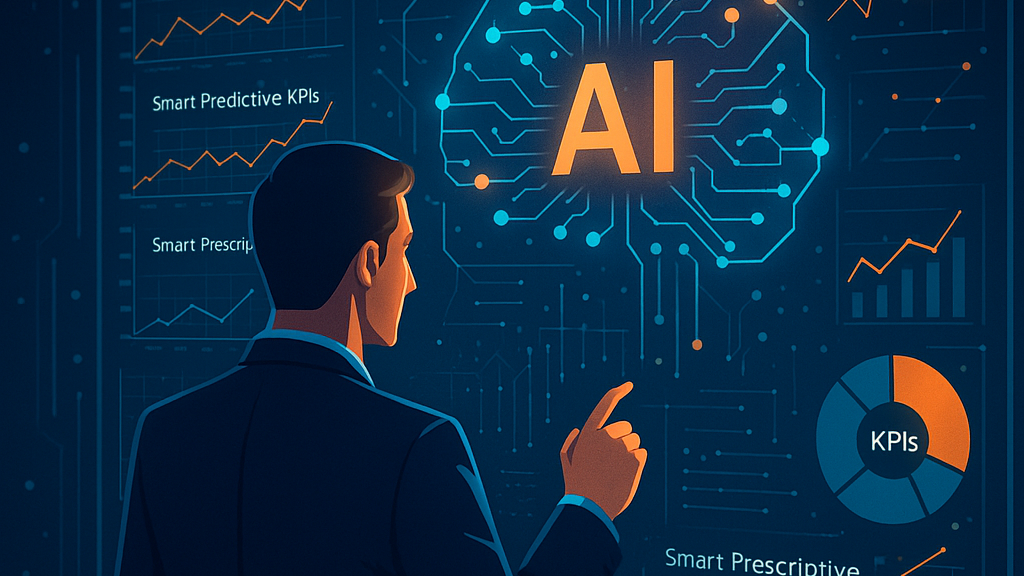
The future of Service Level Agreement (SLA) Key Performance Indicators (KPIs) is being revolutionized by the integration of AI, automation, and predictive analytics. These technologies are transforming the traditional, reactive approach to performance management into a proactive, intelligent, and more customer-centric model.
The Evolution of the Service Level Agreement KPI
For decades, the service level agreement kpi has been the cornerstone of measuring success in service delivery. Traditionally, these KPIs were straightforward, historical metrics: things like uptime percentage, average response time, and mean time to recovery. They were designed to set clear expectations and provide a basis for accountability. However, this traditional model has a fundamental limitation: it’s reactive. An SLA breach is often identified after it's already occurred, leading to punitive measures rather than preventative action.
The modern business landscape, with its emphasis on real-time service and a seamless customer experience, demands more than just a retrospective report card. Customers don't just want to know that an SLA was breached; they want to know that the provider is actively working to prevent issues and ensure uninterrupted service. This is where AI, automation, and predictive analytics come in, shifting the focus from simply reporting on past performance to actively shaping future outcomes.
AI and Automation: The Engine of Proactive Management
Artificial intelligence and automation are the twin engines driving the next generation of service level agreement kpi. Automation, in its simplest form, handles repetitive tasks, freeing up human resources to focus on more complex issues. But when combined with AI, its capabilities are exponentially amplified.
Intelligent Automation
AI-driven automation goes beyond simple task execution. It can analyze service ticket data, identify common issues, and automatically trigger resolutions without human intervention. For example, if a customer reports a connectivity problem, an AI-powered system can automatically run diagnostics, restart network services, and notify the customer of the resolution, all within seconds. This not only meets the response time service level agreement kpi but also provides a superior customer experience.
Dynamic SLA Adjustments
Traditional SLAs are often static and rigid. AI can introduce a layer of dynamism by analyzing real-time data and suggesting adjustments. For instance, an AI might detect a surge in network traffic and predict a potential slowdown. It could then automatically alert the service provider and the customer, and even propose a temporary, mutually agreed-upon adjustment to the latency service level agreement kpi to reflect the current conditions, avoiding a breach and maintaining transparency.
Root Cause Analysis
When an issue does occur, AI can dramatically reduce the time it takes to find the root cause. Instead of human technicians sifting through massive log files, an AI model can quickly correlate data from multiple sources—network logs, application performance data, and user feedback—to pinpoint the source of the problem. This reduces the service level agreement kpi for resolution time and helps prevent the same issue from recurring.
Predictive Analytics: Forecasting the Future of Performance
The most transformative change is the move from reactive to predictive analytics. This is the ability to forecast future events and performance trends based on historical and real-time data. By leveraging this capability, providers can move beyond simply reacting to problems and begin to prevent them altogether.
Predictive Maintenance
For a service level agreement kpi related to uptime or availability, predictive maintenance is a game-changer. AI models can analyze sensor data from hardware and software systems to predict when a component is likely to fail. This allows the service provider to perform proactive maintenance or replace the part before it causes an outage, ensuring the availability service level agreement kpi is never at risk.
Anticipating Service Demand
Predictive analytics can forecast future service demand by analyzing historical patterns, seasonal trends, and even external factors like marketing campaigns. This helps providers allocate resources more efficiently, ensuring that they are adequately staffed to meet peak demand and avoid breaching service level agreement kpis for response and resolution times. For instance, a cloud service provider could use predictive analytics to scale its infrastructure automatically in anticipation of a major client's product launch, guaranteeing a smooth user experience.
Risk Mitigation
Predictive models can also identify potential risks that could lead to an SLA breach. By continuously monitoring key metrics and environmental factors, the system can flag potential issues—like a sudden drop in server performance or an increase in failed login attempts—and alert the team to take preemptive action. This allows providers to address problems while they are still small, preventing them from escalating into major incidents that would violate the service level agreement kpi.
The Future is Collaborative and Proactive
The integration of these technologies is fostering a new era of collaboration between service providers and their clients. Instead of a rigid, transactional relationship governed by penalties, the focus is shifting to a shared goal of continuous improvement and proactive value creation.
The future of the service level agreement kpi is not about replacing human roles but about augmenting them. Human experts will be empowered with intelligent insights, allowing them to make better decisions, solve more complex problems, and build stronger, more transparent relationships with their clients. As this trend accelerates, organizations that embrace AI, automation, and predictive analytics will not only meet their SLAs but will consistently exceed expectations, setting a new standard for service excellence.



An agreement or contract or deal that bounds the customer and therefore the service provider is understood as service level agreement.
Service level agreement holds a framework that states what type of services customers will get from that particular business.
To make it clear, an service level agreement online in India or SLA is a contract or agreement between the provider and the customers, which explains the level and type of service that is expected by the customer from the provider.
These are mostly end-product based agreement and its purpose is to elucidate the character , quality, and scope of the business or service that the purchasers will receive.Advantages of Service Level AgreementSimplifies The Complex IssuesMost of the customers are not interested to know how the service acts.
The service level agreement can assist in the description of the questions that may come forward and how these questions can be answered if the response is not satisfactory or good enough.No Unrealistic ExpectationsMost of the end-users are frustrated when they are not satisfied with the service or their expectations are not met, whether these expectations are naturalistic or not.
A comprehensive and well-defined service level agreement helps to elucidate the expectations efficaciously by conveying the knowledge thoroughly and therefore the abilities which are present within the service provider.Registration Procedure of Service Level Agreement in IndiaTwo Working DaysOur executive will communicate with you regularly to make you understand the requirements of SLA completely, once you mail in your request to us.