If you’re considering doing business in India, one of the most flexible and cost-efficient options is setting up an LLP company in India. With lower compliance compared to a private limited company, plus the benefits of limited liability for partners, an LLP (Limited Liability Partnership) is a popular vehicle for both startups and established foreign/Indian businesses. In this post, you’ll learn about LLP company formation, formation of LLP company, the process of LLP registration in India, advantages, drawbacks, and best practices.
What is an LLP?
An LLP (Limited Liability Partnership) is a business structure governed by the Limited Liability Partnership Act, 2008. It combines features of both a partnership firm and a company:
Like a partnership, it's flexible in terms of internal management and operations.
Like a company, it offers limited liability protection for its partners. That means each partner’s liability is limited to the extent of their contribution to the LLP.
In short, an LLP company in India gives you the benefit of both worlds—operational flexibility + legal protection.
Why Choose LLP Company Formation?
Here are some reasons why entrepreneurs, both domestic and foreign, often prefer LLP over other structures:
Limited Liability for partners but simpler governance than a full company.
Lower compliance burden than private limited companies (fewer formalities, less stringent annual requirements).
Cost-effective setup & maintenance — fewer statutory filings, no requirement for elaborate board meetings etc.
Better for small or medium-sized businesses where operational flexibility is more important than having equity shareholders.
Foreign participation possible, subject to FDI norms, making LLP company formation in India attractive to international investors.
Who Can Form an LLP in India
Minimum two partners required. Partners can be individuals or corporate entities.
At least one partner must be a resident of India (as per current rules).
No mandatory minimum capital requirement under law, though in practice it is wise to have a reasonable contribution.
Formation of LLP Company: Step by Step Process
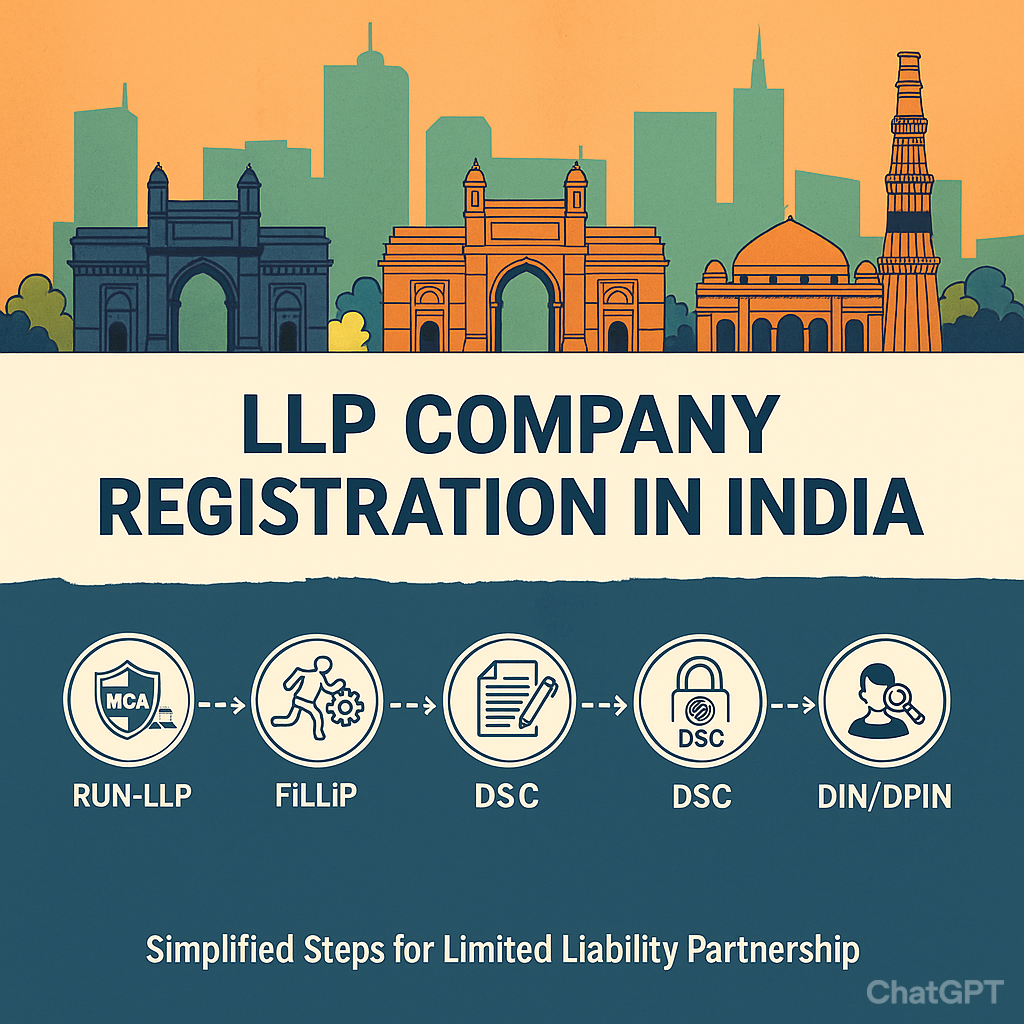
Below is a general roadmap for LLP company registration in India, including the formation process:
Step
What You Must Do
1. Check & Reserve Name
Propose name(s) for the LLP. Submit to Ministry’s portal. Ensure name doesn’t infringe trademark or similar names.
2. Obtain Digital Signatures
Designated partners need DSCs (Digital Signature Certificates).
3. Apply for DIN/DPIN
Designated Partners must obtain Designated Partner Identification Number.
4. Incorporation Filing
File incorporation documents (Form LLP-1) with the Registrar, including name, registered office, partner details.
5. LLP Agreement
Draft and file the LLP agreement (Form LLP-3). This is the internal charter: rights, duties, profit sharing, contributions etc.
6. Certificate of Incorporation
Once approved, Registrar issues the Certificate of Incorporation. The LLP is then officially formed.
7. Post-formation Registrations
Apply for PAN, TAN, GST registration (if needed), bank accounts etc. If foreign partners are involved, comply with Foreign Direct Investment (FDI) norms.
Legal & Regulatory Requirements
LLP Act, 2008 is the governing statute.
LLP must maintain books of accounts.
File annual returns and statements of accounts with the Registrar.
Tax filings: income tax returns, TDS (where applicable), GST (if turnover or inter-state supplies demand it).
Advantages of LLP Company Formation in India
Limited liability protection for partners.
Flexibility in internal structure—partners can organize how they wish.
Lower cost and simplified compliance compared to companies.
Easier to maintain than private limited companies regarding meetings, audits (depending on turnover), etc.
Attractive for foreign investors for certain sectors (depending on FDI policy).
Challenges & Considerations
Some restrictions exist for foreign participation depending on sector or regulatory rules.
Although compliance is lower, failure to file required returns or maintain books can lead to penalties.
Not all investors or clients view LLP same as corporate entities; sometimes credibility or funding prospects are affected.
Tax treatment, profit sharing, partner liabilities etc. must be defined clearly in the LLP agreement.
Is LLP Right Structure for You?
Use LLP if:
You want limited liability without heavy compliance load.
Your business is small to medium in size.
You want a flexible structure for profit sharing or management.
You are okay with constraints in raising capital (LLPs can find it harder to raise large investments compared to companies).
If you are planning to scale rapidly, seek external investment (VCs, private equity), or expand into sensitive sectors, you might want to compare with forming a private limited company.
Conclusion
LLP company registration in India is a viable, efficient, and legally sound option for many businesses—especially those seeking balance between flexibility and liability protection. The formation of LLP company involves manageable steps, and when done correctly, an LLP can provide a strong foundation for growth.
If you’re considering LLP company formation in India, it helps to get expert legal and tax advice to ensure compliance, avoid pitfalls, and tailor the LLP agreement to your specific needs.