


In today’s digital-first world, businesses operate under increasing pressure to deliver exceptional customer experiences—especially during peak seasons when traffic surges can make or break sales goals. Retailers, SaaS providers, and e-commerce brands all face a common challenge: maintaining speed, reliability, and seamless functionality under heavy loads. Whether you are preparing for Black Friday, the holiday shopping rush, or a seasonal promotional event, performance optimization is no longer optional—it is mission-critical.
Companies like Zoolatech specialize in creating scalable, resilient solutions that ensure websites and applications remain fast and stable, even when customer demand spikes. In this article, we will explore why performance optimization matters, the key strategies to prepare for peak seasons, and actionable steps businesses can take to stay ahead of the competition.
Why Performance Optimization Matters
When traffic surges, every second counts. Studies consistently show that page load time directly affects conversion rates and revenue:
Speed = Conversions: According to Google, a one-second delay in mobile load times can impact conversion rates by up to 20%.
Reliability = Trust: Downtime during a major sales event not only costs lost revenue but also damages brand reputation and customer loyalty.
Scalability = Growth: Companies that scale effectively during high-traffic periods gain a competitive edge, as they can serve more customers without sacrificing experience.
The modern digital landscape demands proactive preparation. Simply reacting to outages or slowdowns is not enough. Businesses need to anticipate peak demand and engineer their systems to handle it seamlessly.
Understanding Peak Season Challenges
Peak seasons are predictable in some industries (e.g., holiday shopping, back-to-school, tax season) and less predictable in others (viral social media campaigns, flash sales, unexpected publicity). The main challenges include:
Traffic Spikes – Sudden increases in concurrent users can overwhelm servers, databases, and APIs.
Infrastructure Bottlenecks – Legacy architecture may not support horizontal scaling or load balancing efficiently.
Code Inefficiencies – Unoptimized code can slow down applications under stress.
Third-Party Dependencies – Payment gateways, shipping providers, or analytics scripts can become single points of failure.
Customer Experience Pressures – Slow checkout processes or broken features result in abandoned carts and frustrated users.
Understanding these challenges allows businesses to build resilience into their systems well before peak season begins.
Strategy 1: Capacity Planning and Scalability
Capacity planning is the first step toward performance optimization. This involves forecasting the expected traffic load based on historical data, marketing campaigns, and growth projections.
Benchmark Traffic Data: Review analytics from previous years to identify traffic patterns.
Load Testing: Simulate heavy user loads to see where bottlenecks occur.
Horizontal Scaling: Use cloud infrastructure that allows for automatic scaling of servers and services.
Content Delivery Networks (CDNs): Distribute content across global edge locations to reduce latency.
By aligning infrastructure capacity with anticipated demand, companies reduce the risk of slowdowns or downtime when traffic surges.
Strategy 2: Application and Code Optimization
Even with strong infrastructure, poorly optimized code can cripple performance. Engineering teams should:
Refactor Slow Queries: Optimize database queries to reduce load times.
Implement Caching: Use in-memory caches (Redis, Memcached) to store frequently accessed data.
Minimize API Calls: Batch requests where possible to reduce server overhead.
Optimize Front-End Assets: Minify CSS and JavaScript, lazy-load images, and compress resources.
Profile Regularly: Use performance monitoring tools to spot slow endpoints and memory leaks.
The goal is to build lean, efficient applications that perform well under stress. For example, when businesses develop retail app solutions, they must ensure the checkout flow is optimized and can handle thousands of simultaneous users without failures.
Strategy 3: Load Testing and Chaos Engineering
Testing under controlled conditions is one of the most powerful ways to prepare for high-traffic events.
Load Testing: Simulates expected user volume to validate system performance.
Stress Testing: Pushes systems beyond expected capacity to find breaking points.
Chaos Engineering: Intentionally introduces failures to see how systems respond, improving resiliency.
Synthetic Monitoring: Continuously tests application performance from multiple locations worldwide.
Teams that adopt these practices can proactively fix issues before customers ever encounter them.
Strategy 4: Monitoring, Alerts, and Observability
Performance optimization does not end with deployment—it continues in real time. Observability ensures that teams can react quickly when things go wrong.
Real-Time Monitoring: Track CPU, memory, database performance, and network latency.
Application Performance Monitoring (APM): Tools like New Relic, Datadog, or Grafana provide deep insights into application health.
Custom Alerts: Notify engineering teams when thresholds are breached (e.g., response times exceed 200ms).
User Experience Metrics: Measure Core Web Vitals (Largest Contentful Paint, First Input Delay, Cumulative Layout Shift).
Continuous observability allows teams to maintain reliability even as traffic fluctuates throughout the day.
Strategy 5: Disaster Recovery and Redundancy
Despite the best planning, failures can still occur. Disaster recovery (DR) and redundancy planning minimize impact:
Multi-Region Deployment: Host services across multiple data centers to avoid single points of failure.
Failover Systems: Automatically redirect traffic to healthy servers when one becomes unavailable.
Database Replication: Keep real-time backups to ensure data integrity.
Incident Response Playbooks: Have predefined workflows for common outage scenarios.
Businesses that prepare for worst-case scenarios can recover quickly, reducing downtime and revenue loss.
The Role of Teams and Collaboration
Optimizing performance is not just a technical challenge—it requires cross-functional collaboration between engineering, DevOps, marketing, and customer support. Key steps include:
Aligning Goals: Ensure all teams understand performance targets and business objectives.
Coordinating Campaigns: Marketing teams should notify engineers of upcoming campaigns so they can prepare for traffic spikes.
Customer Support Training: Equip support teams to handle increased inquiries during peak periods.
Postmortems and Continuous Improvement: After peak season, review incidents and successes to refine processes for the future.
Leveraging Expert Partners
Many businesses lack the in-house resources to implement all of these strategies effectively. This is where technology partners like Zoolatech play a key role. They help companies develop retail app solutions, optimize backend systems, implement scalable infrastructure, and conduct thorough performance testing ahead of critical events.
By working with experienced engineers who understand both business and technical challenges, organizations can accelerate their readiness and focus on growth rather than firefighting.
Future Trends in Performance Optimization
Looking forward, performance optimization will increasingly rely on automation, AI, and real-time decision-making:
Predictive Autoscaling: Machine learning models that anticipate traffic spikes before they occur.
Edge Computing: Processing data closer to users for ultra-low latency.
Serverless Architectures: Pay-as-you-go computing that scales instantly with demand.
AI-Driven Monitoring: Intelligent anomaly detection that reduces false alarms.
Businesses that embrace these innovations will gain a significant advantage in delivering seamless customer experiences year-round.
Final Thoughts
High-traffic events and peak seasons are both an opportunity and a risk. The businesses that thrive are those that prepare thoroughly—forecasting demand, optimizing infrastructure, streamlining code, testing under stress, and monitoring in real time.
Whether you are scaling an e-commerce platform, launching a marketing campaign, or looking to develop retail app solutions that can withstand seasonal surges, the principles outlined in this article will help you stay competitive.
Companies like Zoolatech demonstrate how strategic performance optimization can transform a business from reactive to proactive, ensuring that every customer interaction—no matter how busy the season—remains fast, reliable, and enjoyable.




Today there are many iOS fitness app. We can also develop a iOS App for health if you follow proper tips. Here are some tips for App develop. For more information-https://bit.ly/2GnFmbe
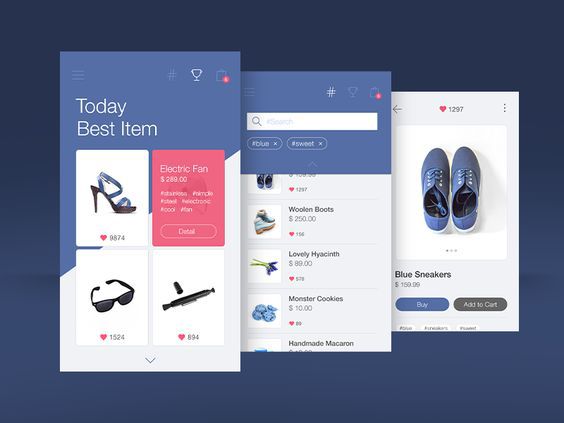
Moreover, more and more customers have gone mobile.
They do their shopping with the help of smartphones and tablets.
Online shops are facing real boom today with more than 50% of all internet users buying different products online.Mobile shopping has proved to be extremely convenient.
It lets people purchase necessary goods wherever they are.
These components will guide you through the magic world of digital shelves and a selection of products for all tastes.
Traditional shopping style is about to vanish making it obvious that a shopping app like Flipkart is our nearest future.A growing number of mobile users shows us that shopping websites are no longer of any interest to potential customers.