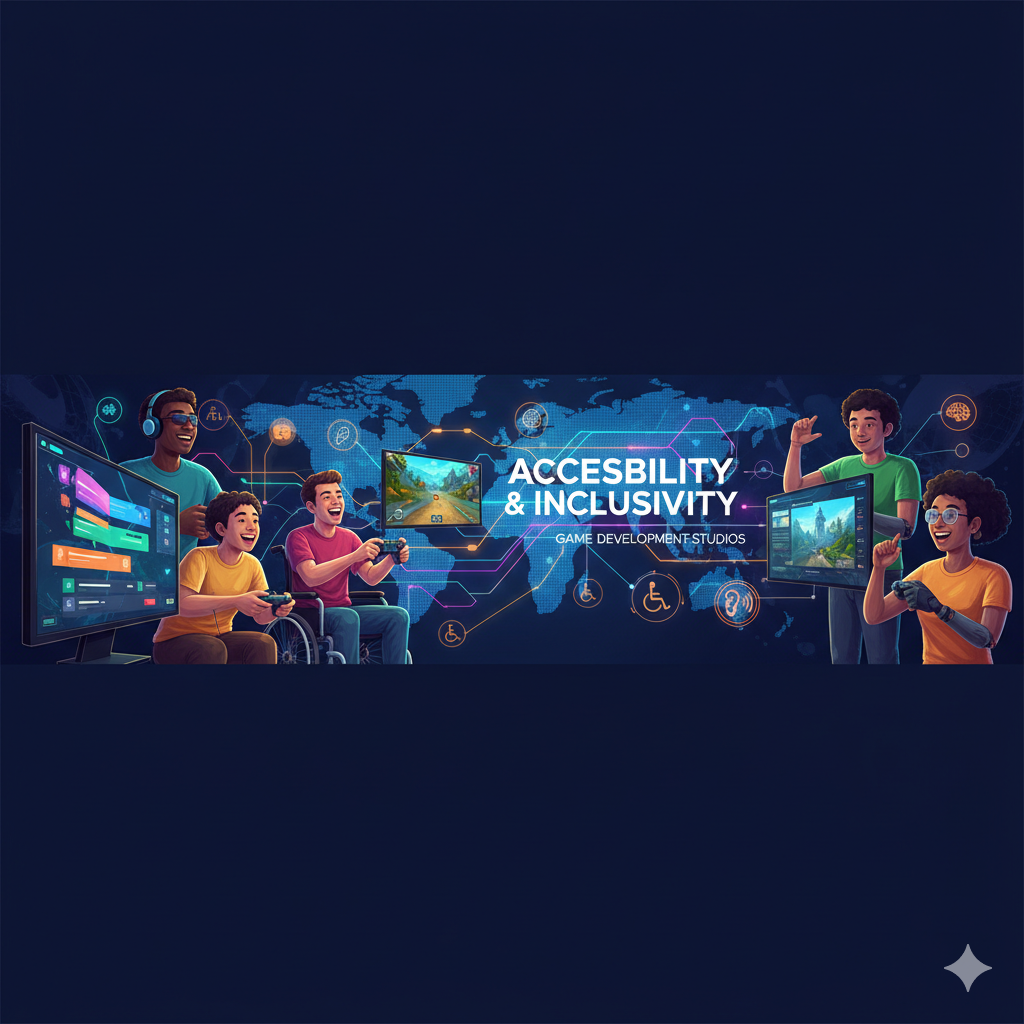
There are currently over 3.32 billion gamers worldwide. However, millions continue to encounter obstacles that prevent them from fully enjoying games. Many players are left out due to poor design decisions, constrained control schemes, and a lack of representation. This is where inclusivity and accessibility come into play, not as extras, but as fundamental components of contemporary design. Prioritizing these values helps game development studios expand their audience, build their reputations, and attract devoted fans. This blog will explain why accessibility is essential for every game art studio, how to design inclusively, how it affects players, and what the future holds for studios that follow this path.
Key Takeaways
● Accessibility enables game development studios to reach a wider audience and foster long-term loyalty.
● Every game art studio must create adaptable assets for different abilities and devices.
● Inclusive design boosts engagement, reputation, and community connection. The future of accessibility combines AI tools, adaptive controllers, and thoughtful design pipelines.
Why Accessibility & Inclusivity Matter for Game Development Studios
Everyone can play thanks to accessibility, regardless of ability or disability. In the world of gaming, inclusivity ensures that players feel valued, represented, and accepted. When combined, they reinterpret what it means to make games that are accessible to all.
Business Benefits
- Expands audience by including millions of disabled gamers worldwide.
- Increases retention by allowing more players to enjoy full experiences. Enhances brand reputation as studios known for inclusivity gain trust and loyalty.
- Creates sustainable revenue by tapping into overlooked markets.
Social Value
- Ensures that every player is on an even playing fi eld.
- Breaks down digital barriers to promote equality.
- Creates a variety of communities where players can interact without boundaries.
- Makes gaming a medium that is truly accessible to all.
For modern game development studios, accessibility is not just about compliance. It’s about building lasting impact through creativity, empathy, and innovation.
Best Practices for Inclusive Designs in Game Art Studio
Adding features at the end is not the goal of inclusive design. The goal is to incorporate accessibility into each pipeline stage. By following these guidelines, studios make sure that players of all skill levels have engaging experiences and that teams steer clear of expensive reworks in the future.
1. Customizable Controls for Game Development Studios
The first obstacle that many players encounter is control schemes. For game development studios, flexible controls ensure that no player is locked out.
● Permit keyboard and controller remapping.
● For limited mobility, off er one-button or one-hand modes.
● Provide sensitivity settings for touchscreens and analog sticks. From the beginning, support adaptive controllers.
Make input tutorials easy to follow and accessible.
2. Visual and Audio Accessibility in Game Art Studio
When it comes to promoting accessibility through assets, a game art studio is essential. Audio and visual selections have the power to create or destroy inclusivity.
- Utilize color palettes with high contrast and options that are safe for colorblind individuals.
- Make sure your typography is readable and scalable.
- Provide movable backgrounds and sizes for the subtitles.
- For significant cutscenes, include audio descriptions.
- Incorporate visual or haptic feedback for in-game notifications.
3. Inclusive Narratives and Representation
The narratives and characters that players interact with are also accessible. With careful design, game development studios can increase inclusivity.
- Include characters with a range of abilities, genders, and cultures.
- Steer clear of stereotypes in the design, dialogue, and development.
- Provide culturally appropriate references and language localization.
- Make customizable avatars that represent the diversity of the real world.
- To ensure authenticity, test plots with a range of viewers.
4. Testing with Diverse Player Groups
Early and frequent testing guarantees that accessibility functions in real life as well as on paper.
- Participate in playtesting cycles with players who have disabilities.
- Get ongoing input while developing, not after the product is released.
- Record feedback loops so that design teams can take prompt action.
- Include accessibility checklists in your quality assurance procedures.
- To increase pipeline efficiency, departmental learnings should be shared.
5. Continuous Education and Awareness for Game Art Studio Teams
Inclusivity calls for continuous awareness among teams rather than quick fixes.
- Educate artists and developers on accessibility standards.
- Educate teams on changing international standards.
- Conduct internal workshops with consultants who specialize in accessibility.
- Promote the exchange of knowledge among engineers, designers, and artists.
- Include a quantifiable KPI for accessibility in the project's objectives.
Impact of Accessibility on Players and Communities
Accessibility is not just about features. It directly influences how players connect with games and with each other. Inclusive design expands the reach of titles while strengthening bonds within gaming communities.
Key impacts of accessibility:
Equal participation: Players with disabilities can have the same experiences thanks to accessibility.
- Player retention: Loyalty and repeat engagement are frequently higher in games that take into account a variety of needs.
- Community growth: Multiplayer communities are more hospitable when features like captions or adjustable controls are included.
- Representation: Diverse assets created by a game art studio give players a sense of visibility and worth.
- Social impact: Studios promote empathy and dismantle barriers between groups by emphasizing inclusivity.
When taken as a whole, these effects show that accessibility is more than a technical choice. It is a social duty that changes the way communities and players engage in gaming environments.
Current State and Future of Accessibility in Game Development Studios
In gaming, accessibility is now required rather than optional. Prominent game development studios now incorporate features like text scaling, colorblind options, and remappable controls from the beginning. By providing dozens of accessibility options that enable more players to participate fully, games like The Last of Us Part II have established industry standards.
In the future, technology will advance this. Accessibility will be seamless thanks to voice recognition, AI-driven personalization, and adaptive hardware. While larger teams incorporate accessibility into core pipelines, smaller studios will use lightweight tools. Games that give each player choice, flexibility, and an inclusive design are the ones of the future.
Conclusion
Inclusion and accessibility are no longer side topics. They are essential to the expansion of gaming. Setting these values as a top priority helps game development studios reach a wider audience, build their reputation, and spur innovation. Those who create for everyone, without exception, will have the future of gaming.
FAQs
Are accessibility features expensive to implement?
Not always. When accessibility is considered early, costs remain manageable. Building inclusive features into the design phase avoids the need for costly retrofitting later.
What’s the most impactful accessibility feature in modern games?
Customizable controls and subtitles consistently rank as the most valued features. They directly help players with mobility or hearing challenges while improving usability for everyone.
What’s next for accessibility in gaming?
The future will bring AI-driven personalization, adaptive devices, and more inclusive pipelines. Players can expect dynamic difficulty adjustments, smarter voice recognition, and hardware that adapts to individual needs.