

3D cuboid annotation services have become an essential tool in the development of modern computer vision systems. As industries increasingly rely on artificial intelligence for tasks such as object recognition and autonomous navigation, the ability to accurately label three-dimensional objects within images or video frames has grown in importance. These services help transform raw visual data into structured formats that AI models can understand and learn from, improving their performance in real-world applications.
Enhancing Autonomous Vehicle Systems
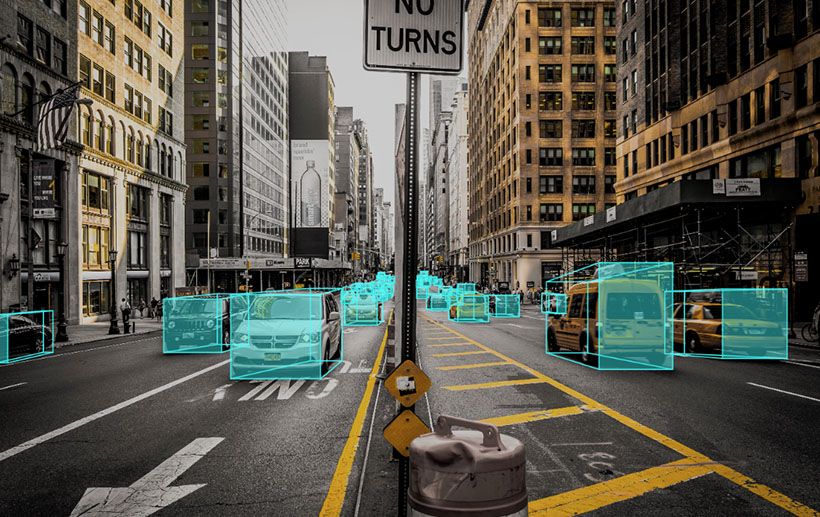
One of the primary applications of 3D cuboid annotation services is in autonomous vehicles. Self-driving cars must be able to detect and track objects such as pedestrians, cyclists, vehicles, and road obstacles in real time. By annotating these objects with precise 3D cuboids, developers provide AI systems with a spatial understanding of their environment. This not only aids in accurate distance estimation but also helps in predicting object movement, allowing vehicles to make safer navigation decisions. The depth and orientation information captured through these annotations is critical for building robust models that can operate reliably in complex traffic scenarios.
Supporting Robotics and Industrial Automation
In robotics and industrial automation, 3D cuboid annotation services play a crucial role in object manipulation and spatial planning. Robots that operate in warehouses, manufacturing plants, or logistics centers must identify items, avoid collisions, and interact with objects precisely. Annotated 3D cuboids allow AI systems to understand object dimensions and positions, enabling robots to plan paths efficiently and handle objects accurately. This capability enhances operational efficiency and reduces errors in tasks such as sorting, packaging, and assembling components, contributing to smoother industrial workflows.
Advancing Augmented and Virtual Reality Applications
3D cuboid annotation services are also valuable in augmented reality (AR) and virtual reality (VR) applications. These technologies rely heavily on accurate spatial mapping to create immersive experiences. Annotating real-world objects in 3D allows AR and VR systems to place virtual elements with correct scaling, orientation, and positioning. For example, in AR applications, virtual furniture can be accurately overlaid in a room, while VR environments can simulate real-world interactions more realistically. By providing detailed spatial information, these annotations help improve user experience and interaction within digital environments.
Improving AI Model Accuracy Across Various Domains
Beyond specific industries, 3D cuboid annotation services contribute broadly to AI model accuracy. Tasks such as scene understanding, object detection, and behavior prediction benefit from precise 3D labeling. Annotated datasets can be used to train models that understand complex environments, whether for surveillance, urban planning, or medical imaging. The ability to capture an object’s position, size, and orientation in three-dimensional space ensures that AI systems can make informed decisions and deliver reliable outputs, enhancing their applicability across multiple domains.
3D cuboid annotation services are a cornerstone of modern AI and computer vision applications. They provide critical spatial data that enables autonomous vehicles, industrial robots, AR/VR experiences, and various other AI-driven systems to function accurately and efficiently. By translating raw visual inputs into structured, three-dimensional information, these services support more intelligent, reliable, and versatile AI solutions. As technology continues to advance, the demand for precise 3D annotation is likely to grow, reinforcing its importance in shaping the future of AI-powered systems.