


For many healthcare professionals, billing and coding feels like a maze of rules, numbers, and regulations. In obstetrics and gynecology, that complexity is even greater because services often extend over months, involve bundled care, and include everything from preventive screenings to surgeries. To make sense of it, let’s break down how billing and coding works, why it matters, and how examples can make the concepts clearer. When we talk about OB/Gyn Medical Billing, we’re really talking about the foundation that keeps practices financially stable while ensuring patients receive fair and transparent care.
Why Billing and Coding Are Essential in OB/Gyn
Billing and coding serve as the bridge between patient care and financial reimbursement. Every diagnosis, exam, and procedure must be translated into a standardized code that insurance carriers recognize. Without that process, practices risk underpayment, delayed claims, or compliance problems.
OB/Gyn is unique compared to other specialties. A pregnancy, for example, isn’t a single visit—it’s a continuum of care that includes prenatal checkups, lab tests, ultrasounds, labor, and delivery. Capturing all of that in codes requires precision, or else the practice loses revenue and patients may face confusing bills.
Common Examples in OB/Gyn Billing
Example 1: Prenatal Care
A patient’s prenatal visits are usually bundled into a global maternity package. However, if she develops an unrelated condition like a urinary tract infection during pregnancy, that requires separate coding. Without distinguishing the two, the practice won’t be reimbursed for the extra care.
Example 2: Cesarean Delivery
If a patient delivers via cesarean, coders must select the correct CPT code for the procedure and pair it with the appropriate diagnosis code. Any complications, such as postpartum hemorrhage, need additional coding to reflect the complete clinical picture.
Example 3: Preventive Screenings
Routine Pap smears and HPV screenings fall under preventive services. These have specific codes, and payers often cover them fully. However, if abnormalities are found and follow-up procedures are required, coders must shift to diagnostic codes.
These examples illustrate how accuracy impacts both reimbursement and patient clarity.
The Biggest Challenges in OB/Gyn Billing
Bundled Services
Global maternity codes can be confusing, especially when additional services arise during pregnancy. Coders must know when to use bundled codes and when to bill separately.
Claim Denials
OB/Gyn practices face higher-than-average denial rates. Even small errors, like missing modifiers, can trigger nonpayment.
Ever-Changing Guidelines
Coding guidelines evolve each year. From ICD-10 updates to payer-specific rules, staying compliant requires constant vigilance.
Documentation Gaps
If physicians don’t fully document complications, procedures, or follow-ups, coders cannot justify the claims. Documentation is the backbone of billing accuracy.
Breaking Down the Basics
Diagnostic Codes
ICD-10-CM codes capture the patient’s diagnosis. In OB/Gyn, these range from routine pregnancies to complications such as gestational diabetes or ectopic pregnancy.
Procedural Codes
CPT and HCPCS codes describe the procedures performed—everything from ultrasounds to hysterectomies. Knowing the difference between preventive and diagnostic coding is especially important.
Modifiers
OB/Gyn coding often requires modifiers to explain the circumstances. For example, a modifier might clarify when a physician provided only part of a global maternity package or when a procedure was performed bilaterally.
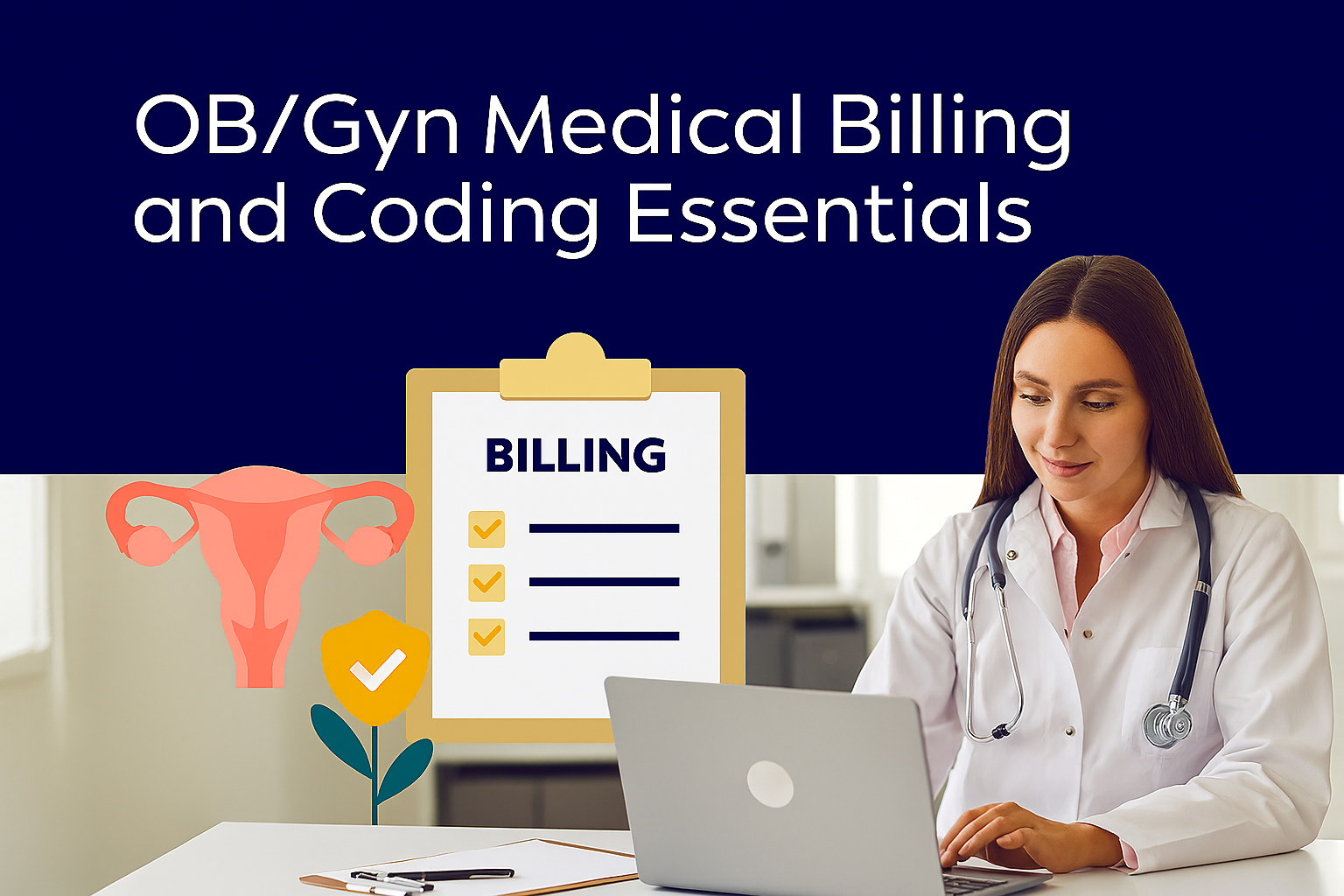
Understanding these basics is the foundation of accurate billing. For deeper insight, providers and staff often turn to guides like OB/Gyn Medical Coding Essentials, which explain how to navigate bundled services, modifiers, and compliance in everyday practice.
Best Practices for OB/Gyn Billing
1. Prioritize Complete Documentation
If it isn’t documented, it can’t be billed. Physicians and staff should carefully record every encounter, complication, and procedure.
2. Use Technology
EHR systems and claim scrubbing tools help catch errors before submission. Leveraging technology saves time and reduces denial rates.
3. Conduct Regular Training
Coding rules change constantly. Ongoing staff training ensures everyone is up to date on compliance and payer requirements.
4. Audit Claims
Internal audits highlight recurring mistakes and identify opportunities for improvement. Routine reviews protect revenue and compliance.
5. Consider Outsourcing
Many OB/Gyn practices turn to specialists who focus solely on billing and coding. Outsourcing helps reduce errors and allows providers to focus on patient care.
Why Accuracy Matters for Patients
Accurate billing impacts more than just the practice—it directly affects patients. Errors can lead to unexpected bills, disputes with insurers, and frustration. On the other hand, precise coding ensures patients are billed fairly and helps maintain trust between the provider and patient.
The Role of Specialists in OB/Gyn Billing
Because of its complexity, OB/Gyn billing benefits greatly from specialized expertise. Companies like RCM Experts understand the nuances of bundled maternity services, preventive screenings, and surgical coding. Their knowledge helps reduce denials and keeps practices financially healthy while improving the patient experience.
Final Thoughts
At first glance, OB/Gyn billing may seem overwhelming. But when broken down into examples, its purpose becomes clear: to fairly represent the care provided, ensure timely reimbursement, and protect both patients and providers from financial headaches. By focusing on documentation, staying updated on coding rules, and using tools or expert support, practices can greatly improve their billing outcomes.
For OB/Gyn practices seeking more stability and efficiency, partnering with a trusted medical billing company in USA can make a significant difference. With expert guidance, providers can concentrate on delivering exceptional care while knowing the financial side of their practice is in good hands.